



A Himalayan Birth
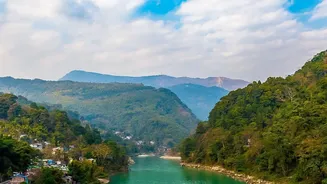
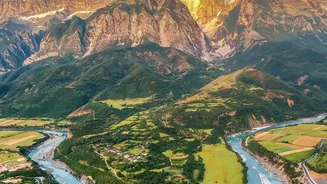
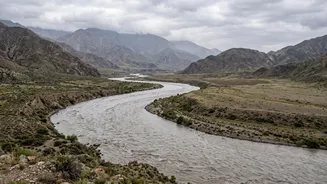
The Kosi's story begins not as one river, but as seven. In Nepal, it is called the Saptakoshi, a powerful confluence of tributaries that drain the southern slopes of the Himalayas and the Tibetan plateau. Some of its feeder rivers, like the Arun, are
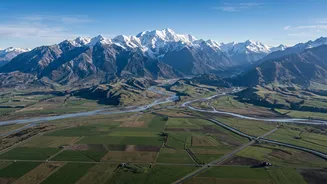
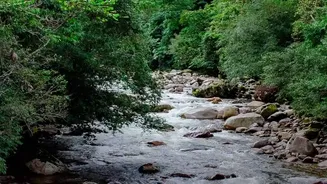
older than the mountains they slice through. This vast catchment area includes some of the world's highest peaks, like Everest and Kanchenjunga. The river system cascades through deep, steep gorges, beginning its journey from altitudes as high as 8,000 meters. The young, fragile geology of the Himalayas means these fast-flowing waters easily erode the landscape, picking up vast quantities of rock and soil from the very start.
The Burden Of Silt
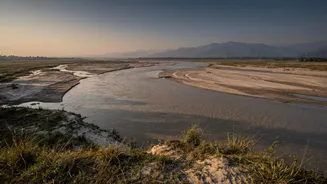
What truly defines the Kosi is its immense sediment load. As it carves through the Himalayas, it collects an astonishing amount of silt. By the time it reaches the plains at Chatara in Nepal, the river carries an estimated 100 million tonnes of sediment annually. To put that in perspective, while the Kosi basin forms only a small part of the greater Ganga river system, it contributes nearly a quarter of its total sediment. This heavy burden is the root cause of its volatile nature. The river is so choked with its own debris that it is constantly forced to find new ways to flow, making it uniquely prone to sudden and dramatic shifts in its course, a phenomenon known as avulsion.
Building Its Own Rampage
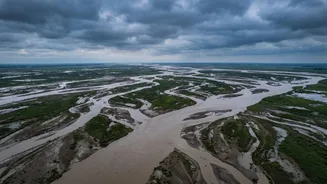
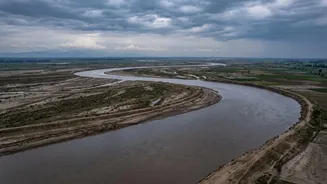
As the Kosi exits the narrow Chatra Gorge in Nepal, its gradient drops dramatically. The river, which was a rushing torrent, suddenly slows as it hits the flat, vast plains of Bihar. Unable to carry its heavy load any further, it dumps the silt, creating one of the world's largest alluvial megafans—a massive, cone-shaped deposit of sediment stretching over 15,000 square kilometers. Over centuries, this constant deposition has caused the river to swing wildly across this fan. Historical records show the Kosi has shifted its course by more than 120 kilometers westward in the last 250 years, abandoning old channels and carving new ones. Each shift leaves behind a trail of sandy, infertile land and displaces entire communities.
The Embankment Paradox
In an attempt to tame the river and protect the plains, extensive embankments were built along the Kosi's banks in the 1950s. The idea was to confine the river to a single, predictable channel. However, this intervention has had unintended and severe consequences. Trapped between these man-made walls, the river deposits its massive sediment load directly onto its own bed. Over decades, this has caused the riverbed to rise significantly, to the point where the Kosi now flows several meters above the surrounding countryside—a phenomenon known as a 'super-elevated' river. This has turned the embankments into precarious dams, holding back a river that is desperate to break free and find a lower path.
When The Levees Break
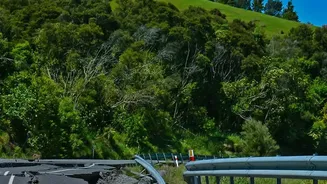
The danger of this engineered system became tragically clear in August 2008. The Kosi breached its eastern embankment at Kusaha in Nepal, and the river abruptly abandoned its channel. It surged eastwards by 120 kilometers, reclaiming an old path it had not occupied for over a century. The result was a catastrophic flood that affected over three million people in Bihar and tens of thousands in Nepal, causing widespread destruction and loss of life. The 2008 disaster was a devastating reminder of the river's immense power and the inherent risks of trying to contain a system so fundamentally dynamic. It highlighted that the very structures built for protection had created the conditions for an even greater catastrophe.