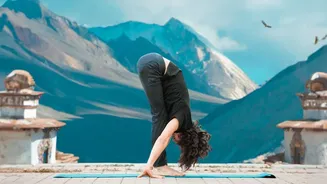



The Seated Forward Bend, or Paschimottanasana, is a fundamental yoga posture that offers a deep stretch but can be challenging. A yoga strap can transform this pose, making it more accessible and effective for everyone, regardless of flexibility.
Understanding Paschimottanasana
Paschimottanasana,
which translates to 'Intense West Stretch', targets the entire back side of the body, from the heels to the neck. It's celebrated for its ability to stretch the hamstrings, lengthen the spine, and calm the nervous system. However, many people, especially those with tight hamstrings or lower back sensitivity, find it difficult to perform without rounding their spine. This is where the goal of the pose can get lost. The aim isn't simply to touch your toes, but to hinge forward from the hips while maintaining a long, neutral spine.
Why Introduce a Yoga Strap?
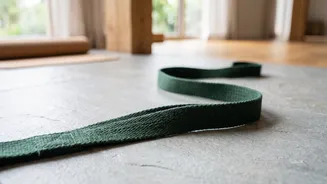
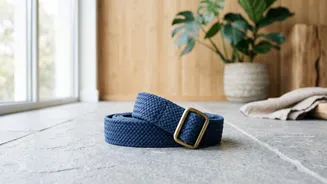
A yoga strap is not a crutch, but a tool for smarter, safer practice. For many, reaching the feet in Paschimottanasana forces the back to hunch, putting pressure on the vertebral discs and sacroiliac (SI) joints. A strap effectively extends your arm's reach, allowing you to connect with your feet without sacrificing alignment. This connection enables you to maintain a long spine and hinge correctly from the hip crease, ensuring the stretch is focused on the hamstrings and lower back muscles, not straining them. It makes the pose accessible and prevents the common mistake of pulling aggressively with the arms to force depth.
Step-by-Step Guide with a Strap
To begin, sit on your mat with your legs extended straight in front of you in Dandasana (Staff Pose). For extra support and to help your pelvis tilt forward, consider sitting on the edge of a folded blanket. Loop the strap around the balls of your feet, holding one end in each hand. Inhale and sit up tall, lengthening your spine and pulling your shoulders away from your ears. As you exhale, begin to hinge forward from your hips, keeping your back straight. Instead of rounding forward, think about sending your chest toward your feet. Walk your hands down the strap, but only as far as you can while keeping your spine elongated. Your arms should be relaxed, not yanking you forward. Hold the pose for 30 to 60 seconds, or about 5 to 10 deep breaths.
Benefits of the Strap-Assisted Pose
Using a strap in Paschimottanasana offers several key advantages. Primarily, it promotes superior alignment by preventing the back from rounding, which is a common error that can lead to strain or injury. This proper form ensures that you are effectively stretching the hamstrings and calves. The strap also provides support, allowing you to hold the posture for longer periods with stability. This extended hold encourages a deeper release in the connective tissues. By creating a gentle tension—pressing your feet into the strap as you gently pull with your hands—you can guide your torso forward more mindfully, deepening the stretch in a controlled and safe manner.
Common Mistakes to Avoid
The most frequent error is rounding the spine to get the head closer to the knees. The focus should be on hinging from the hips with a flat back. Another mistake is using the strap to aggressively pull yourself into the pose. The strap is a guide, not a winch; avoid yanking on it, which creates tension in the shoulders and neck. Also, be mindful not to lock your knees, especially if you have tight hamstrings. Keeping a micro-bend in the knees can protect the joints and prevent overstretching the hamstring tendons. Finally, remember to breathe. Holding your breath causes the muscles to tense, counteracting the goal of the stretch.