

A Celestial Landmark in Flux
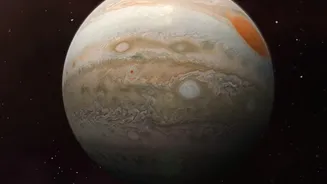
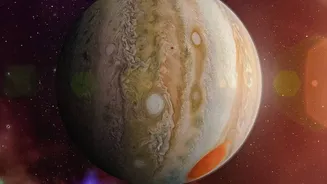
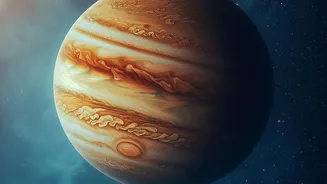
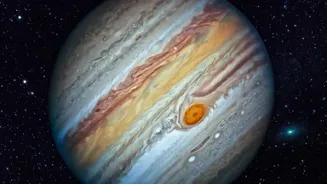
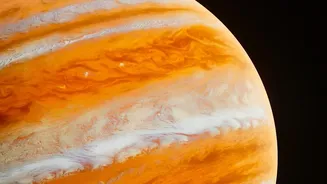
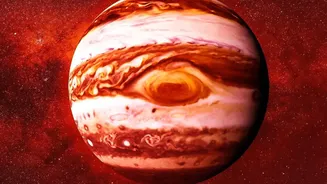
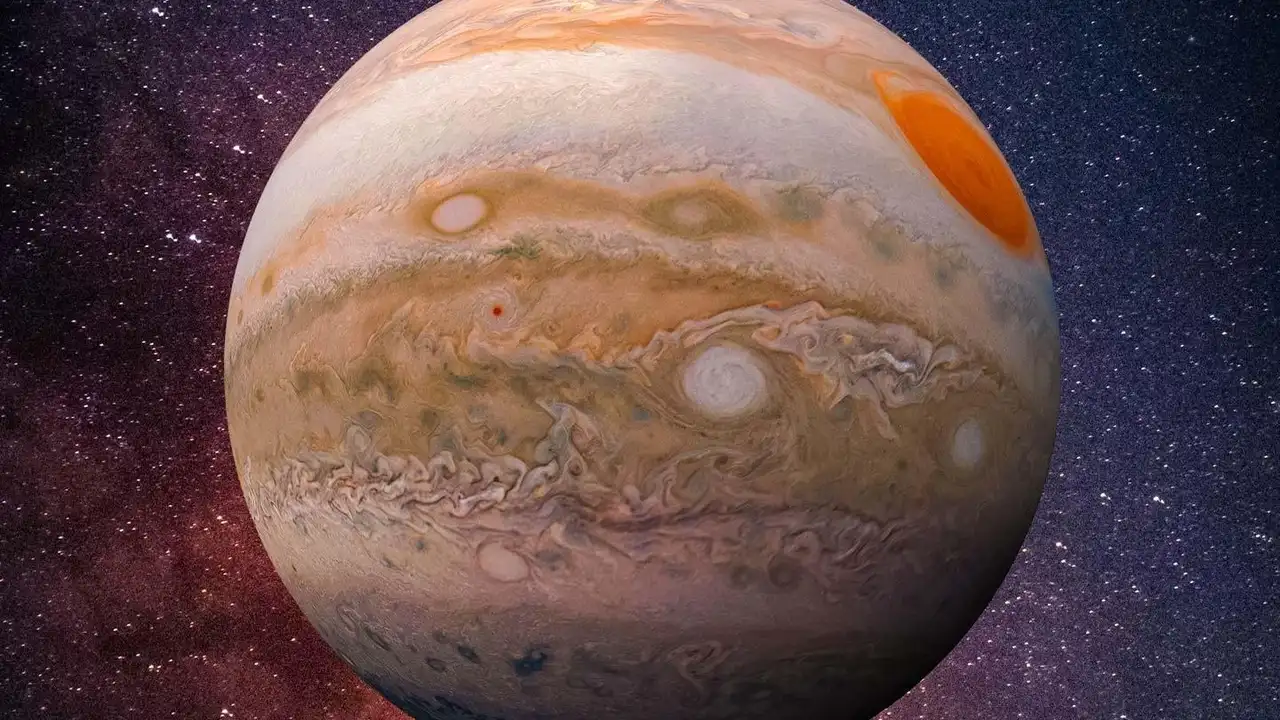
For as long as we have had telescopes powerful enough to see it, the Great Red Spot has been a defining feature of Jupiter. It is a colossal anticyclonic storm, a high-pressure system so vast that historic observations from the late 1800s estimated it could
swallow three Earths. But for the last century, astronomers have watched it shrink. The latest observations, including those from NASA's Juno spacecraft and the James Webb Space Telescope, confirm this trend. Once a stretched-out oval, the storm is now more circular and measures roughly the width of a single Earth, a dramatic downsizing from its former glory.
The View from New Heights
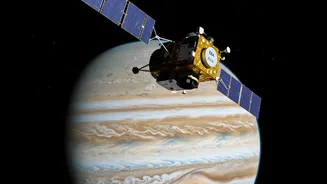
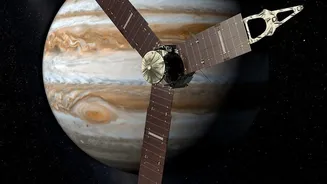
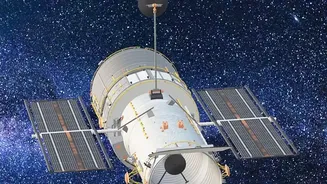
New instruments are giving us a ringside seat to these changes. The James Webb Space Telescope (JWST), with its powerful infrared vision, has peered deep into the storm's structure. These images reveal surprising complexity, including a variety of features like dark arcs and bright spots within the vortex itself. The clarity has allowed scientists to study the storm's dynamics in ways never before possible, uncovering details about its altitude and structure. Meanwhile, the Juno probe, in orbit around Jupiter since 2016, continues to make close flybys, gathering data that helps scientists understand the storm's deep roots and internal mechanics.
Why Is It Shrinking?
The leading theory behind the Great Red Spot's shrinkage is essentially a matter of diet. Scientists believe the gigantic storm has sustained itself for centuries by feeding on smaller, nearby storms. Numerical simulations have shown that when these smaller vortices are 'fed' to the Great Red Spot, it grows and strengthens. The current thinking is that there are fewer of these smaller storms available on Jupiter now. Starved of this energy source, the colossal storm has begun to shrink. It’s a fascinating look into the lifecycle of a weather system on a scale almost unimaginable on Earth.
More Than Just a Size Change
The transformation isn't just about size. The storm is also changing its shape, height, and even its iconic colour. As the spot has shrunk in width, some evidence suggests it may be growing taller. Its wind speeds have also been observed to be slowly increasing at its edges. Even its famous red hue is in flux. For years, the spot has been shifting to a more orange or pinkish-orange shade, a change scientists are still working to understand but believe is tied to complex chemical reactions involving solar radiation and compounds in Jupiter's upper atmosphere.
An Uncertain Future for a Giant
This leads to the ultimate question: will the Great Red Spot disappear entirely? The truth is, nobody knows for sure. Some models predict it could vanish within a few decades, while others suggest it could persist for centuries more in a diminished state. Recent observations have shown unsettling signs, such as large "flakes" of red material peeling away from the storm's edge, suggesting it might be coming apart. Interestingly, historical records from the 1600s mention a "Permanent Spot" on Jupiter that later vanished. Some researchers now believe this was a different storm entirely, and that Jupiter may have a history of growing and then losing these giant vortices. If so, we may be witnessing a countdown to the end of the most famous storm in the solar system.