


A Cosmic Whodunit
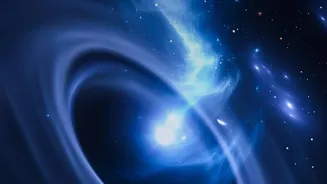
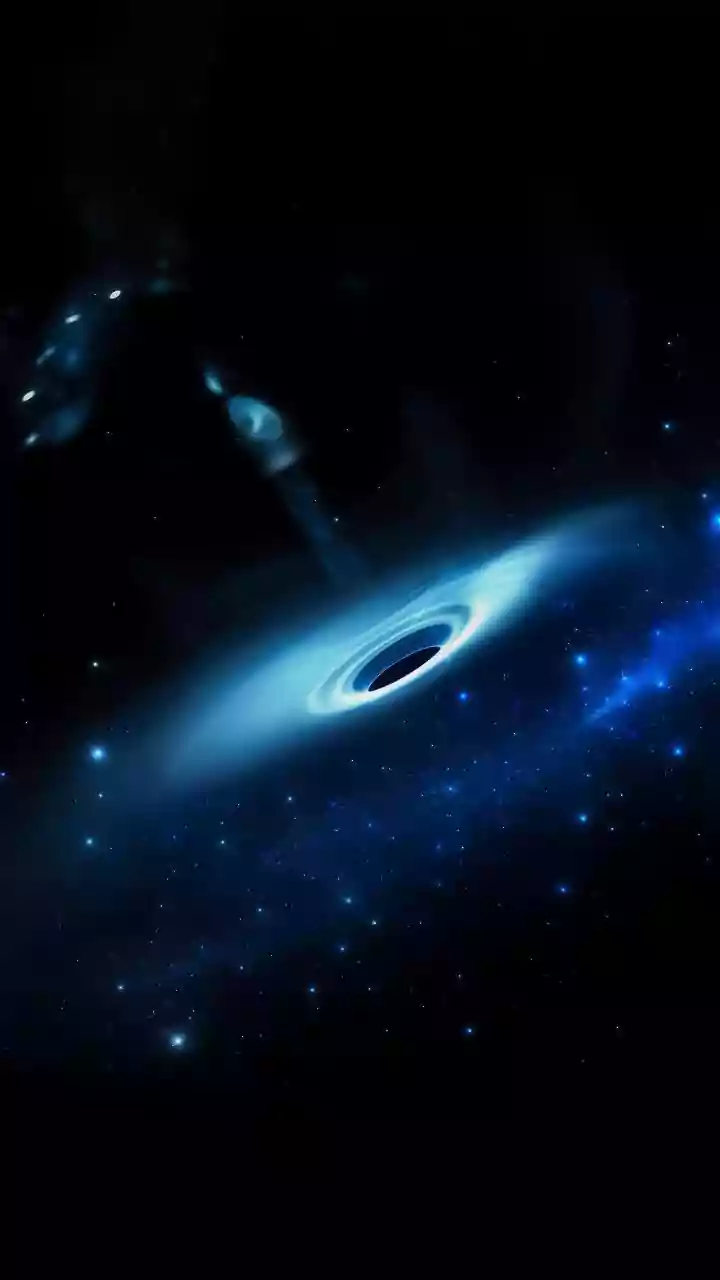
Imagine trying to understand what happens inside a sealed, soundproof room by only studying the faint vibrations it sends through the floor. This is the challenge astronomers face with black holes. These objects are so dense that not even light can escape
their gravitational pull, making them invisible to traditional telescopes. Scientists have long theorized that the extreme environments around them, especially the supermassive black holes at the centers of galaxies, act as powerful cosmic accelerators, flinging particles out across the universe at nearly the speed of light. For a century, the origin of these high-energy particles, known as cosmic rays, has been a major puzzle. Proving which cosmic engines were responsible required a new kind of detective work.
The Ghostly Messengers
The key clues are not particles of light, but elusive particles called neutrinos. Neutrinos are incredibly tiny, have almost no mass, and rarely interact with other matter. Billions of them pass through your body every second without you ever noticing. But this is also their superpower. Because they don't interact much, they travel in a straight line from their source, carrying unaltered information across billions of light-years. While photons (light) can be blocked by dust or bent by magnetic fields, neutrinos point directly back to their birthplace. If you could trace a high-energy neutrino, you could pinpoint a cosmic accelerator. The challenge, of course, is catching them.
A Telescope Made of Ice
To catch these 'ghost particles', scientists built one of the world's strangest telescopes: the IceCube Neutrino Observatory. Instead of using mirrors, it uses a cubic kilometre of pristine ice located deep beneath the South Pole. Thousands of sensors are suspended in this giant ice block, waiting for the rare instance when a high-energy neutrino collides with an atom in the ice. This collision produces a faint flash of blue light, which the sensors detect. By mapping the path of this light, scientists can reconstruct the direction the neutrino came from. For ten years, from 2008 to 2018, IceCube patiently listened for these faint signals from the cosmos, building up a map of the high-energy neutrino sky.
Connecting the Dots Across the Sky
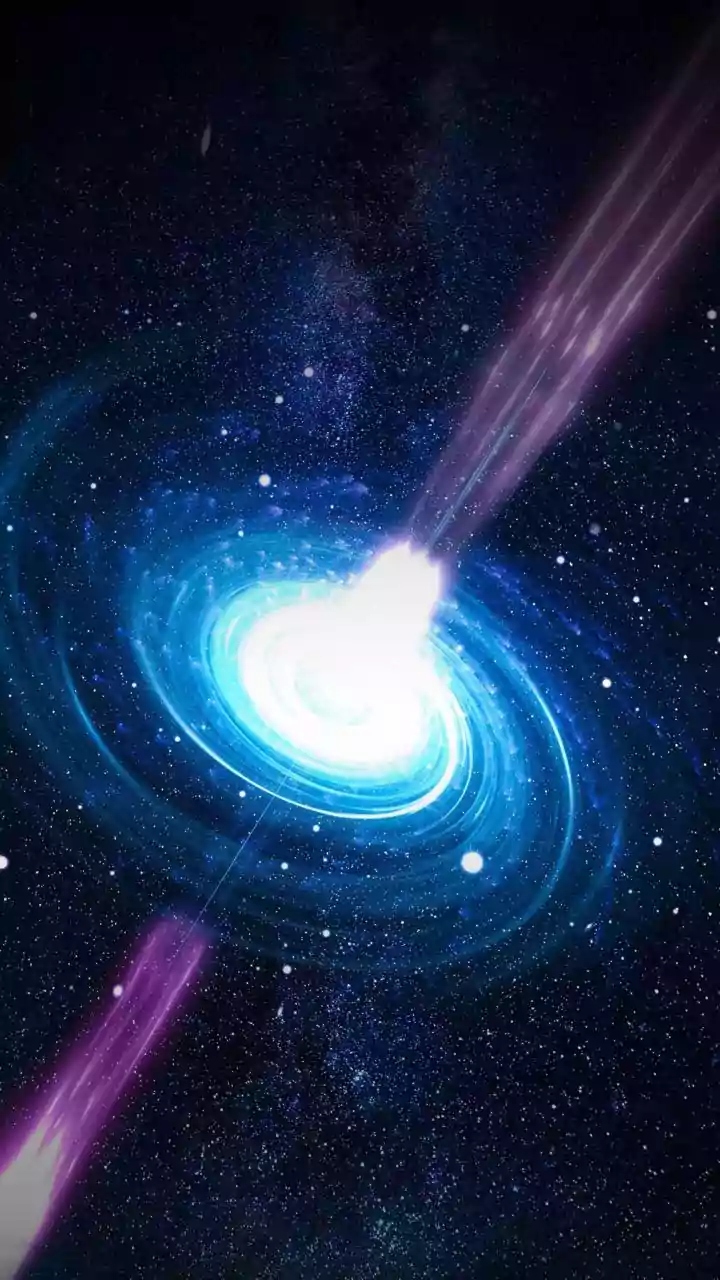
After a decade of data collection, the scientific collaboration behind IceCube had a catalogue of high-energy events. The next step was to see if these neutrino arrivals coincided with any known celestial objects. They cross-referenced their neutrino map with catalogues of powerful cosmic sources. The results pointed to a specific class of objects: blazars. A blazar is the brilliant core of a distant galaxy, where a supermassive black hole is actively feeding on surrounding gas and dust. This process shoots out a colossal jet of energy and particles aimed directly at Earth. The analysis showed a clear statistical link between the arrival of high-energy neutrinos and the locations of these blazars. It was the cosmic equivalent of finding a suspect's fingerprints at a crime scene.
A New Era of Astronomy
This discovery is a landmark achievement, providing the first solid evidence that blazars are a long-sought source of high-energy cosmic neutrinos. It helps solve a century-old mystery and confirms that the environments around supermassive black holes are indeed powerful enough to accelerate particles to incredible energies. More importantly, it marks a major step forward for 'multi-messenger astronomy' — the practice of studying the universe using different signals like light, gravitational waves, and now, neutrinos. By combining these different messengers, astronomers can get a much more complete and detailed picture of cosmic events. It's like adding sound to a silent movie; suddenly, the universe has a new voice, and it’s telling us the secrets of black holes.