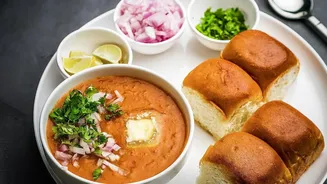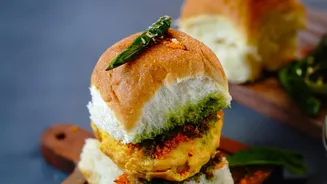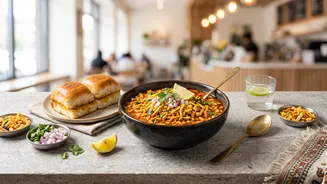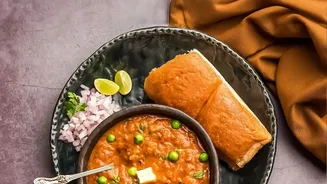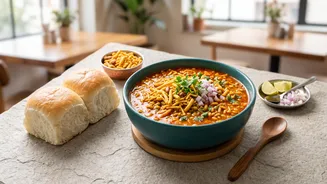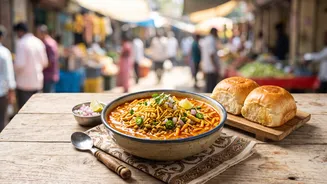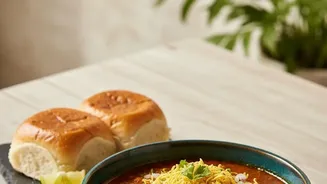


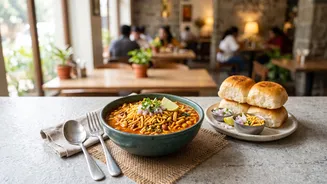
It's more than a dish; it’s an experience. A beloved Maharashtrian street food, Misal Pav is a complex explosion of textures and flavours, a perfect symphony of soft bread, crunchy toppings, wholesome sprouts, and a famously fiery gravy.
The Meaning in the Mix
At its heart,
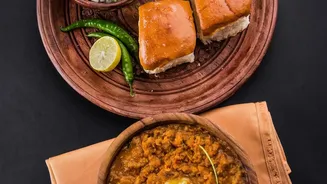
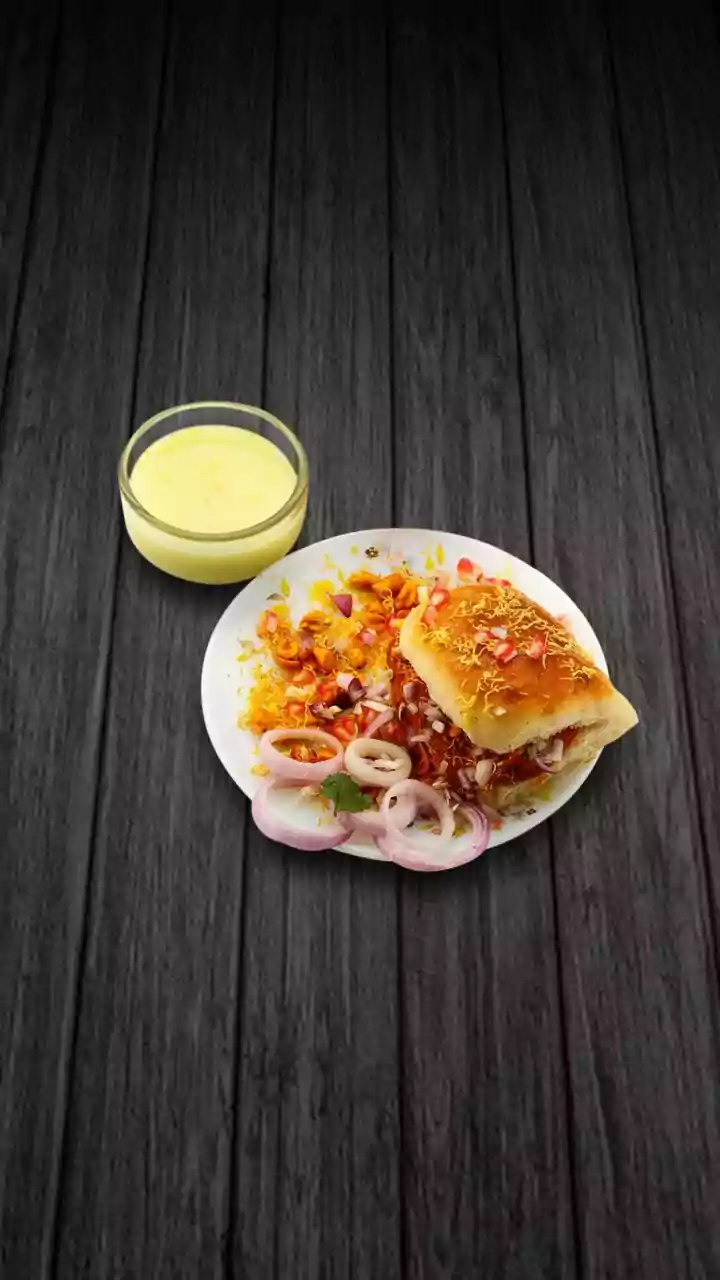
Misal Pav is a story of assembly. The word 'misal' itself means 'mixture' in Marathi, which perfectly captures the essence of this iconic dish. It's not a single curry but a layered creation, a vibrant medley that brings together different components to create something truly special. Traditionally a hearty and affordable meal for workers, it has since become a breakfast and snack-time superstar across Maharashtra and beyond. The dish consists of two main parts: a thick curry made from sprouted lentils, called 'usal', and a thin, spicy gravy known as 'kat' or 'rassa'. These are combined and then lavishly garnished before being served with soft bread rolls called pav.
The Foundation: Healthy Sprouted Pulses
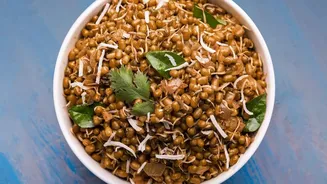
The foundation of any good misal is the 'usal', a wholesome curry typically made from sprouted moth beans, known as 'matki'. While matki is traditional, some variations use sprouted moong beans or a mix of different sprouts. The sprouts are cooked until tender but still holding their shape, often with a base of onion, ginger, garlic, and mild spices. This sprouted base provides a nutritious, protein-packed foundation and a pleasingly earthy flavour that grounds the entire dish. It’s this component that makes misal more than just an indulgence; it's a genuinely filling and robust meal.
The Soul: A Fiery Gravy
If the usal is the foundation, the 'kat' or 'rassa' is the soul. This is the thin, fiery gravy that gives misal its famous kick and deep, reddish colour. Often prepared separately to control the spice level, the kat is a flavour bomb made from a base of coconut, tomatoes, onions, and a potent blend of spices. The shimmering layer of red oil that floats on top, known as the 'tari' or 'tarri', is a hallmark of an authentic misal and is prized for its concentrated flavour. Diners often ask for more of this spicy gravy to pour over their bowl, customizing the heat to their liking.
The Toppings: A Symphony of Crunch and Freshness
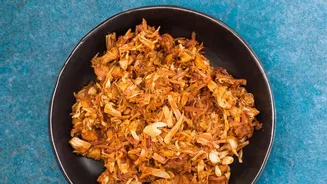
What truly elevates misal from a simple curry into a textural masterpiece is the generous heap of toppings. A layer of crunchy 'farsan'—a savory mix of fried snacks like sev (crispy chickpea flour noodles) and other namkeens—is essential. This adds a delightful crunch that contrasts with the soft sprouts and gravy. On top of the farsan comes a liberal sprinkling of finely chopped raw onions for a pungent bite, fresh coriander for an aromatic lift, and a wedge of lemon to be squeezed over everything, adding a crucial zing of acidity that cuts through the richness and spice.
A Tale of Many Cities: Regional Twists
Misal is not a monolith; it changes its character as it travels across Maharashtra. Kolhapuri Misal is legendary for its intense spiciness, using a special onion-garlic masala that sets it apart. In contrast, Puneri Misal is often milder, sometimes with a hint of sweetness, and might include poha (flattened rice) in its toppings. The Nashik version strikes a balance and is often served with a side of yogurt and fried papad, and its gravy can be made with a distinctive black masala (kala masala). Each regional variant tells a different story, reflecting the local palate and available ingredients.