






Stuck in a midday slump? That heavy-eyed feeling is a common struggle for desk workers. But before you reach for another coffee, research suggests a more effective, equipment-free solution might be just a few steps away: the office stairwell.
The Caffeine Comparison
Many people
rely on a cup of coffee or a caffeinated soda to power through the afternoon. While caffeine can certainly help, its effects may not be as potent as you think. A notable study from the University of Georgia looked at sleep-deprived young adults and compared the effects of a 50-milligram dose of caffeine (about the amount in a can of soda) to 10 minutes of low-to-moderate intensity stair walking. The results were clear: the group that walked the stairs reported feeling significantly more energised and vigorous immediately after the activity compared to those who had caffeine or a placebo. While the energy boost was temporary, it was a powerful demonstration that movement can be a more effective immediate fix for feelings of low energy than a small dose of caffeine. The stair-walking group also reported an increase in their motivation to work, an effect not seen with the caffeine.
Meet the 'Exercise Snack'
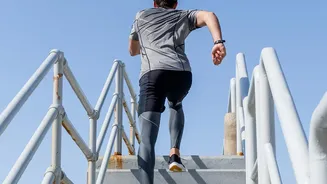
The concept behind these short bursts of activity is often called an 'exercise snack'. Unlike a full workout that requires a significant time commitment, special clothes, and a trip to the gym, an exercise snack involves just a few minutes of vigorous movement spread throughout the day. For sedentary office workers, this approach is both practical and sustainable. Research shows that breaking up long periods of sitting is crucial for health, and these mini-workouts are an ideal way to do it. Stair climbing is particularly effective because it's a vigorous activity that works against gravity, engaging major muscle groups in your legs and core and elevating your heart rate quickly. This makes it more efficient at boosting energy and burning calories than a similar amount of time spent walking on a flat surface.
Long-Term Health Gains
The benefits of regular stair climbing extend far beyond a temporary energy lift. These brief, intense sessions contribute to significant long-term health improvements. Studies have shown that incorporating stair-climbing 'snacks' can improve cardiorespiratory fitness, a key indicator of heart and lung health known as VO2 max. One study found participants improved their VO2 max by 5% and their peak power output by 12% after just six weeks of climbing a three-flight stairwell vigorously a few times a day. Other research suggests that climbing just five flights daily can reduce the risk of heart disease by 20%. By repeatedly interrupting sedentary time, you also support joint health, lower your resting heart rate, and can even see improvements in markers like cholesterol.
Making It a Habit
Integrating stair climbing into your workday doesn't have to be daunting. The key is to start small and build consistency. Don't feel you need to climb 20 floors on your first day. Begin with a single flight or two. You can try getting off the elevator a couple of floors early on your way up and taking the stairs the rest of the way. Anchor the new habit to an existing part of your routine, such as right after returning from lunch or during your usual afternoon coffee break. If you're concerned about your knees, take the elevator back down. As you get stronger, you can gradually increase the number of flights. Remember to wear stable, comfortable shoes and use the handrail for safety. The goal is to make it a repeatable, almost automatic part of your day, not a dreaded chore.