




The High Cost of the EV Revolution
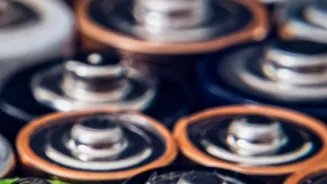
For years, the electric vehicle revolution has run on lithium. From smartphones to EVs, lithium-ion batteries have been the dominant technology, prized for their high energy density. But this dependency comes at a price. Lithium is not rare, but its extraction
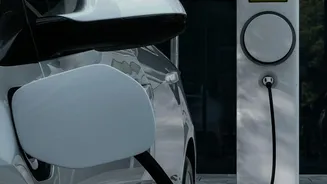
and processing are concentrated in a few countries, creating a fragile supply chain. Geopolitical tensions, mining disruptions, and soaring demand have led to price volatility and bottlenecks, making it difficult for manufacturers to bring down the cost of EVs — the single biggest barrier to mass adoption in India.
Meet Sodium-Ion: The Abundant Alternative
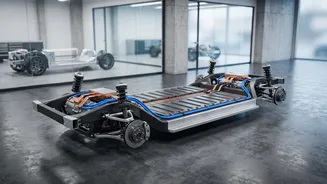
Enter the sodium-ion battery, a technology that swaps out costly and constrained materials for something incredibly common: sodium. Derived from common salt, sodium is one of the most abundant elements on Earth, readily available in India and across the globe. This fundamental difference strikes at the heart of the supply chain problem. Instead of relying on a complex global chain for lithium, cobalt, and nickel, sodium-ion batteries can be built using cheaper, more accessible materials like sodium and iron, drastically improving supply chain resilience.
Unpacking the Cost and Supply Chain Benefits
The business case for sodium-ion is compelling. Firstly, the raw materials are significantly cheaper. With sodium being abundant, its price is stable and low, unlike the fluctuating lithium market. Experts project that at scale, sodium-ion batteries could be 20-30% cheaper than their lithium-iron-phosphate (LFP) counterparts. Secondly, this technology allows for a more localized supply chain, a major advantage for India's 'Make in India' ambitions. By reducing dependence on imported minerals and processing, India can build a self-reliant EV ecosystem, insulated from global shocks.
Are They Good Enough for an EV?
The main trade-off has historically been energy density; sodium-ion batteries are typically heavier and larger than lithium-ion for the same amount of energy. However, recent breakthroughs have closed this gap significantly. Leading manufacturers like CATL have achieved energy densities that enable a range of over 400 km in current EV models, with 500-600 km ranges on the horizon as the technology matures. Furthermore, sodium-ion batteries have distinct advantages: they perform exceptionally well in extreme cold and heat, are non-flammable and safer, and can be fully discharged to zero volts for safer, cheaper transport.
The Road to Adoption in India
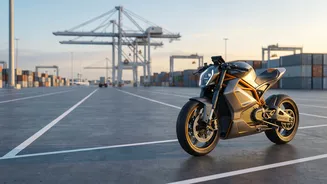
The transition is already beginning. Global giants like CATL are starting mass production, with costs expected to reach parity with LFP batteries by late 2026. In India, the potential is enormous. The technology is perfectly suited for the country’s dominant two- and three-wheeler segments and for affordable, compact city cars where a 300-400 km range is more than sufficient. Several Indian firms and research institutions, like Pune's Rechargion and Bengaluru's JNCASR, are actively developing indigenous sodium-ion technology, heralding a future where India is not just a consumer but a producer of this critical component.