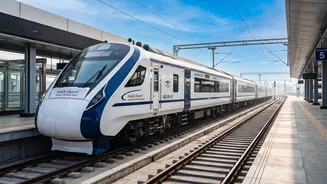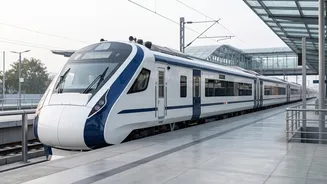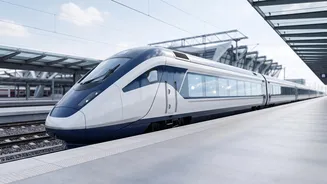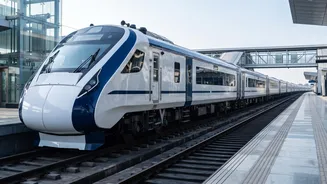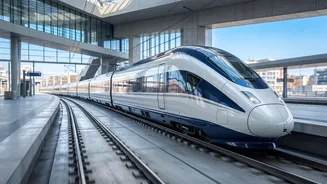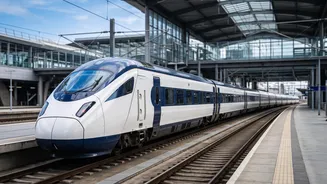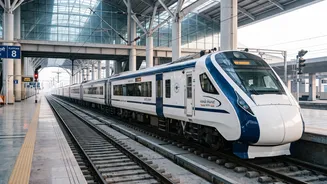








Indian Railways is on the cusp of another major evolution in overnight travel. Following the launch of the 16-coach Vande Bharat sleeper, it is now designing a larger, 24-coach variant to enhance long-distance services across the country.
A New Chapter in Overnight Travel
Indian Railways
is pushing forward with its ambitious modernization plan by developing designs for a new, expanded 24-coach Vande Bharat sleeper train. This move follows the introduction of the 16-coach sleeper variant and signals a focused effort to upgrade the nation's long-distance, overnight travel network. The Integral Coach Factory (ICF) in Chennai is spearheading this project, tasked with manufacturing an initial batch of 50 of these larger trainsets. Unlike the chair-car Vande Bharat trains designed for daytime journeys, these sleeper versions are built specifically for routes covering 800 to 1,200 kilometers, aiming to replace legacy trains on major trunk routes over time. The goal is to provide a faster, more comfortable, and safer alternative for millions of passengers who rely on overnight services.
What's New in the 24-Coach Design?
The primary enhancement of the new design is its increased capacity. By expanding from 16 to 24 coaches, these trains will be able to accommodate significantly more passengers, a crucial factor for India's high-demand rail corridors. A key addition to the 24-coach layout will be a dedicated pantry car, allowing for the preparation and service of hot meals onboard—a feature not present in the shorter sleeper models. The design also promises more bio-vacuum toilets to cater to the larger number of travelers. While the core Vande Bharat aesthetics and aerodynamic profile will be retained, the interiors are being re-evaluated to maximize passenger comfort, with ergonomically designed berths, better cushioning, and improved ambient lighting setting a new standard for sleeper travel.
The Path to Service: Design and Trials
Before these new trains can enter service, they must undergo a rigorous process of design finalization and mandatory trials. The ICF in Chennai is targeting a deadline of around November 10, 2026, to finalize the design of the 24-coach variant. Once the design is locked in, the first prototype is expected to be ready for trials by May or June 2027. These trials are critical for ensuring the train's safety, performance, and stability at operational speeds, which are expected to be around 160 kmph. This process involves extensive testing under the supervision of bodies like the Research Designs & Standards Organisation (RDSO) before receiving the final green light for commercial operations. The successful rollout depends on seamless coordination between the ICF and various equipment suppliers, including those providing braking systems, doors, and propulsion technology.
Upgrading the Passenger Experience
The Vande Bharat sleeper platform represents a significant leap in passenger amenities. Travelers can expect a host of modern features, including automatic doors, fully sealed wider gangways for easier movement between coaches, and advanced soundproofing for a quieter journey. Each berth will feature individual reading lights and charging ports. Safety is also a top priority, with the trains equipped with the indigenous KAVACH anti-collision system, CCTV cameras, and fire detection systems. The First AC coaches will offer premium comforts, such as hot water showers and switchable privacy glass on cabin doors, bringing a 'wow' factor to rail travel in India.
A Vision for a Modern Railway
The development of the 24-coach sleeper is part of a much larger strategic vision for Indian Railways. Over 200 Vande Bharat sleeper trains are planned in the coming years, with manufacturing distributed across multiple entities, including BEML and a joint venture between Rail Vikas Nigam Ltd and a Russian firm. This massive industrial expansion aims to not only enhance passenger experience but also increase network capacity and reduce journey times. While the 16-coach sleeper trains have already started operating on routes like Howrah–Kamakhya and are set for launch on the Delhi–Varanasi corridor, the upcoming 24–coach variant is poised to become the new workhorse for long–haul overnight travel, eventually succeeding iconic trains like the Rajdhani Express on key routes.