






Look Beyond the Front-of-Pack Promises
The front of a package is prime real estate for marketers. It’s where you’ll find alluring words like “natural,” “healthy,” “whole wheat,” or “no added sugar.” However, many of these terms are not legally regulated in India and can be misleading. The word “natural,” for instance,
can be used even if a product is highly processed. Similarly, a recent crackdown by the Food Safety and Standards Authority of India (FSSAI) flagged several brands for using the term “healthy” on products high in other undesirable ingredients. The real story is almost always on the back. So, your first rule should be to treat the front label as an advertisement and flip the pack for the facts.
The Ingredient List: Your Ultimate Truth-Teller
The ingredient list is your most powerful tool. By law, ingredients must be listed in descending order of weight. This means the first three to four ingredients make up the bulk of the product. If you see sugar, maida (refined flour), or palm oil at the top of the list, you know what you’re primarily consuming, regardless of the health claims on the front. Also, be aware of hidden sugars. Manufacturers often use multiple types of sweeteners to avoid listing “sugar” as the first ingredient. Look for words ending in “-ose” like dextrose, fructose, and maltose, as well as terms like corn syrup or cane juice. These are all forms of added sugar.
Mastering the Nutrition Facts Table
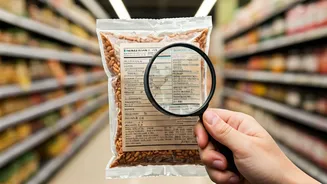
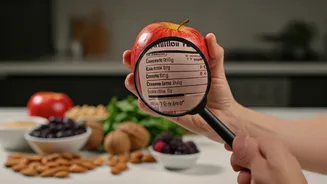
The nutrition table provides a standardized snapshot of the food's content, usually per 100g/100ml and per serving. Instead of getting overwhelmed, focus on a few key metrics. As a rule of thumb for healthier choices, look for lower numbers on saturated fat, trans fat, sodium, and total sugars. A high sodium content is particularly common in savoury snacks, with many products containing high levels. For sugars, anything below 5g per 100g is generally considered low. Conversely, look for higher numbers in protein and dietary fibre, which contribute to satiety and better health. Comparing the 'per 100g' column of similar products is the best way to make a truly informed choice.
Beware the 'Serving Size' Trap
This is one of the most common ways consumers are misled. A packet of chips or biscuits might display a surprisingly low calorie count, but this is often for a tiny serving size that nobody actually eats, like just three biscuits. Always check the serving size and then look at the total number of servings in the container. To understand your actual intake, you need to multiply the nutritional values (calories, sugar, fat) by the number of servings you consume. A packet you finish in one sitting might actually contain three or four servings, tripling or quadrupling the numbers you see on the label.
Decoding Logos and Certifications
Official logos are a quick way to verify certain claims. In India, every packaged food must have an FSSAI license number. The green dot signifies a vegetarian product, while the brown dot indicates non-vegetarian ingredients. For organic products, don't be fooled by just the word. Look for the official 'Jaivik Bharat' logo, which is a unified mark for legally certified organic food. A product can only be labelled 'organic' if at least 95% of its ingredients are certified organic. Terms like 'farm-fresh' or 'chemical-free' have no legal standing and are often just marketing fluff without this certification.