

The Quest for Lunar Water
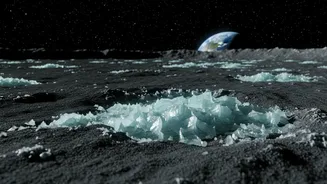
The discovery of water on the Moon, first hinted at by ISRO's Chandrayaan-1 mission, has ignited a new space race. This isn't just about finding water, but about unlocking the resources for humanity's future in space. Water can be used for drinking and growing
food for astronauts, but more importantly, it can be split into hydrogen and oxygen. This provides breathable air and, crucially, the components for rocket propellant. Turning the Moon into a refuelling station could drastically reduce the cost and complexity of missions to Mars and beyond. ISRO, following its historic Chandrayaan-3 landing, is now at the forefront of this next great leap. Recent data from the Chandrayaan-2 orbiter has further strengthened evidence of significant subsurface ice deposits.
Why the Dark Craters?
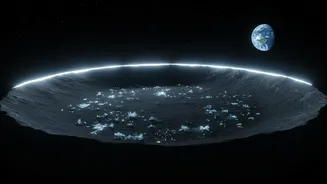
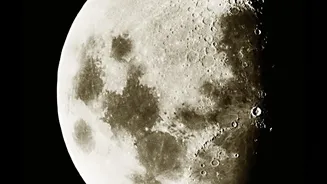
The prime real estate for lunar water is at the poles, inside what are known as Permanently Shadowed Regions (PSRs). Because of the Moon's slight tilt, the floors of some deep polar craters are never touched by direct sunlight. These areas are among the coldest places in our solar system, with temperatures plunging as low as -250° Celsius. This extreme cold acts as a perfect deep freeze, trapping water ice for potentially billions of years. Any water that found its way into these craters, perhaps from comets or asteroids, would be preserved. This makes PSRs the primary target for missions aiming to find and analyze lunar ice.
Mapping the Ice: LUPEX Mission
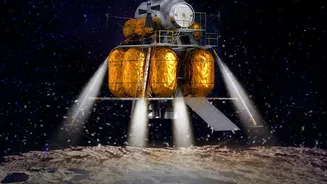
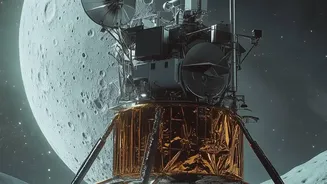
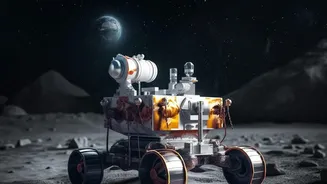
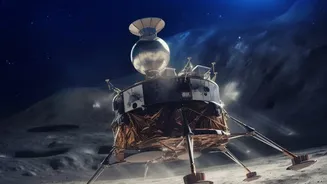
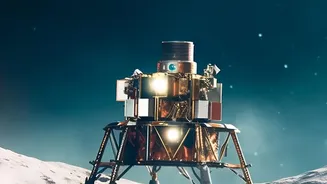
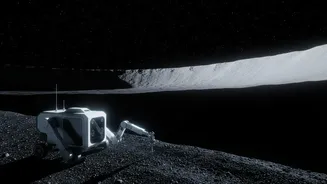
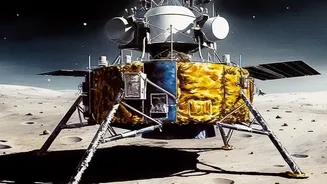
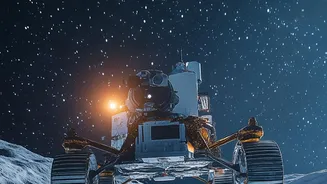
To find the ice, ISRO is collaborating with the Japan Aerospace Exploration Agency (JAXA) on the Lunar Polar Exploration Mission (LUPEX), sometimes referred to as Chandrayaan-5. This ambitious mission, planned for no earlier than 2028, will deploy a lander developed by ISRO and a sophisticated rover from JAXA. The rover will be packed with instruments designed to map the ice. An ISRO-provided Ground Penetrating Radar (GPR) will scan up to three meters beneath the surface to locate deposits. A Neutron Spectrometer from NASA will detect hydrogen, a key indicator of water, while other instruments analyze the lunar soil, known as regolith. The goal is to get a detailed 3D map of where the ice is and how much of it exists.
The Challenge of Extraction
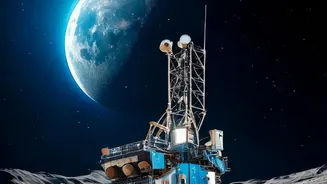
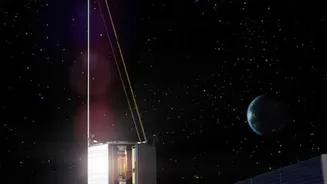
Finding the ice is just the first step; getting it out is a complex engineering challenge. The LUPEX rover will be equipped with a drill capable of penetrating 1.5 meters into the frozen regolith to collect samples. Once drilled, the icy soil needs to be heated. One leading concept is a thermal corer or drill that heats the regolith, causing the ice to sublimate—turn directly from a solid to a gas. This water vapour is then captured and condensed back into liquid water or ice in a cold trap. Several methods are being explored globally, from using microwave energy to heat the soil uniformly, to deploying large mirrors on crater rims to direct solar energy into the shadowed areas. The LUPEX mission will test these fundamental technologies by drilling and analyzing samples in-situ.
India's Future on the Moon
The LUPEX mission is more than just a scientific expedition; it is a critical step in establishing a sustainable human presence beyond Earth. By proving it can locate and utilize lunar resources, ISRO cements India's position as a major space power and a key partner in international efforts like the Artemis Accords. The technologies developed for LUPEX, from the heavy-lift lander to the resource-extraction payloads, will form the foundation for future missions. These could include robotic construction, permanent lunar habitats, and eventually, crewed missions. Mastering the ability to 'live off the land' on the Moon is the key to unlocking the rest of the solar system, and ISRO is helping to forge that key.