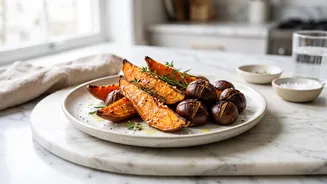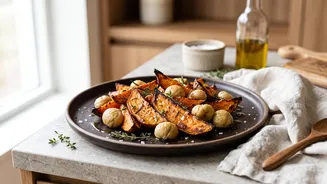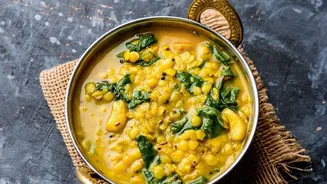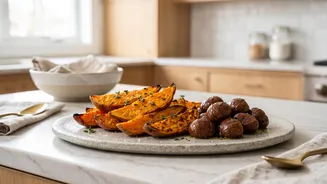



Sweet potatoes and chestnuts are beloved for their comforting, earthy flavours, but their textures can be worlds apart. Understanding their starchy nature is the key to unlocking their full potential in your kitchen, from silky soups to hearty stuffings.
The Science of Starchy Texture
In the culinary world, 'starchy' describes a texture that can range from light and fluffy to dense and creamy. This is largely determined by the ratio of two starch molecules: amylose and amylopectin. A higher proportion of amylose generally leads to a drier, fluffier, and more crumbly texture, like that of a baked russet potato. Foods with more amylopectin tend to become sticky, waxy, or creamy when cooked because this molecule is better at holding onto water. This simple difference explains why some ingredients mash into a smooth puree while others remain granular or 'mealy'.
The Sweet Potato's Dual Personality
Sweet potatoes are fascinating because their texture isn't one-size-fits-all; it varies dramatically by type. Orange-fleshed varieties like Garnet and Jewel have higher moisture content and more amylopectin, which is why they become soft, moist, and creamy when baked, making them ideal for mashes and pies. On the other hand, white or pale-yellow fleshed sweet potatoes, sometimes called 'chestnut-type' sweet potatoes, have a higher starch content with more amylose. This gives them a drier, fluffier, and denser texture that holds its shape well, much like an actual chestnut. These varieties are perfect for roasting into chunks or making fries.
The Chestnut's Floury Heart
Unlike most nuts, which are rich in fats, chestnuts are defined by their high starch content, behaving more like a grain or potato. They have significantly less water than a sweet potato and their starch creates a texture that is distinctly dense, floury, and sometimes crumbly once cooked. This unique composition allows chestnuts to serve many functions. They can be pureed into velvety soups, where they act as a natural thickener, or chopped into stuffings, where their firm but tender pieces add wonderful body and a subtly sweet, earthy flavour. Their low fat and high starch profile is what sets them apart from every other nut.
A Head-to_Head Comparison
When placed side_by_side, the textural differences are clear. For a smooth, creamy puree, an orange_fleshed sweet potato is the superior choice, lending moisture and a silky mouthfeel. A chestnut puree will be denser and more granular, though still delicious. For stuffings or dishes where you want distinct, tender pieces, chestnuts hold their form beautifully. While a firm, dry sweet potato can also work, chestnuts offer a unique, slightly crumbly bite that absorbs surrounding flavours without becoming mushy. Nutritionally, chestnuts are higher in carbohydrates and calories, while sweet potatoes offer a major dose of Vitamin A.
How Cooking Method Changes Everything
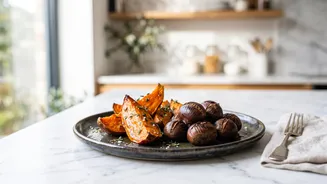
The way you cook these ingredients dramatically alters their final texture. Roasting concentrates the sugars in sweet potatoes, making them softer and more caramelised. Steaming or boiling orange_fleshed varieties results in a very soft, moist flesh perfect for purees. For chestnuts, boiling or steaming is an effective way to soften them for peeling and pureeing, creating a tender, creamy base. Roasting chestnuts, on the other hand, drives off more moisture, resulting in a firmer, drier texture with a concentrated nutty sweetness, which is why they are so popular as a simple snack.
When to Choose Which Ingredient
Your choice depends entirely on the texture you desire for your final dish. For a creamy, rich soup or a silky pie filling, reach for an orange_fleshed sweet potato. Its high moisture and amylopectin content will give you a luxuriously smooth result. If you need a hearty, crumbly element for a holiday stuffing or want to create a dense, flour_like base for baked goods or pasta, chestnuts are the perfect candidate. And for those times when you want a fluffy, roasted vegetable that holds its shape, a dry/pale_fleshed sweet potato variety offers the best of both worlds/providing a texture that lives up to its 'chestnut_like' name.