






The Old and Painful Question
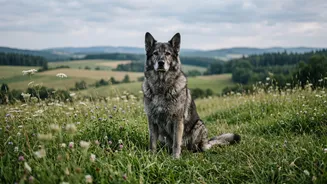
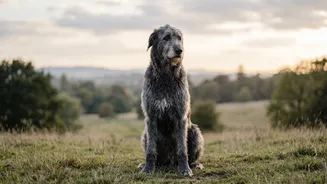
Why does a Great Dane or an Irish Wolfhound rarely see their tenth birthday, while a tiny Chihuahua can live for nearly two decades? It’s a question that has long puzzled veterinarians and dog owners alike. For years, the common assumption was that bigger
bodies simply endure more wear and tear. But recent research shows the answer is far more complex and is programmed at a deep biological level. This discrepancy contradicts the general rule in the animal kingdom, where larger species like elephants and whales typically outlive smaller ones like mice. The unique evolutionary path of dogs, shaped by humans, has created a fascinating and unfortunate exception.
A Tale of Two Aging Patterns
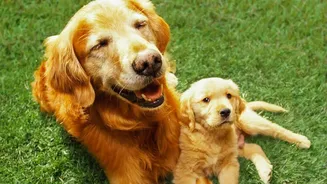
Recent studies, including major findings from the Dog Aging Project, have revealed that large dogs don't just get old; they age biologically faster. The key lies in the epigenome—a layer of chemical instructions that sits on top of DNA and tells genes when to switch on and off. As animals age, these instructions change in predictable ways, creating what scientists call an 'epigenetic clock'. Research published in the journal 'Science' found that the epigenetic clocks of large dog breeds tick at a much faster rate. In essence, a five-year-old Mastiff is biologically much older than a five-year-old Pomeranian, with its cells showing more signs of aging.
The Role of 'Jumping Genes'
A specific mechanism behind this accelerated aging involves something called 'jumping genes', or transposable elements. These are bits of DNA that can copy themselves and move to new locations in the genome, potentially causing damage and instability. The body uses a process called DNA methylation to keep these jumping genes in check. However, a recent study found that as dogs age, this methylation control weakens. In large breeds, the loss of this control is significantly faster—about 35% more per year than in small breeds. This loss of regulation, particularly for a jumping gene called LINE1, appears to be a major driver of the rapid aging seen in bigger dogs, contributing to a higher risk of diseases like cancer.
The Growth vs. Longevity Trade-Off
This accelerated aging is a direct consequence of selective breeding for size. Humans have pushed for bigger and bigger dogs, and in doing so, have inadvertently selected for genetic pathways that favour rapid growth at the expense of a long life. A key player in this is the insulin-like growth factor 1 (IGF-1) signalling pathway. High levels of IGF-1 are crucial for achieving large size during puppyhood, but these same high levels are linked to accelerated aging and a higher incidence of age-related diseases in adulthood. Small dogs, by contrast, tend to have lower levels of IGF-1, which is associated with a longer lifespan across many species, from flies to mice. Essentially, the biology of large dogs is locked in a trade-off: grow big quickly, but age just as fast.
What This Means for Big Dog Owners
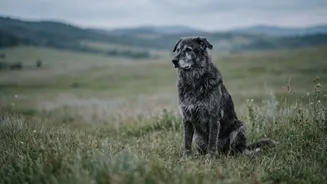
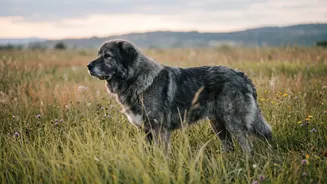
This research doesn't just solve a biological puzzle; it offers crucial guidance for owners of large and giant breeds. Knowing that these dogs are on an accelerated aging track means that proactive and vigilant healthcare is paramount. They are considered 'seniors' much earlier, often by age five or six, compared to nine or ten for small breeds. This calls for earlier screening for age-related conditions like cancer and arthritis, which are more common in larger dogs. While we can't change their genetics, understanding this biological pattern empowers owners to focus on providing the best possible quality of life, managing joint health, maintaining a healthy weight to reduce strain, and cherishing the time they have with their beloved companions.