

Creating a Roadmap for Lunar Resources
For decades, scientists have known that water likely exists on the Moon, but knowing it's there and knowing exactly where to find it are two different things. Previous missions offered tantalizing hints, detecting enhanced hydrogen concentrations in the polar
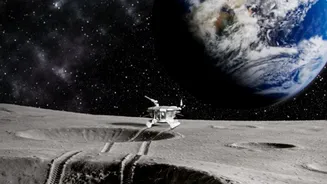
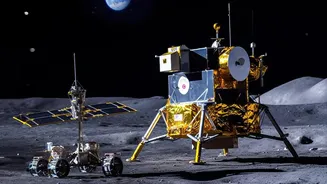
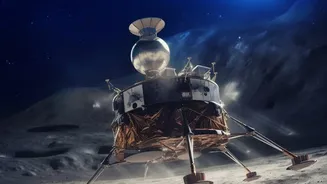
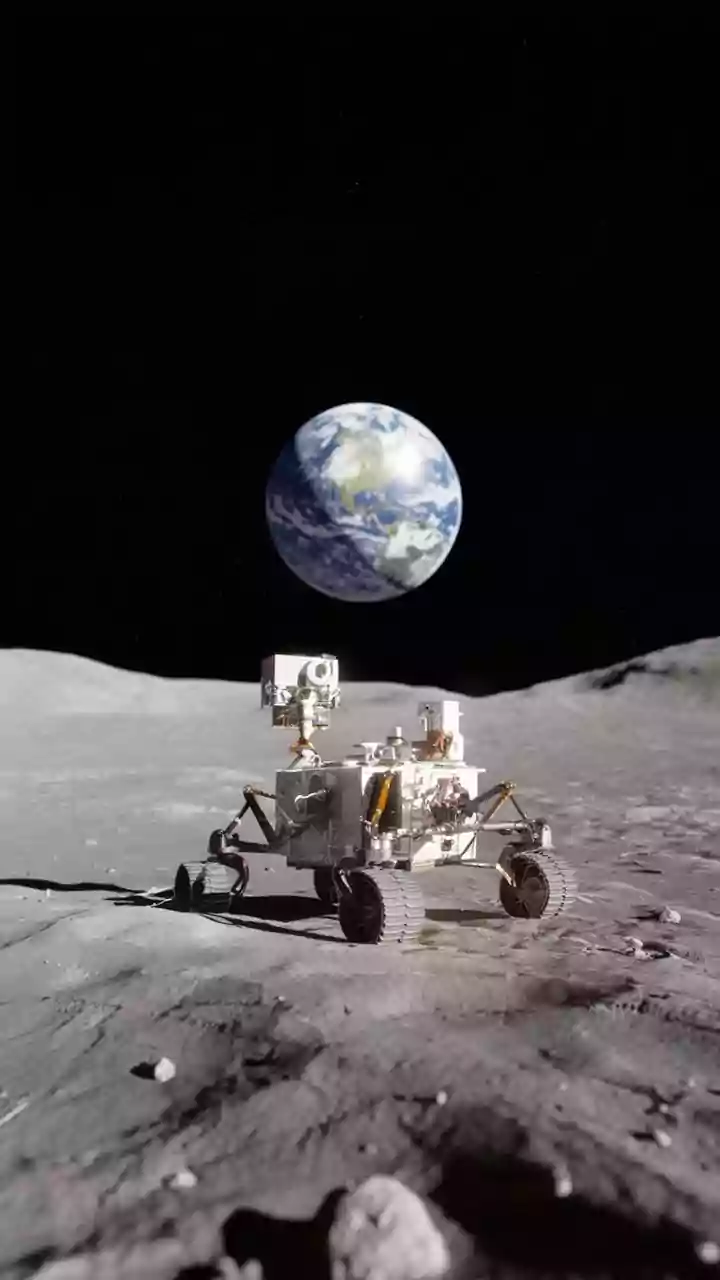
regions. However, these early maps were broad, lacking the detail needed for mission planning. The latest mapping efforts provide a much higher-resolution picture of where this ice is located. Think of it as the difference between knowing a city has treasure and having a detailed map with 'X' marking the spot. This new level of detail is crucial for planning future robotic and human missions, including those under NASA's Artemis program, as it helps identify the most promising locations for landing and resource extraction.
How to See Water Without Seeing It
So, how does a neutron spectrometer 'see' water buried beneath the lunar surface? It's a clever bit of indirect detection. The Moon's surface is constantly bombarded by high-energy cosmic rays from deep space. These rays smash into the lunar soil, or regolith, knocking particles called neutrons loose. These neutrons bounce around before escaping back into space. However, if they collide with a hydrogen atom—the 'H' in H₂O—they lose a significant amount of energy. A neutron spectrometer doesn't look for water directly; instead, it counts the neutrons escaping the surface and measures their energy. A dip in the number of medium-energy neutrons is a strong indicator that hydrogen is present below, pointing to deposits of water ice. This allows scientists to map potential water deposits down to a depth of about one meter without ever drilling.
The Moon's Deep-Freeze Reservoirs
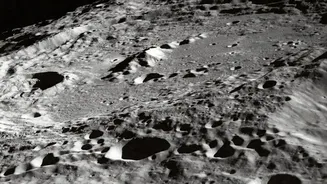
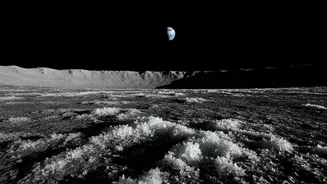
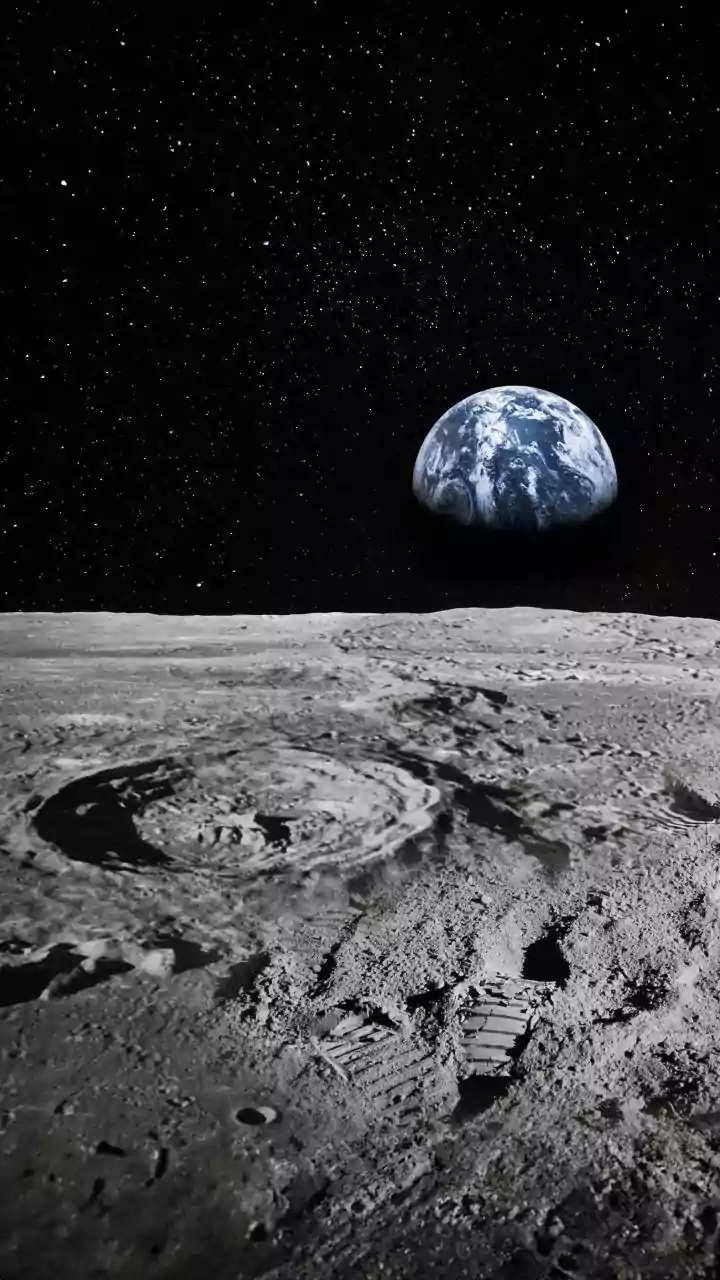
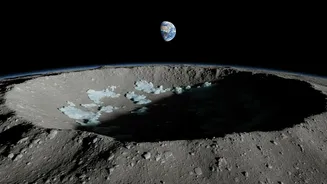
The prime real estate for this water ice is the Moon's south pole. This region is home to 'permanently shadowed craters,' which are some of the coldest places in our entire solar system. Because the Sun is always low on the horizon at the lunar poles, the floors of some deep craters have not seen direct sunlight for billions of years. This creates a perfect 'cold trap,' where any water delivered by comets or created by chemical processes becomes frozen solid and can remain stable for immense periods. These craters act as natural, deep-freeze reservoirs, preserving a resource that would otherwise be broken down by sunlight and lost to space. Confirming the exact form and quantity of this ice—whether it's mixed in with the soil or exists in purer layers—is the critical next step for missions on the ground.
Why Water Is the New Lunar Gold
Finding accessible water on the Moon is a game-changer because it enables 'in-situ resource utilization' (ISRU), a fancy term for living off the land. Launching materials from Earth is incredibly expensive, costing thousands of dollars per kilogram. If astronauts can source water locally, it unlocks a host of possibilities. The most obvious use is for drinking and life support. But its true value lies in its chemical components: hydrogen and oxygen. Using electrolysis, water can be split into breathable oxygen for a lunar habitat and hydrogen and oxygen to create powerful rocket fuel. This transforms the Moon from a barren destination into a vital refueling station for the solar system.
Fueling the Future of Deep Space Exploration
The ability to produce rocket fuel on the Moon dramatically reduces the cost and complexity of more ambitious missions. A rocket launching from the Moon to Mars needs far less energy than one fighting Earth's much stronger gravity. A lunar base, supported by local water resources, could serve as a logistical hub—a pit stop where spacecraft can top up their tanks before venturing into the outer solar system. This makes long-term missions, scientific outposts, and eventual human exploration of Mars far more feasible. A number of commercial companies are already developing technologies to extract and process lunar water, signaling a new economic frontier in space. This detailed map of water ice isn't just a scientific curiosity; it's a foundational blueprint for the future human and commercial economy in space.