

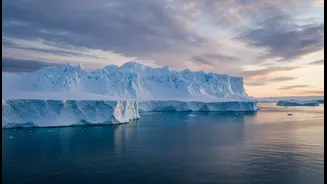



The Planet's Broken Air Conditioner
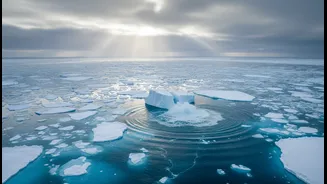
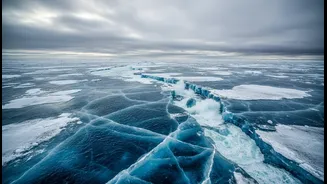
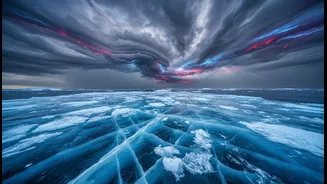
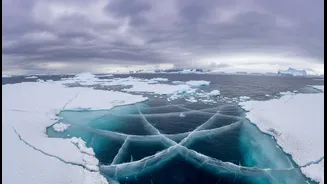
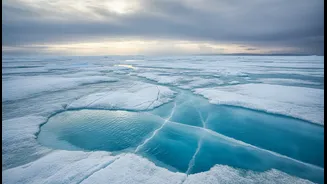
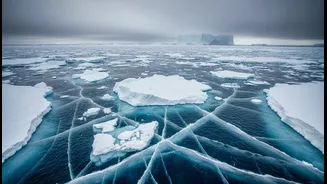
Think of the Arctic as Earth's giant, reflective shield. The vast white sheet of sea ice has a high albedo, meaning it reflects most of the sun's energy back into space, keeping the polar region—and by extension, the planet—cool. However, as global temperatures
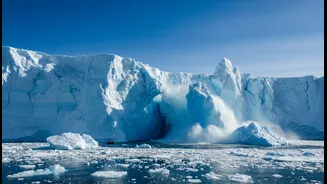
rise, this ice is vanishing at an alarming rate. We are losing Arctic sea ice at a rate of nearly 13% per decade. When the bright ice is replaced by dark ocean water, which has a very low albedo, more of the sun's heat is absorbed. This creates a dangerous feedback loop known as 'polar amplification': the warmer the ocean gets, the more ice it melts, and the more the ocean warms. As a result, the Arctic is heating up two to four times faster than the rest of the planet, fundamentally breaking a critical component of our global climate system.
A Wobbling River of Air
This intense warming at the pole doesn't stay in the Arctic. It disrupts the massive atmospheric currents that shape our weather. The most important of these is the polar jet stream, a high-altitude river of air that flows around the Northern Hemisphere. This current is driven by the temperature difference between the cold Arctic and the warm tropics. But as the Arctic warms rapidly, this temperature difference shrinks. A weaker temperature gradient leads to a slower, wavier, and more unpredictable jet stream. Instead of a stable, fast-flowing river, it begins to meander and 'wobble'. These wobbles can cause weather systems to get stuck in place for longer periods, leading to prolonged heatwaves, persistent cold snaps, and more intense bouts of rain far to the south.
The Monsoon Connection
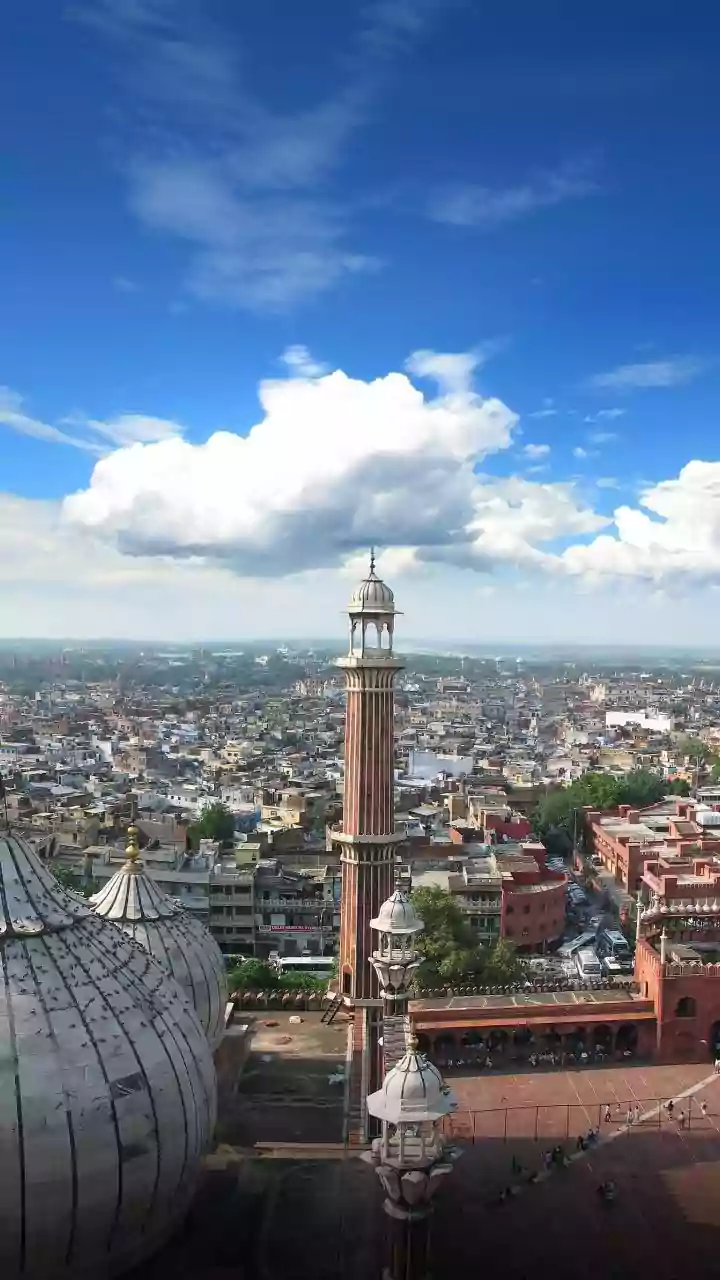
For India, these atmospheric disruptions are having a direct and profound impact on the single most important weather phenomenon: the summer monsoon. Research from leading Indian institutions like the National Centre for Polar and Ocean Research (NCPOR) has established a significant link. Studies show that a reduction in Arctic sea ice in the spring and early summer is connected to an increase in overall monsoon rainfall later in the season. But the impact is complex. The location of the ice loss matters. For example, melting in the Central Arctic tends to increase rainfall in central and north-eastern India, while melting in the Barents-Kara Sea can alter patterns differently.
More Intense, More Erratic Rainfall
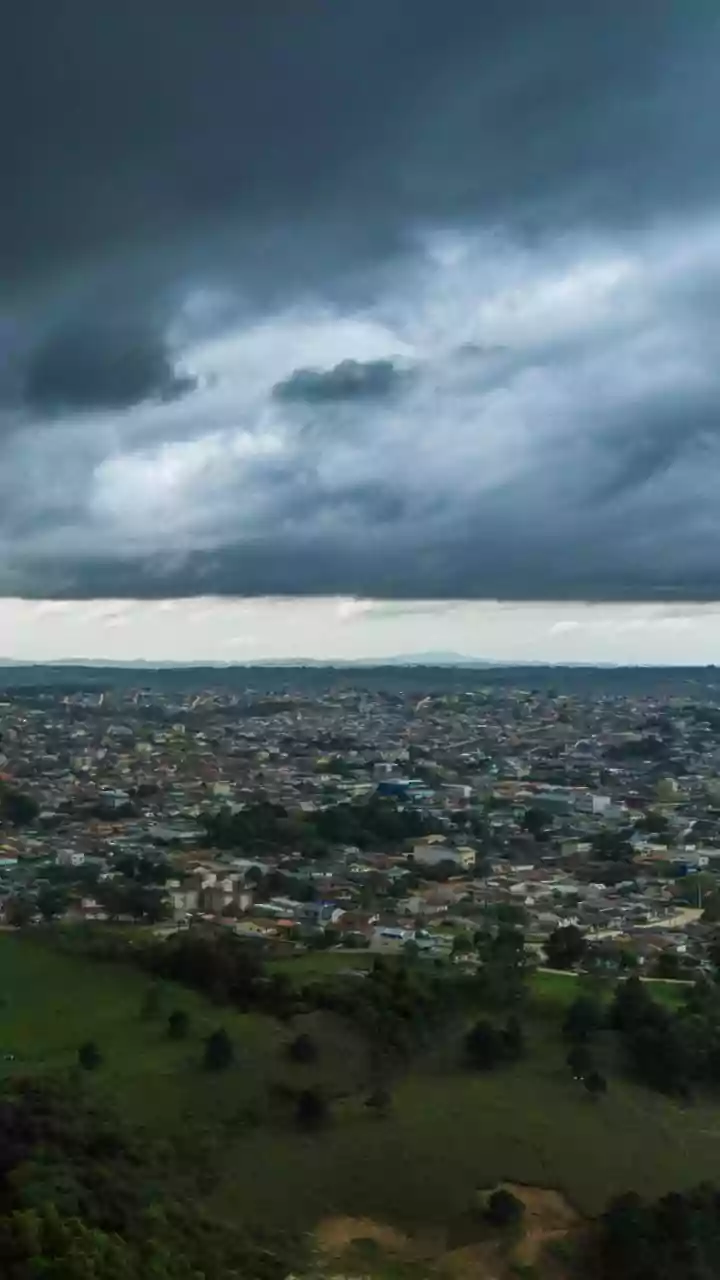
Beyond just the total amount of rain, the character of the monsoon is changing. Scientists have linked the decline in Arctic sea ice to a troubling increase in 'intense precipitation events' across South Asia. This means the rain, when it comes, is more likely to be extreme, increasing the risk of devastating floods similar to those seen in Kerala and Uttarakhand in recent years. Furthermore, researchers at the Indian Institute of Tropical Meteorology have observed that the heaviest late-season rains are drifting westward across the country. This westward shift, linked to early-summer ice melt thousands of kilometres away, alters long-established agricultural cycles and water management plans, creating new challenges for millions.
Bringing a Global Issue Home
Understanding this teleconnection—the link between the Arctic and our local weather—is crucial for reframing climate change in India. It ceases to be an abstract concept or a distant problem and becomes a tangible force affecting our water, our food security, and our economy. The erratic behaviour of the monsoon is not just a random fluctuation; it's a symptom of a planetary system under strain. When we discuss climate action, infrastructure planning, or disaster preparedness, the state of the Arctic is no longer a peripheral detail. It is a core part of the conversation about India's future, demonstrating that in our interconnected climate, what happens in a faraway sea of ice has very real consequences right here.