


Gaganyaan's Grand Ambition
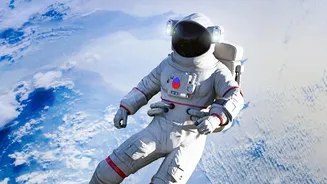
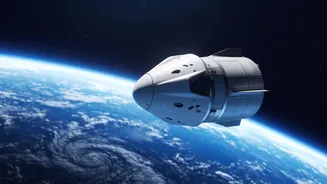
The Gaganyaan programme is India's historic mission to demonstrate human spaceflight capability. The goal is to launch a crew of three astronauts into a Low Earth Orbit of 400 kilometres for a three-day mission and bring them safely back to Earth, with
a splashdown in Indian sea waters. A successful mission would make India only the fourth country in the world—after the United States, Russia, and China—to independently send humans into space. Before any astronaut boards the spacecraft, ISRO is committed to a meticulous series of uncrewed test flights to validate every single component, from the launch vehicle to the crew's life support systems. The first of these crucial uncrewed missions, known as G1, is targeted for late 2026.
Testing for a Safe Return
One of the most critical phases of any human space mission is the return journey. To ensure the Gaganauts come home safely, ISRO has been conducting extensive Integrated Air-Drop Tests (IADT). These tests are designed to qualify the complex parachute system that will decelerate the Crew Module after its fiery re-entry through Earth's atmosphere. In a recent test, a simulated Crew Module weighing 5.7 tonnes—the same weight as the real one—was lifted by an Indian Air Force Chinook helicopter and dropped from an altitude of about 3 kilometres. A precise sequence of ten parachutes of four different types was then deployed to slow the module down for a gentle and safe splashdown. These tests validate the structural integrity of the parachutes under maximum load conditions, giving ISRO confidence in the system's reliability.
Simulating Every Scenario
When human lives are at stake, there is no room for error. ISRO's philosophy is to test for every possible contingency. This involves more than just parachute tests. The agency has successfully completed qualification tests for several other critical systems. One is the Crew Module Up-righting System (CMUS). After splashing down in the ocean, the capsule might not land perfectly upright. The CMUS uses a system of flotation bags, inflated with cold gas, to automatically return the module to the correct orientation, ensuring the astronauts are safe and stable while they await recovery. Another test validated the mechanism that separates the Crew Module from the Service Module before re-entry, ensuring a clean break without any damage. A third test confirmed the module's structure could withstand the force of the apex cover being jettisoned, which is necessary to deploy the life-saving parachutes.
The Human Element
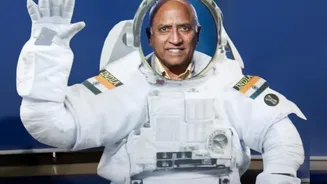
While machines and systems undergo thousands of ground tests, the human element is also central to the mission's preparation. The four astronaut-designates—all decorated Indian Air Force pilots—are deeply involved in the mission's development. Group Captain Angad Pratap, one of the selected astronauts, has spoken about their active role in designing the human-machine interface, contributing their operational expertise to the capsule's architecture. This collaboration ensures that the spacecraft is not just technically sound but also practical and intuitive for the crew who will operate it. The astronauts are undergoing continuous training, preparing for the physical and mental rigours of spaceflight. Their patience and deep involvement reflect the mission's safety-first culture.
The Road Ahead
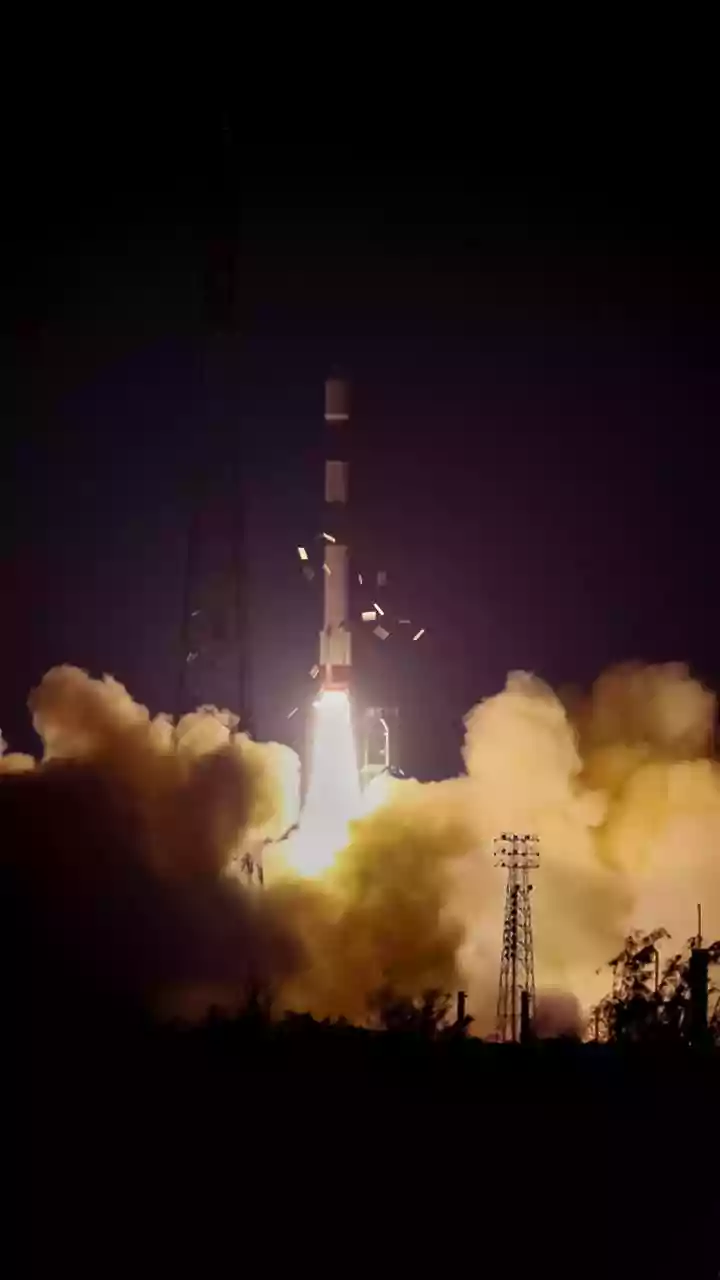
With many ground and air-drop tests successfully completed, ISRO is methodically moving towards the first major flight milestone: the G1 uncrewed mission. This flight, expected by the end of 2026, will carry Vyommitra, a sophisticated humanoid robot, to simulate human functions and test the life-support systems in space. Following G1, at least two more uncrewed missions are planned to thoroughly vet every aspect of the mission profile. Only after ISRO is completely satisfied with the performance and safety of the entire system will it proceed with the first crewed mission, H1, which is targeted for 2027. Each successful test is another confident step, bringing India closer to its monumental goal of becoming a human spacefaring nation.