

Venus at Its Brightest
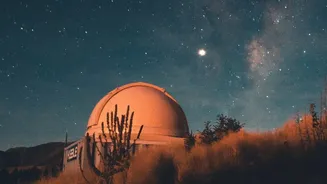
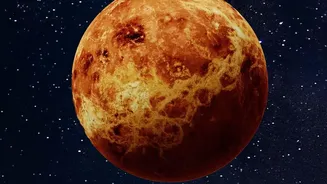
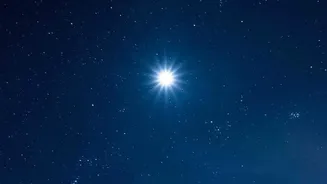
The planet Venus will be a showstopper throughout September, appearing as a brilliant 'evening star' in the western sky shortly after sunset. It reaches its peak brightness for the year around September 18-22, shining at a dazzling magnitude of -4.8.
This is so bright that it will be easily visible even from light-polluted cities. For a special treat, look to the west on the evening of September 14, when a slender crescent moon will appear strikingly close to Venus, creating a beautiful pairing for about an hour after sunset before they both dip below the horizon. This event does not require any special equipment; just find a clear view of the western horizon as twilight deepens. Though Venus will appear as a crescent through a telescope, its immense brightness is due to its relative closeness to Earth during this phase of its orbit.
The Autumnal Equinox Arrives
Mark your calendars for the official start of autumn in the Northern Hemisphere. The autumnal equinox will occur on Tuesday, September 22. This astronomical event marks the moment the Sun crosses the celestial equator from north to south. On the equinox, day and night are of nearly equal length across the globe, a balance that has been celebrated by cultures for centuries. In India, this time of year is associated with various festivals that celebrate the harvest and the change of seasons. While it’s not a visual event you can watch in the sky, the equinox signifies a tangible shift. After this date, the nights will grow progressively longer than the days, leading us toward the winter solstice. It’s a perfect time to reflect on the changing seasons and enjoy the cooler evening air.
The Famous Harvest Moon
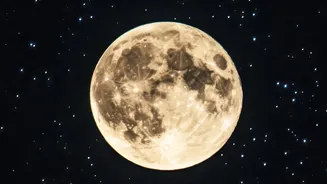
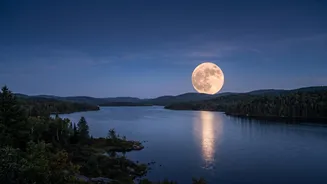
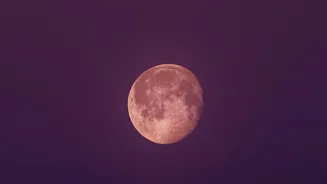
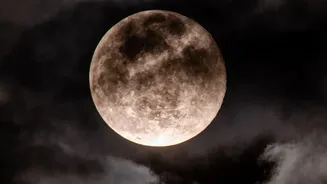
September’s full moon is the renowned Harvest Moon, which will reach its peak illumination on Saturday, September 26. This full moon gets its name because it’s the one that falls closest to the autumnal equinox. What makes the Harvest Moon special is that for several consecutive evenings around the full moon date, the moonrise occurs very close to sunset. This phenomenon historically provided farmers with extra hours of bright moonlight to bring in their crops. Look for the moon to rise in the east around sunset, appearing as a large, golden-orange orb. This stunning colour is due to its light filtering through more of Earth's atmosphere when it's low on the horizon. On the nights of September 26 and 27, you’ll also spot the planet Saturn shining brightly near the moon, adding another point of interest to your viewing.
More Planetary and Lunar Sights
Beyond the headline events, September offers more opportunities for skygazers. The new moon on September 11-12 will provide the darkest skies of the month, ideal for stargazing. This is one of the last chances in 2026 to get a clear view of the Milky Way’s core from the Northern Hemisphere before it disappears until next spring. Early risers can catch some beautiful planetary alignments in the pre-dawn sky. On September 6 and 7, the crescent moon will be near Mars in the eastern sky. Just a day later, on September 8, the moon will appear exceptionally close to the brilliant planet Jupiter before sunrise. Saturn will be visible for most of the night throughout the month, rising in the east shortly after sunset.