
The Sun's Inevitable End
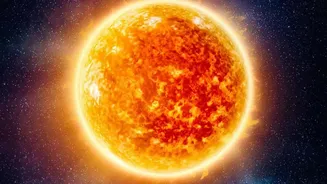
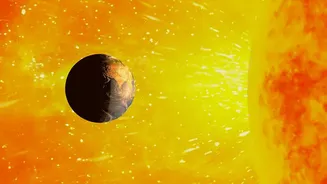
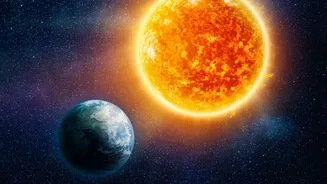
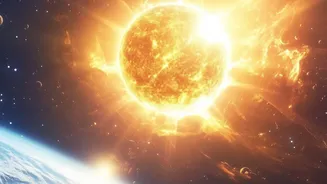
Every star has a life cycle, and our Sun is no exception. Currently in its stable middle age, it will eventually exhaust the hydrogen fuel in its core. When this happens, in roughly five billion years, it will begin a dramatic transformation. First, it will swell
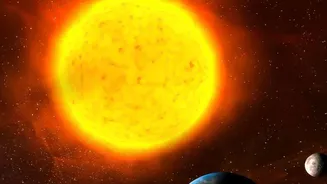
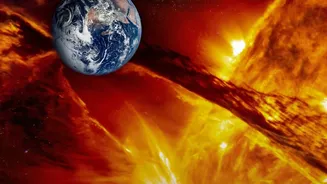
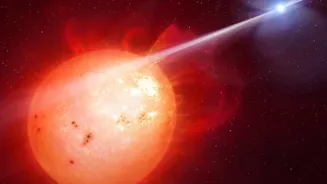
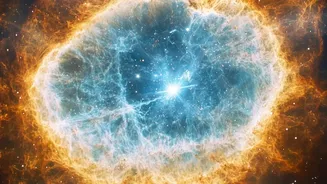
into a red giant, its outer layers expanding hundreds of times to a size that will engulf the inner planets. Mercury and Venus are certain to be consumed, and Earth's fate hangs in the balance, though it will be rendered uninhabitable regardless. After this catastrophic expansion, the Sun will shed its outer layers, leaving behind a hot, dense, Earth-sized core known as a white dwarf. This stellar remnant is the final stage for stars like our Sun, a glowing ember that will slowly cool over trillions of years.
A New Solar System Architecture
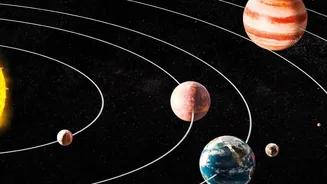
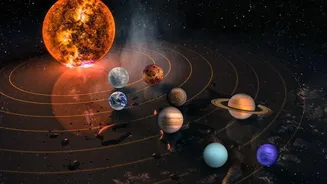
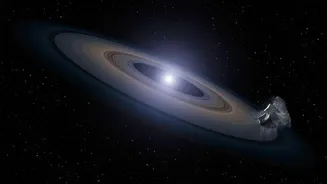
The Sun’s death will fundamentally re-engineer our cosmic neighbourhood. As it becomes a white dwarf, the Sun will lose roughly half of its total mass. Since the Sun's gravity is what keeps the planets in their orbits, this mass loss will cause the surviving planets to drift further away. Studies have confirmed that planets orbiting at a sufficient distance, like our gas giants, can survive this process. Scientists gain these insights by looking for clues in other star systems. By observing planets that have already survived their star's death, astronomers can build models for our own future. Discoveries of Jupiter-like planets orbiting distant white dwarfs provide a real-world analogue for what our own system may one day become.
Jupiter and Saturn's Fiery Future
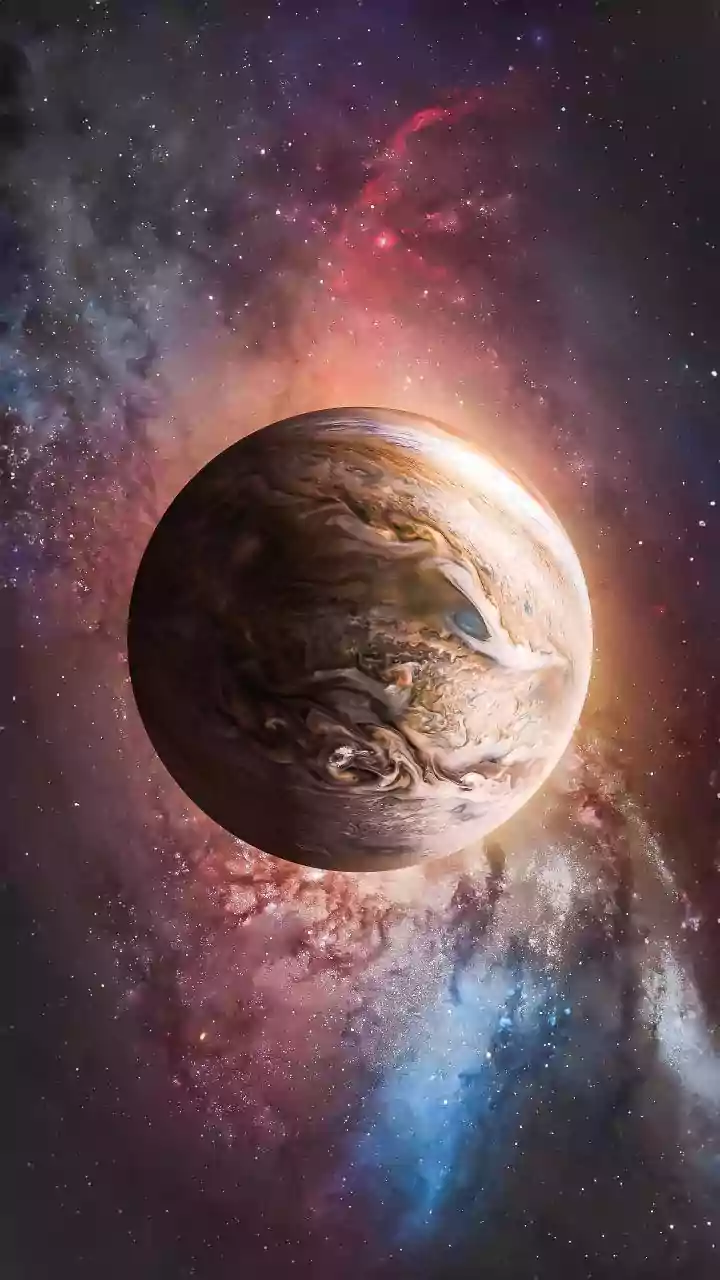
While Jupiter and Saturn are far enough away to avoid being swallowed by the red giant Sun, they won't escape unscathed. During the Sun's expansion, the intense heat will blast the giant planets. Saturn's iconic rings, made almost entirely of water ice, will vaporise. The frozen moons orbiting both Jupiter and Saturn, like Europa and Enceladus, will likely have their icy shells melted away, potentially creating temporary liquid water oceans. Even after the Sun shrinks into a white dwarf, the drama isn't over. The initial temperature of the white dwarf will be incredibly high, continuing to irradiate the giants and strip away their atmospheres. The entire system will be profoundly and permanently altered.
A More Chaotic and Shorter Endgame
For a long time, astronomers believed that after the Sun became a white dwarf, the new, wider orbits of the giant planets would be stable for an extraordinarily long time—perhaps for billions of billions of years. However, recent studies and more complex simulations are painting a much more chaotic picture. New models suggest that the Sun won't lose mass in a smooth, gentle process. Instead, it will happen through violent, random ejections. These ejections will act like 'stochastic kicks', nudging and perturbing the orbits of the surviving planets. This gravitational instability means the outer solar system could fall into disarray much faster than previously thought. Instead of trillions of years, the system could destabilise within just one billion years after the Sun becomes a white dwarf, a cosmic blink of an eye in comparison.
A Glimpse From Afar
Much of what we know comes from being cosmic detectives. Astronomers use powerful tools like the James Webb Space Telescope to find and study planets around existing white dwarfs. They look for 'polluted' white dwarfs, whose atmospheres contain heavy elements that should have sunk into the star's core long ago. The presence of elements like calcium, iron, or even more exotic ones like niobium, is strong evidence that the dead star is actively consuming the debris from its former planetary system—asteroids, moons, or even entire planets that have been gravitationally disturbed and torn apart. Each of these distant, ghostly systems serves as a forensic clue, helping us reconstruct the long-term forecast for our own corner of the galaxy.