






What is a Caretaker Government?
In many democracies, a caretaker government is a temporary administration that runs the country during an election period or when a government loses a confidence vote, before a new one is formed. In Israel, this is also known as a transitional government.
According to Israel’s Basic Law: The Government, an outgoing administration continues to perform all its functions until a new government is officially constituted. The primary goal is to prevent a 'governance vacuum', ensuring the state is never without a functioning executive branch. This means that, legally, a caretaker government holds the same powers as a regular, fully mandated one. The term 'caretaker' itself does not even appear in Israeli law, highlighting its full continuity of power.
The Unwritten Rule of Restraint
While the law doesn't formally limit a caretaker government, a powerful convention known as the 'principle of restraint' applies. This principle, largely established and enforced by Israel's Supreme Court, dictates that a transitional government should avoid making major, irreversible decisions that could bind its successor. This includes long-term policy shifts, significant budget allocations, or appointing senior officials like judges. The court subjects a caretaker government's decisions to a stricter standard of 'reasonableness' than a regular government's. This creates a fundamental tension: the government has the full legal authority to act, but it is expected to show self-control due to its diminished democratic mandate after an election or collapse of a coalition.
Powers Over National Security and War
The area where a caretaker prime minister retains the most significant authority is national security. The principle of restraint is less restrictive when it comes to urgent security needs. An Israeli caretaker government can legally launch a major military operation. For instance, Prime Minister Netanyahu was in a caretaker capacity when Israel launched Operation Guardian of the Walls in 2021. While the prime minister cannot unilaterally declare war—that requires a cabinet decision—he retains full command over the military and intelligence services like Shin Bet. This gives a caretaker leader immense power to respond to threats or even initiate significant military action if it's deemed a pressing necessity.
Limits on Domestic and Political Power
Domestically, the limitations are more pronounced. A caretaker government is generally barred from making major appointments to senior civil service or judicial positions. While the prime minister can still dismiss and appoint ministers without Knesset approval under certain circumstances to prevent a ministry from being vacant, these powers are interpreted narrowly by the courts. Furthermore, while the government remains in place, the newly elected Knesset can begin introducing and passing legislation, creating an unusual dynamic where the executive and legislative branches may be at odds. This prevents a caretaker prime minister like Netanyahu from passing laws that could, for example, affect his ongoing corruption trial.
Why This Role Is So Controversial
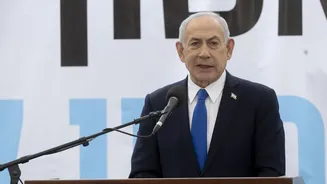
The ambiguity between vast legal power and the convention of restraint makes the caretaker period a source of constant political friction in Israel. Critics often accuse incumbent leaders of using the caretaker role for political gain, such as making voter-friendly economic decisions before an election or using security issues to rally support. Benjamin Netanyahu, having served as caretaker prime minister multiple times during Israel's recent years of political deadlock, has often seen his decisions challenged in court. This ongoing debate highlights a central question in Israeli democracy: how to balance the need for continuous governance with the principle that a leader without a fresh, clear mandate should not make nation-altering decisions.