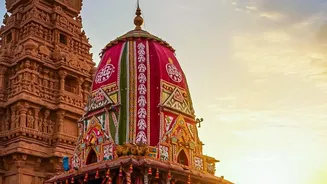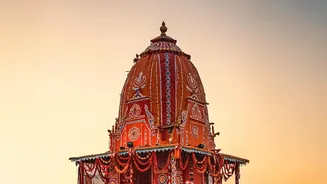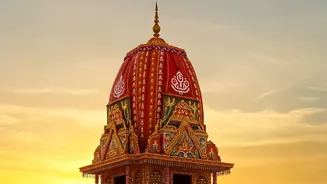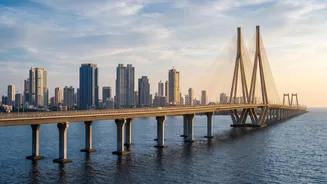


Mathura: The Spiritual Epicentre
To experience Janmashtami in Mathura is to walk directly into the heart of devotion. As the birthplace of Lord Krishna, the entire Braj region, including nearby Vrindavan and Gokul, is steeped in a spiritual aura that intensifies exponentially during
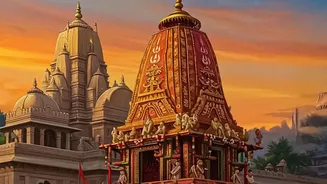
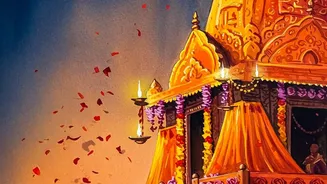
the festival. The celebrations here are not just an event; they are a deep, personal pilgrimage for millions. The atmosphere is overwhelmingly devotional, with the air filled with the sounds of temple bells, conch shells, and continuous chanting of bhajans and kirtans. The focus is on temple-centric rituals, many of which begin days in advance. Festivities include Jhulanotsav, where deities are placed on decorated swings, and vibrant Jhankis (tableaux) depicting scenes from Krishna's life line the streets. The entire region, from the main Krishna Janmabhoomi Mandir to the countless smaller temples, is adorned with flowers and lights, creating a divine spectacle.
The Main Event: A Midnight Birth
The climax of Mathura's celebration is the midnight Abhishek, a sacred bathing ceremony of the infant Krishna idol at the precise moment of his birth. At the Shri Krishna Janmabhoomi Temple, the idol in the Garbha Griha (sanctum sanctorum) is bathed in milk, curd, honey, and ghee. This ritual is followed by the offering of 'Chappan Bhog' (56 food items) and a grand aarti that fills the air with an unparalleled spiritual energy. The experience is deeply moving and communal, as thousands of devotees, who often fast throughout the day, stay awake to witness the divine birth and welcome their beloved deity. The day after, Nandotsav is celebrated to commemorate Nanda Baba's joy, with sweets and gifts distributed, continuing the festive spirit.
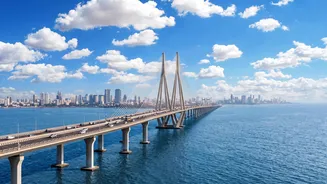
Mumbai: The Urban Spectacle
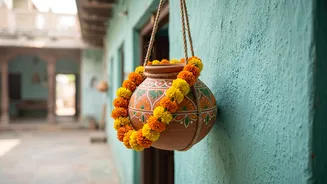
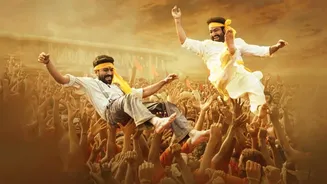
While Mathura offers spiritual immersion, Mumbai presents a high-octane, community-driven spectacle. Here, Janmashtami is almost synonymous with Dahi Handi, a thrilling event that commemorates Krishna’s mischievous childhood antics of stealing butter. Across the city, especially in areas like Dadar, Thane, and Ghatkopar, clay pots filled with curd, butter, and money are strung high above the streets. Teams of young men, known as 'Govindas', travel across the city in trucks, forming multi-layered human pyramids to reach and break the pot. The atmosphere is electric, fueled by cheering crowds, loud music, and a palpable sense of competition, as teams vie for bragging rights and often substantial prize money.
The Main Event: Human Pyramids and Unity
The Dahi Handi is more than just a competition; it's a powerful display of teamwork, strategy, and perseverance. These Govinda pathaks (teams) practice for weeks to perfect their formations, which can reach staggering heights of up to nine tiers. The event turns entire neighbourhoods into festival grounds, with locals and visitors gathering to watch the action. Women and residents often throw water on the pyramids to make the task more challenging, adding to the playful chaos. While rooted in a religious story, the Mumbai celebration is a cultural festival that celebrates unity, physical prowess, and an unshakeable community spirit.
Which Experience Matches Your Style?
Your choice between Mathura and Mumbai depends entirely on what you seek from the festival. For the Spiritual Pilgrim: Mathura is your undeniable destination. If your goal is deep spiritual immersion, witnessing ancient rituals, and connecting with the origins of the faith, the Braj region is unparalleled. The experience is about prayer, devotion, and being part of a timeless tradition. For the Adventure and Spectacle Seeker: Mumbai’s Dahi Handi is the perfect fit. If you are drawn to energy, excitement, and a large-scale public festival with a competitive edge, the adrenaline of watching the Govindas is an unforgettable experience. For the Family Traveller: Mathura and the surrounding towns like Gokul offer a more controlled, though crowded, environment focused on cultural and religious storytelling, which can be wonderful for all ages. While Mumbai's main Dahi Handi events can be intense, many smaller, neighbourhood-level celebrations offer a family-friendly glimpse into the tradition. For the Culture Photographer: Both cities are a visual feast. Mathura offers poignant scenes of devotion, decorated temples, and colourful rituals. Mumbai provides dynamic action shots of human pyramids, jubilant crowds, and raw urban energy.