







The Myth of the Lone Genius
Our culture loves the idea of the lone genius—an Einstein or a Newton whose singular intellect changes the world. While these figures are rightly celebrated, this narrative often overshadows a more common truth: discovery is frequently a product of passion,
persistence, and being in the right place at the right time. Formal training is a powerful tool, but it isn't the only path to insight. The real engines of discovery are often curiosity and careful observation, qualities available to anyone, regardless of their background or education. The stories of people who made monumental contributions without official credentials remind us that expertise can be built on the ground, not just in the classroom.
The Fossil Hunter of Lyme Regis
Consider Mary Anning, born in 1799 to a poor family in Dorset, England. To help support her family, she began collecting and selling fossils found in the seaside cliffs. She had no formal scientific education. Yet, through years of dedicated searching, she developed an unparalleled eye for spotting important specimens. Anning discovered the first correctly identified ichthyosaur skeleton, the first complete plesiosaur skeletons, and the first pterosaur skeleton found outside of Germany. Her findings were fundamental to the nascent science of palaeontology, providing key evidence for extinction and the idea of an ancient world. Though the male-dominated scientific establishment of her time often failed to credit her, her work undeniably changed our understanding of Earth's history.
The Monk in the Garden
In the 19th century, an Augustinian friar named Gregor Mendel lived in an abbey in what is now the Czech Republic. He wasn't a university professor or a famous researcher. He was a monk with a deep curiosity about the natural world. In his monastery's garden, he began a series of meticulous experiments, carefully cross-breeding pea plants and documenting their traits over generations. Through this patient work, he uncovered the fundamental laws of inheritance, observing how traits like colour and height were passed down. His findings, published in 1866, were largely ignored for decades. But they were eventually rediscovered and became the very foundation of modern genetics.
The Musician Who Saw a New World
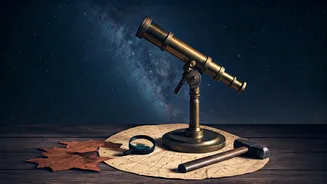
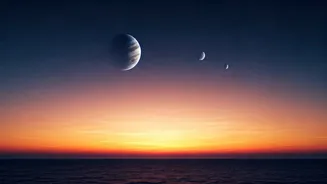
In 1781, a German-born musician living in Bath, England, was pursuing his hobby: astronomy. William Herschel was not a professional scientist; he earned his living as an organist and composer. But his passion for the stars drove him to build his own powerful telescopes, far superior to many used by official astronomers. One night, while systematically surveying the sky from his backyard, he noticed an object that didn't behave like a star. After careful observation, he concluded it was a planet. He had discovered Uranus, the first planet found since antiquity. His amateur passion had literally expanded the known boundaries of our solar system, and he was eventually appointed Court Astronomer.
The Modern Citizen Scientist
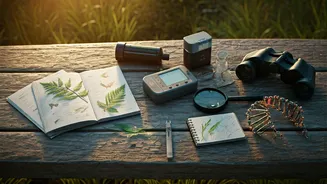
This phenomenon is not just a relic of the past. Today, the spirit of Anning and Herschel lives on in the global movement of 'citizen science.' Technology has empowered millions of ordinary people to contribute to cutting-edge research. Online platforms like Zooniverse allow volunteers to help scientists by classifying distant galaxies, identifying wildlife in camera trap photos, or transcribing historical weather records. In India, birdwatchers contribute invaluable data to platforms like eBird, helping track population trends and migration patterns that inform conservation efforts. From spotting new species of insects in a local park to monitoring water quality in a neighbourhood stream, the opportunities for everyday individuals to participate in the grand project of discovery are more accessible than ever.