






What Are AI Skin Scanners?
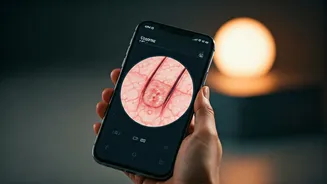
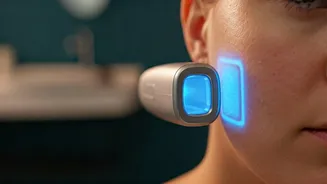
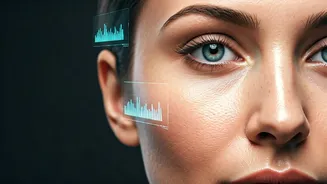
AI skin scanners are applications and devices that use artificial intelligence to analyse images of your skin. You simply take a photo of a mole, rash, or your entire face, and the app’s algorithm gets to work. It compares your photo to a massive database
of labelled images of various skin conditions. These tools can assess a range of concerns, from cosmetic issues like wrinkles, pore size, and hydration levels to more serious medical conditions like acne, psoriasis, and potentially suspicious moles. The primary appeal is clear: they offer a quick, accessible, and low-cost way to get preliminary information about your skin without having to book a doctor's appointment.
The Science Behind the Selfie
The technology behind these scanners is a form of AI called computer vision, which is powered by machine learning models. Developers train these models on millions of images of skin conditions that have been diagnosed and labelled by dermatologists. By analysing this vast dataset, the AI learns to recognise the visual patterns, colours, textures, and border irregularities associated with different conditions. Modern systems use advanced architectures like vision transformers, which are more powerful than older models and can offer more robust performance across different lighting conditions and skin tones. The AI isn't 'diagnosing' in the human sense; it's performing a sophisticated pattern-matching exercise to classify what it sees in your photo.
The Promise: Early Detection and Accessibility
The main benefit of AI skin scanners is their potential to promote early detection. For many people, especially in a country like India with a limited number of specialised dermatologists, getting a quick check-up isn't always easy. These apps can act as a first line of defence, flagging a suspicious spot that might have otherwise been ignored and prompting a user to seek a professional opinion. Some studies have shown that in controlled settings, the best AI algorithms can detect certain skin cancers with an accuracy comparable to, or even exceeding, that of non-specialist doctors. For tracking chronic conditions like eczema or acne, these tools can provide objective data to monitor whether a treatment is working over time.
Hype vs. Reality: How Accurate Are They?
This is the crucial question. While lab results can be impressive, with some top-tier platforms claiming overall accuracy rates above 94%, real-world performance is a different story. The accuracy of a scan you take on your phone can be affected by many factors: the quality of your camera, the lighting in your room, the angle of the photo, and even the presence of pen marks on the skin. Furthermore, a significant problem is dataset bias. Many AI models have been trained predominantly on images of lighter skin tones, which means their accuracy can drop significantly for people with darker skin. A 2025 study in Hyderabad, India, found that while apps showed moderate accuracy for conditions like acne, their performance was inconsistent and biased toward lighter skin tones.
The Risks: False Security and Unnecessary Anxiety
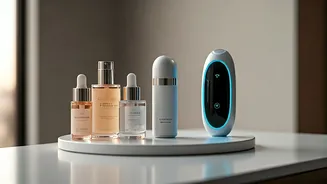
The limitations lead to two major risks. The first is a false negative, or false reassurance. An app might incorrectly label a potentially dangerous lesion as 'low risk', causing a user to delay seeking essential medical treatment. The second is a false positive, where a harmless spot is flagged as 'high risk', leading to unnecessary anxiety, stress, and healthcare costs. Some dermatologists also warn that many cosmetic-focused apps are simply funnels designed to sell you specific skincare products, regardless of whether they are right for you. There are also data privacy concerns to consider, as you are uploading sensitive health images to an app.
The Dermatologist's Verdict
The consensus among medical professionals is clear: AI skin scanners are not a substitute for a board-certified dermatologist. Dermatologists use more than just visual information; they consider your medical history, lifestyle, and can perform a physical examination and, if needed, a biopsy—something an app can't do. Most experts view these apps as potentially useful tools for raising skin health awareness and for screening, but not for diagnosis. They can help you document changes over time and arrive at an appointment better informed, but the final word should always come from a human expert. As one dermatologist put it, they simply "aren't 'there' yet."