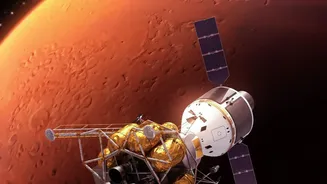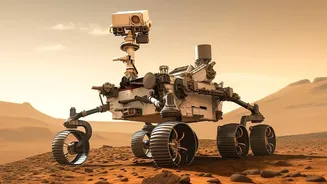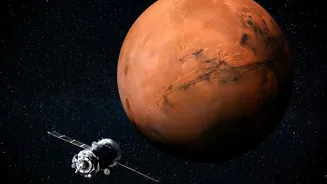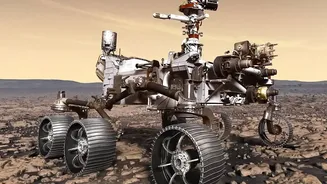





Bringing rocks from Mars to Earth is one of the most ambitious projects in space exploration history. But with soaring costs and slipping timelines, NASA is hitting the reset button, launching a fresh round of planning to save the landmark mission.
A Prize of Historic Proportions
For
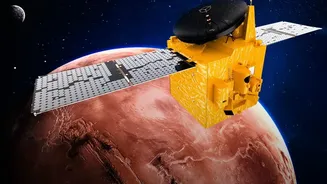
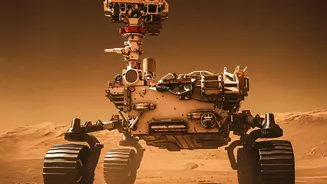
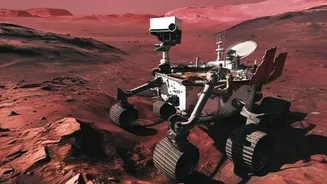
decades, scientists have dreamed of analysing pristine samples of Martian rock and soil in laboratories on Earth. The Mars Sample Return (MSR) mission was designed to be the crowning achievement of this quest. The first phase is already a success: NASA's Perseverance rover has been drilling into the floor of Jezero Crater since 2021, sealing cigar-sized cores of rock into ultra-clean titanium tubes. Scientists chose Jezero because it was once a river delta and lake, an environment that might have harboured microbial life billions of years ago. Examining these samples on Earth, with state-of-the-art equipment far too large to send to Mars, could revolutionise our understanding of planet formation, the history of water in our solar system, and—most tantalizingly—whether life ever existed beyond Earth.
An 'Unrealistic' and Costly Plan
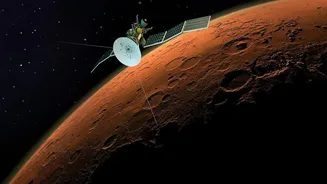
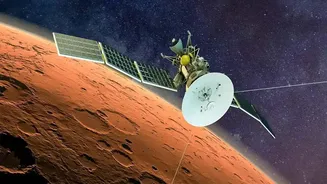
The original plan for retrieving the samples was a marvel of complexity. It involved a second lander, a small fetch rover, and a 'Mars Ascent Vehicle' (MAV) to launch the sample container into orbit. From there, a European Space Agency (ESA) orbiter would capture the container and fly it back to Earth. However, an independent review board in 2023 delivered a sobering verdict, calling the plan's budget and schedule 'unrealistic'. The estimated cost had ballooned to as much as $11 billion, and the return date had slipped to 2040, a timeline NASA Administrator Bill Nelson called 'unacceptable'. The review found that the project was underfunded from the start and faced immense technical challenges, prompting Congress and the White House to effectively end support for the existing mission architecture in early 2026.
NASA's New Blueprint for Success
Faced with a flagship mission in crisis, NASA has gone back to the drawing board. In early November 2026, the agency announced a new initiative called the Perseverance Sample Retrieval Architecture, or PSRA. This new effort essentially scraps the previous blueprint and opens the floor for a complete rethink. A dedicated team will be formed in January 2027 with the goal of developing 'impartial recommendations' for a faster, cheaper, and lower-risk way to get the samples home. The team's mandate is to review all previous lessons, evaluate current technologies, and explore different acquisition options before delivering a final report in the winter of 2027-2028. The goal is to find a path that is sustainable within a more constrained budget environment.
Exploring All Options, Including Commercial Partners
This fresh round of planning is casting a wide net for ideas. Well before the formal PSRA was announced, NASA had already begun soliciting proposals from the private aerospace industry to find more innovative approaches. Companies like Lockheed Martin and SpaceX were among those selected to conduct short studies on alternative mission designs. The proposals range from using proven NASA technology in a more streamlined way to leveraging next-generation commercial vehicles like SpaceX's Starship. While no decision has been made, the clear message from NASA is that a more simplified and cost-effective mission is the only way forward. The previous high-end estimate of $11 billion is off the table, with the agency now aiming for a target somewhere in the $5 billion to $7 billion range. The hope is to bring the samples to Earth by 2035, if not sooner.
A Race Against Time and Rising Competition
The pressure on NASA to succeed is not just financial. The scientific community considers this mission its highest planetary science priority. Furthermore, there is an element of international competition. China is moving forward with its own ambitious Mars sample return mission, Tianwen-3, which aims to launch around 2028 and return samples by 2031. This has been described by some as a potential 'Sputnik moment', adding a geopolitical urgency to NASA's efforts. A successful and timely mission would reaffirm NASA's leadership in planetary exploration, while prolonged delays could damage its reputation and cede ground to international rivals. The stakes extend beyond a single mission; they concern America's preeminence in deep-space exploration for the decades to come.