

A Faint Speck in the Darkness
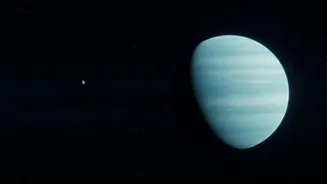
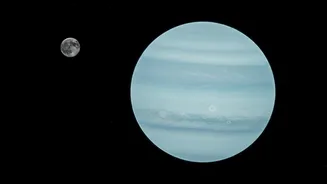
In late 2023, using the powerful Magellan telescopes in Chile, astronomer Scott S. Sheppard detected an incredibly faint object near Uranus. Confirmed and announced in early 2024, the satellite, provisionally named S/2023 U1, is a milestone discovery.
It is the first new moon found around the planet in over two decades and is likely the smallest in its family, measuring a mere 8 kilometres in diameter. Spotting such a minuscule object from billions of kilometres away required special image-processing techniques to filter it from the background light of distant stars. This tiny moon takes a long, looping path around Uranus, completing one orbit every 680 Earth days. Its discovery brings the planet's total known moon count to 28.
Cosmic Fossils from a Bygone Era
So, why does finding one more tiny moon matter? Scientists believe that S/2023 U1, like many of Uranus's outer satellites, is a captured object. This means it didn't form alongside the planet but was instead snared by Uranus's immense gravity billions of years ago. These captured moons are essentially pristine relics from the early solar system. Unlike planets and larger moons, which have been geologically active and have had their original compositions altered by heat and pressure, these small bodies are like cosmic fossils. By studying their composition and orbital characteristics, scientists can piece together a picture of the materials that were present in the solar system’s infancy, offering a direct window into the building blocks of planets.
Unlocking the Secrets of a Tilted Giant
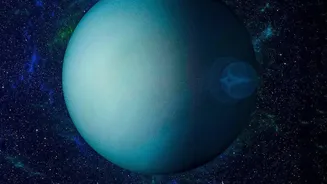
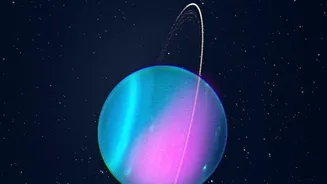
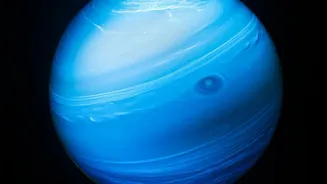
Uranus is the oddball of the solar system, tilted on its side by roughly 98 degrees. The leading theory for this extreme tilt is a cataclysmic collision with an Earth-sized object early in its history. The orbits of its moons hold the key to understanding this violent past. The discovery of S/2023 U1 adds another gravitational player to this complex system. Its distant, eccentric, and inclined orbit can help refine models of how the Uranian system settled after such a monumental impact. The gravitational pull of this new moon, however slight, influences the entire system, and by precisely tracking its path, scientists can learn more about the distribution of mass within Uranus itself and the forces that shaped the orbits of its other moons.
The Shepherds of the Rings
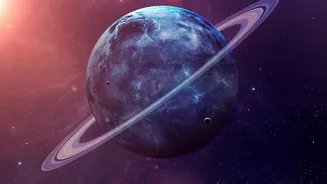
Uranus possesses a set of thin, dark rings that are starkly different from Saturn's broad, bright ones. These delicate structures would dissipate over time if not for the gravitational influence of 'shepherd moons'. These small satellites orbit near the rings, and their gravity acts like a containment field, keeping the ring particles in a narrow, defined path. Moons like Cordelia and Ophelia are known to shepherd Uranus's bright epsilon ring. While S/2023 U1 is too distant to directly shepherd the main rings, its discovery reinforces the idea that a whole population of small, unseen moons likely exists within the Uranian system, each playing a role in the complex dance that maintains its faint rings. Astronomers suspect more moons are waiting to be found closer to the planet, acting as shepherds for other rings.
Paving the Way for Future Exploration
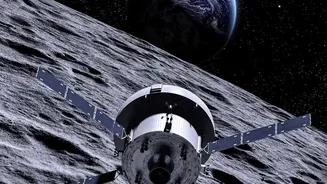
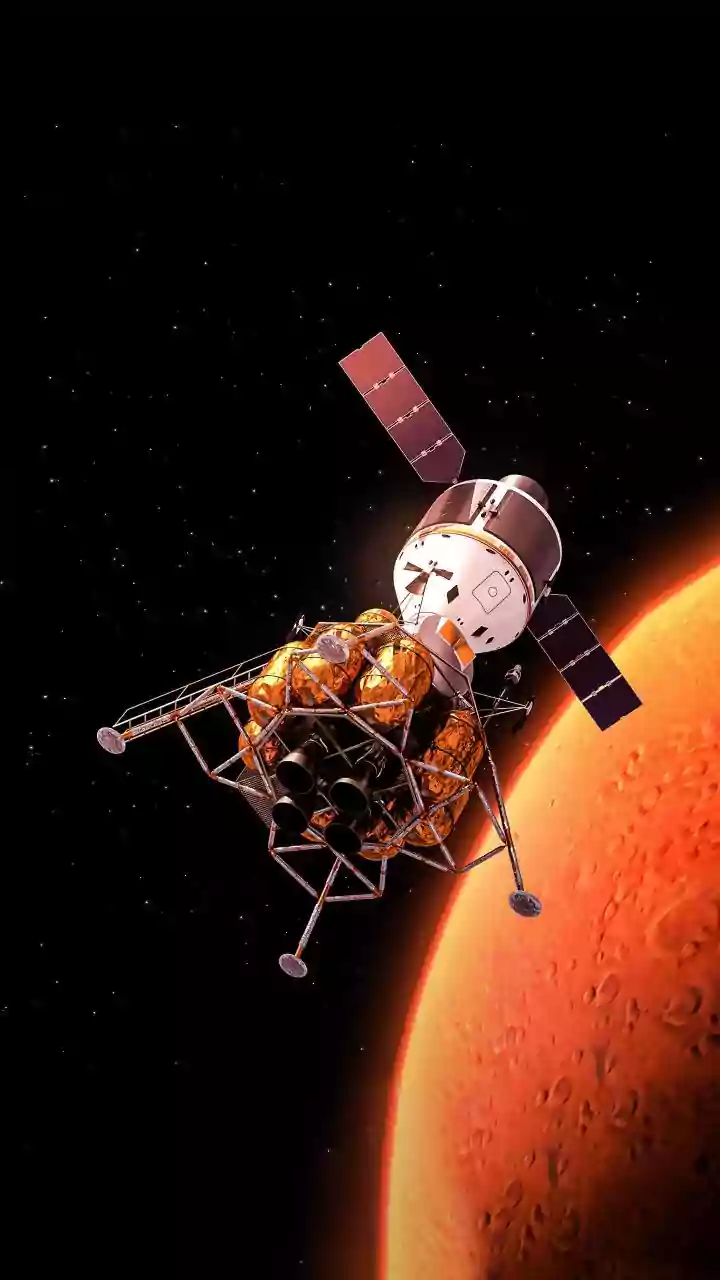
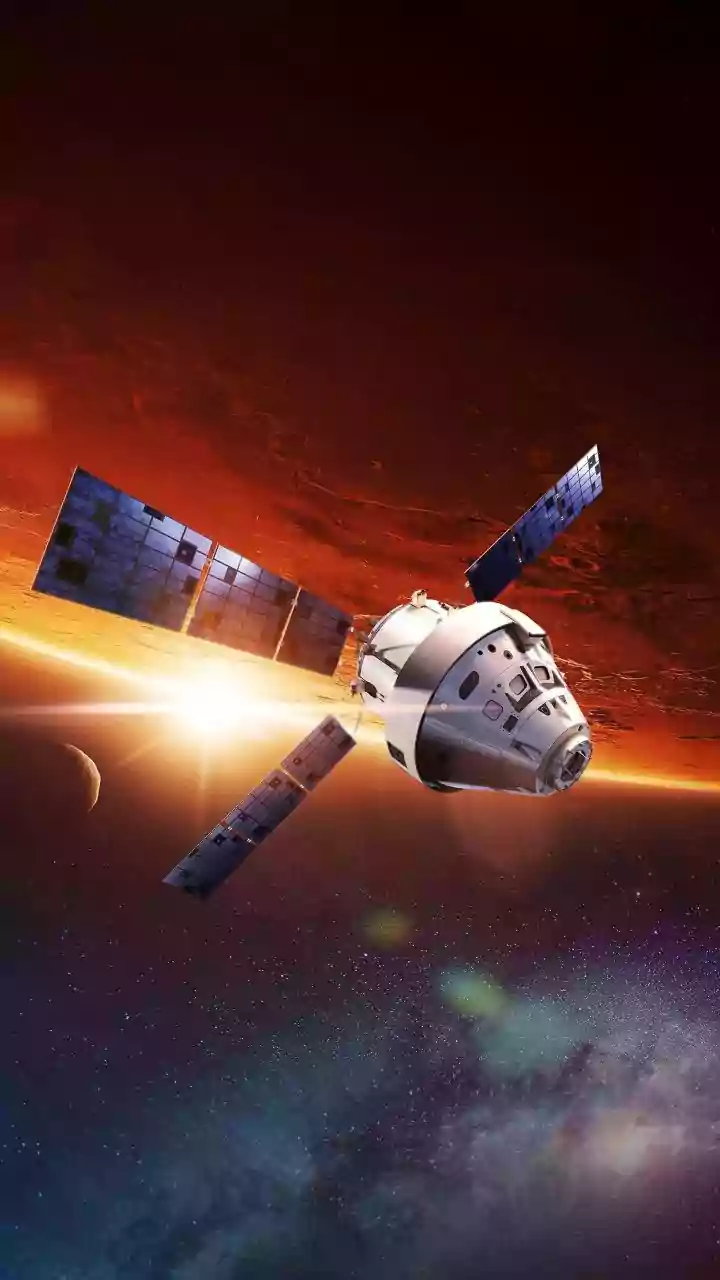
To date, only one spacecraft, Voyager 2, has ever visited Uranus, and that was for a brief flyby in 1986. Discoveries like S/2023 U1, made from ground-based telescopes, are crucial for building the scientific case for a dedicated return mission. A mission to Uranus is now the highest-priority flagship project for NASA in the coming decade. A future Uranus Orbiter and Probe would perform a detailed, multi-year tour of the planet, its rings, and its moons. Knowing where to look for scientifically interesting targets like these small, captured moons helps mission planners design the most effective trajectories and instrumentation to answer our biggest questions about how ice giants—the most common type of planet in our galaxy—form and evolve.