

Saturn Approaches Its Brightest
The star of the show this August is undoubtedly Saturn. The magnificent ringed planet is heading towards its opposition in early October, which is when it will be at its closest and brightest for the year. In late August, it will already be an incredibly
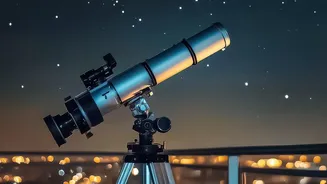
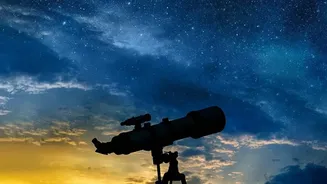
bright, non-twinkling 'star' rising in the east around sunset and visible all night long. It will be shining prominently in the constellation Cetus. Even a basic pair of binoculars might stabilize your view enough to see it as a tiny oval rather than a point of light. For those with a small telescope, this is the perfect time to try and spot its famous rings, which are currently tilted at a fascinating, narrow angle from our perspective. The Moon will make a close approach to Saturn on the evenings of August 29th and 30th, providing a beautiful celestial pairing.
A Deep Partial Lunar Eclipse
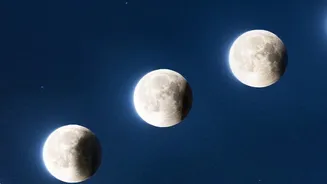
Mark your calendars for the night of August 27-28 for a stunning partial lunar eclipse. This event will be so deep that it is expected to create a 'Blood Moon' effect, where Earth's shadow bathes the Full Moon in a rusty, reddish colour. The Full Moon, also known as the Sturgeon Moon, will be at its peak illumination at 04:18 UTC on August 28. The eclipse will be visible across Africa, Europe, and most of the Americas, and for observers in India, the later stages may be visible depending on your location before moonset in the morning. Unlike a solar eclipse, this celestial event is perfectly safe to view with the naked eye, so you can watch the Earth's shadow creep across the lunar surface without any special equipment.
Catching the Last of the Perseids
The famous Perseid meteor shower officially peaks around August 12-13. However, the shower remains active until August 24, meaning you still have a chance to see some 'shooting stars' in the latter half of the month. While the rate of meteors will be lower than at the peak, patient observers in dark locations, far from city lights, can still be rewarded with a few bright streaks of light. The best time to look is after midnight, facing towards the northeast. The shower is known for producing bright meteors and occasional fireballs that leave persistent trails. With the moon becoming less intrusive towards the end of the month, conditions become more favourable for spotting these fainter, lingering meteors.
A Parade in the Morning Sky
For the early risers, the pre-dawn sky throughout August is a hive of planetary activity. Mars is a prominent fixture, climbing higher and becoming easier to spot in the morning twilight. Jupiter also joins the morning lineup, appearing as a brilliant point of light low on the eastern horizon before sunrise. On August 15, Jupiter and Mercury will have a close conjunction, appearing very near each other just before the sun comes up, though they will be very low on the horizon, making them a challenge to spot without a clear view. Mars and Saturn will be the easiest naked-eye targets in the pre-dawn planetary display.
The Summer Triangle and Milky Way
Beyond the planets and meteors, late August is a fantastic time to appreciate some of the sky's grander structures. Look straight up after dark to find the 'Summer Triangle,' a large and easily recognisable asterism formed by three of the brightest stars in the sky: Vega, Deneb, and Altair. If you can get to a location with minimal light pollution, the diminishing moonlight towards the end of the month provides a perfect opportunity to spot the faint, hazy band of our own galaxy, the Milky Way. This ethereal glow stretches across the sky, passing right through the Summer Triangle. It's a breathtaking sight that requires no equipment, only dark skies and a bit of patience for your eyes to adapt.