





Beyond the Ticket: Calculating 'Door-to-Door' Time
When we think of travel time, we often just consider the flight duration or the hours spent on the train. But for a family juggling kids and luggage, the real metric is the 'door-to-door' time. This includes traveling to the airport or station, check-in
procedures, security, waiting, the journey itself, and then traveling from the destination terminal to your final stay. A one-hour flight can easily become a five-hour ordeal once you factor in all the associated steps. For many routes under 800 kilometres, this is where modern trains have started to challenge the supremacy of air travel.
The Airport Equation: More Than Just Flight Time
Flying is undoubtedly the fastest way to cover long distances. However, the process is far from instant. For domestic flights in India, airlines recommend arriving at the airport at least two hours before departure. This is to navigate check-in counters, which close 60 minutes before the flight, and then security checks. Add to this the travel time to the airport, which are often located far from city centres, and the time spent waiting at the boarding gate, which closes 20-25 minutes before takeoff. After landing, you still have to deplane, wait for your luggage, and then travel into the city. For a family, this multi-step process can be draining.
The Railway Renaissance: A Compelling Alternative
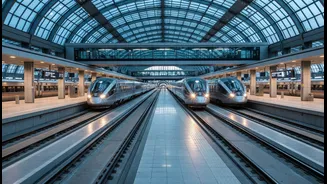
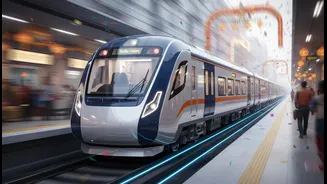
Indian Railways is undergoing a significant transformation, with new-generation trains like the Vande Bharat Express changing perceptions. These trains are designed for routes under 800 km and offer a faster, cleaner, and more comfortable experience. While you should still arrive at the station with time to spare—around 20-30 minutes is often sufficient for finding your platform and coach—the overall pre-departure process is much simpler than at an airport. Railway stations are also typically located more centrally within cities, reducing the time and cost of the first and last legs of your journey. On routes like Mumbai-Ahmedabad or Delhi-Varanasi, the total travel time with Vande Bharat is becoming competitive with flying.
Comfort, Space, and Sanity for Families
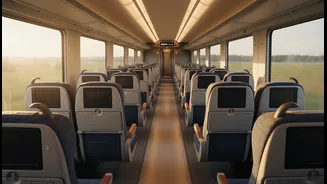
For families travelling with children, comfort and space are paramount. Train travel often wins in this department. The seats are generally wider with more legroom compared to budget airlines, and children have more freedom to move around without being confined to a small seat. Overnight trains in AC classes offer the added benefit of a moving hotel, saving on a night's accommodation and arriving at your destination fresh in the morning. Flights, while quick, can feel cramped and the entire process from security to boarding can be stressful with young children.
The Baggage Battle: A Clear Win for Trains
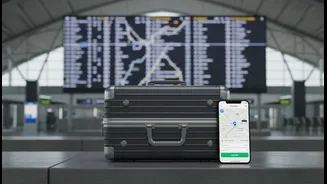
Here, trains have a significant advantage. While airlines in India typically limit free check-in baggage to 15 kg and cabin bags to 7 kg per person, Indian Railways offers a much more generous allowance. For instance, passengers in AC 3-Tier can carry up to 40 kg, with AC First Class allowing a hefty 70 kg. For a family packing for a week-long holiday, this can translate into major savings on excess baggage fees and removes a significant point of travel stress. While Indian Railways has plans to enforce these limits more strictly, they remain far more accommodating than airlines.
Making the Right Choice for Your Family
So, which is better? The answer depends on your specific journey and priorities. For very long distances (over 800-1000 km), flights remain the practical choice to save time. But for medium-distance travel between major cities, the new class of Indian trains presents a strong case. Before you book, do a quick calculation. Estimate the total 'door-to-door' time for both options. Consider the cost, not just of the ticket, but also of airport transfers and potential excess baggage. Factor in the reduced stress and greater comfort a train journey might offer your family. The fastest option on paper may not be the best option for your holiday.