

What You're Looking For
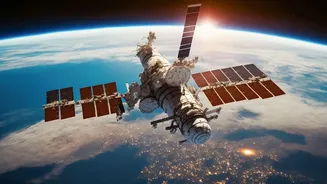
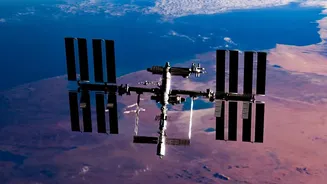
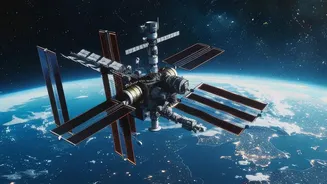
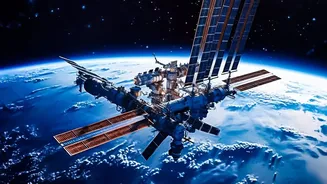
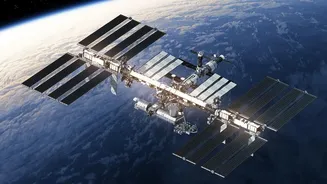
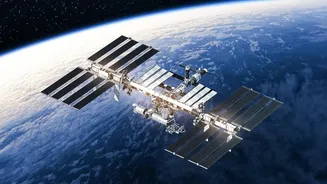
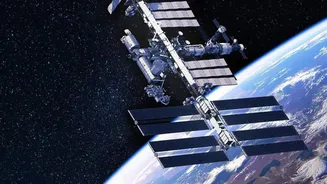
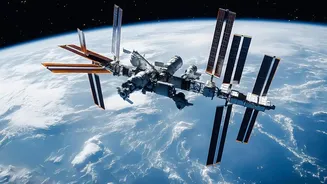
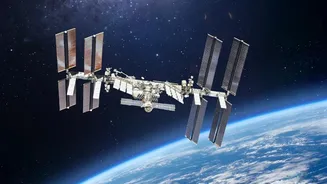
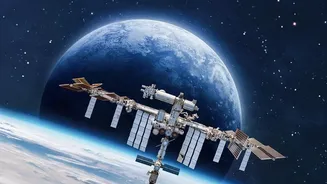
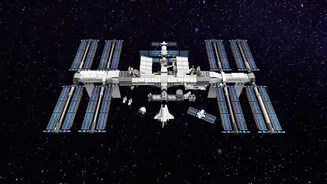
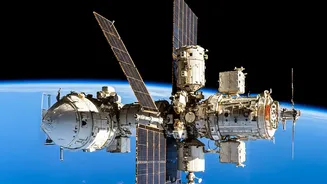
First, let's set the scene. The International Space Station (ISS) is the largest human-made structure in orbit, a sprawling laboratory the size of a football field that has been continuously home to astronauts since the year 2000. It zips around the Earth
at a blistering 28,000 kilometres per hour, completing a full orbit every 90 minutes or so. From the ground, it appears as a very bright, steady point of light moving silently and purposefully across the sky. It looks like a fast-moving star and is often brighter than anything else in the night sky except for the Moon. Crucially, it doesn't blink or have flashing red and green lights like an airplane.
The Right Time and Place
You can't see the ISS just any time. The magic hours are typically just after sunset or just before sunrise. This is the sweet spot when the sky at your location is dark, but the space station, being so high up, is still bathed in sunlight. It’s this reflected sunlight that makes it visible to us down below. To spot it, you'll need a clear view of the sky, ideally away from the glare of city lights, though the ISS is often bright enough to be seen even from urban areas. Because India is located well within the station's orbital path, which extends to 51.6 degrees latitude north and south, residents have frequent and excellent viewing opportunities.
Use a Tracker (It's Easy!)
The secret to a successful viewing is knowing exactly when and where to look. Thankfully, you don’t have to guess. Several fantastic, free resources do the work for you. NASA's official "Spot The Station" website and app are excellent starting points. You simply enter your location, and it generates a list of upcoming viewing opportunities, complete with times, duration, and directions. Other popular and reliable websites and apps include Heavens-Above, ISS Detector, and Satellite Tracker. These tools will send you notifications, so you never miss a chance to run outside and look up.
Decoding the Sighting Data
When you get a viewing alert, you'll see a few key pieces of information. 'Appears' and 'Disappears' will tell you the compass direction where the ISS will first show up and where it will vanish. Most passes move generally from west to east. 'Maximum Height' is crucial; it's measured in degrees from the horizon (0 degrees) to directly overhead (90 degrees). The higher the number, the more spectacular the pass, as the station will travel higher across your sky. As a simple guide, your fist held at arm's length is about 10 degrees. So, if the alert says the station will appear 20 degrees above the horizon, you'll know to look about two fists up.
Your First Viewing: A Checklist
No special equipment is needed; your eyes are more than enough. Binoculars can enhance the view, sometimes revealing a hint of the station's golden colour from its solar panels, but they aren't necessary for your first time. Head outside about five minutes before the scheduled pass to let your eyes adjust to the darkness. Face the direction where the alert says the station will appear and simply wait. Soon, you'll see a bright dot emerge and glide smoothly across the sky over several minutes. What you are witnessing is a testament to international collaboration and human curiosity, orbiting right above your head. Don't forget to share the moment with friends and family; it's a truly memorable experience.