
The Atmosphere's Usual Routine
On a typical day, the sun warms the ground, which in turn warms the layer of air closest to it. This warm air, being lighter and less dense, rises. As it ascends, it carries pollutants from traffic, industry, and other sources up and away, where they
disperse into the upper atmosphere. Think of it like a natural ventilation system. Cooler, denser air from above sinks to take its place, gets warmed by the ground, and repeats the cycle. This constant vertical mixing is crucial for clearing the air we breathe at street level.
When Winter Flips the Script
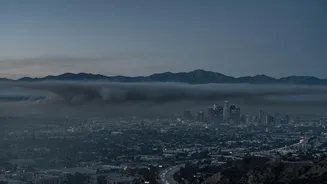
During calm, clear winter nights, this process gets turned on its head. The ground loses heat rapidly after sunset, and without cloud cover to act as a blanket, it becomes very cold. This chills the air right above the surface, making it cooler and denser than the air a few hundred metres higher. This scenario, where a layer of warm air sits on top of a layer of cold air, is known as a thermal inversion. The normal temperature gradient, where it gets colder with altitude, is 'inverted'.
A Lid on the City
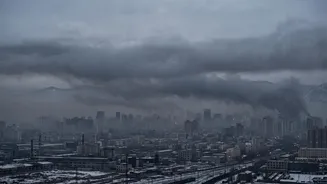
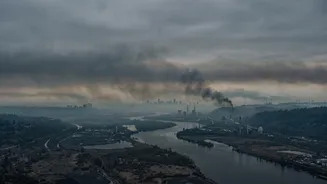
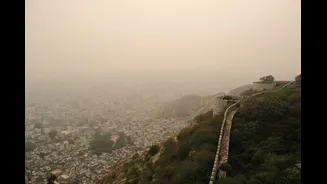
This layer of warm air acts like an atmospheric lid or cap over the city. The cold, dense air near the ground is trapped; it can't rise because the air above it is warmer and lighter. With vertical mixing shut down, there's nowhere for pollutants to go. Emissions from morning traffic, overnight industrial activity, and smoke from biomass or wood burning for warmth all get trapped in this shallow layer of cold air. The longer the inversion lasts—often through the morning until the winter sun is strong enough to warm the ground and break the 'lid'—the more pollutants accumulate.
Winter's Other Complications
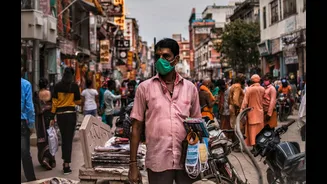
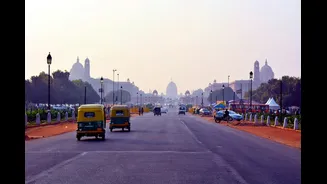
Thermal inversion is the main culprit, but it doesn't work alone. Winter weather brings other factors that worsen air quality. Wind speeds are often much lower during these months, meaning there's less horizontal dispersal of pollutants. Furthermore, human behaviour changes. People may idle cars longer to defrost them, and the demand for heating leads to increased burning of coal, wood, and other biomass, all of which release fine particulate matter (PM2.5) directly into the air that's already trapped. In regions like North India, this is compounded by smoke from post-harvest stubble burning in neighbouring states.
Why It's a Different Beast Than Summer Smog
Summer pollution, while also a health hazard, is typically a different chemical cocktail. It's often dominated by photochemical smog. This forms when strong sunlight reacts with pollutants like nitrogen oxides (NOx) and volatile organic compounds (VOCs) from vehicle exhaust to create ground-level ozone. While harmful, this process depends on heat and sun, and the atmosphere's natural mixing usually continues. Winter smog, on the other hand, is a dense buildup of primary pollutants like particulate matter and sulphur dioxide, trapped by the inversion. It's the physical trapping mechanism of the inversion, not just the chemical reactions, that makes winter pollution so concentrated and persistent at breathing level.