






Gwalior Fort: The Pearl Among Fortresses
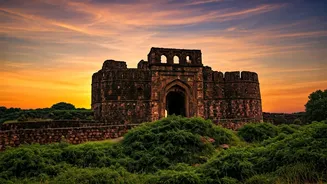
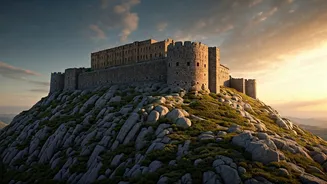
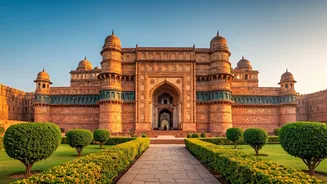
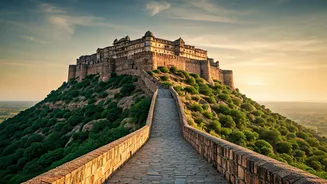
Perched on a vast rocky hill, Gwalior Fort is an imposing sight that has dominated the city's skyline for centuries. Its history stretches back to at least the 6th century, having witnessed the rise and fall of numerous dynasties, including the Tomars,
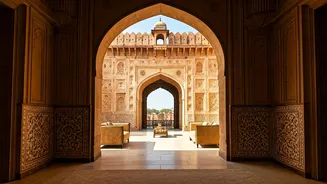
Mughals, and Marathas. Mughal Emperor Babur himself called it "the pearl amongst the fortresses of Hind" for its sheer grandeur. The fort isn't just one structure but a massive complex. Within its 35-feet high walls, you'll find palaces, temples, and water tanks. The Man Mandir Palace is a highlight, adorned with brilliant blue and yellow tiles depicting elephants and peacocks. Don't miss the Teli Ka Mandir, a unique temple blending North and South Indian architectural styles, and the Saas Bahu Temples, covered in intricate carvings. Gwalior Fort's scale and history make it a city within a city, offering a full day of exploration.
Mandu: A Fortress of Romance
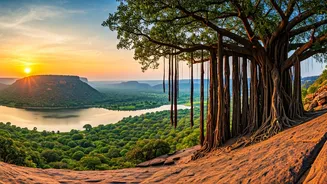
The story of Mandu is a love story, etched in stone. This fort city is a testament to the legendary romance between Sultan Baz Bahadur and the beautiful singer Rani Roopmati. Perched on a plateau, Mandu is famous for its spell-binding Afghan architecture. The Jahaz Mahal, or Ship Palace, is an architectural marvel. Situated between two artificial lakes, it creates the illusion of a ship floating on water, a stunning sight especially during the monsoon. You can wander through the Hindola Mahal (Swing Palace) with its distinctive sloping walls, and feel the history in Baz Bahadur’s Palace and Rani Roopmati's Pavilion. The latter was built on a hilltop to allow the queen to gaze at the distant Narmada River. Mandu isn't just a fort; it's an atmospheric ruin that transports you to an era of royal romance and splendour.
Orchha: Where Palaces Meet the River
Set on an island on the Betwa River, the Orchha Fort complex feels like a scene from a fairy tale. Founded in the 16th century by Bundela Rajputs, Orchha’s architecture is a stunning fusion of Rajput and Mughal styles. The complex is home to three main palaces. The Raja Mahal, built for the kings, boasts vivid murals depicting religious and social themes. The Sheesh Mahal (Palace of Mirrors) has been converted into a heritage hotel, offering a taste of royal living. But the star is the Jahangir Mahal, built by Vir Singh Deo to welcome the Mughal Emperor Jahangir for a single night's stay. Its symmetrical design, with grand domes and delicate chhatris, offers breathtaking views of the surrounding landscape and the serene river below. Orchha’s charm lies in its cohesive beauty, where grand palaces and temples are picturesquely clustered together.
Bandhavgarh Fort: History in the Wild
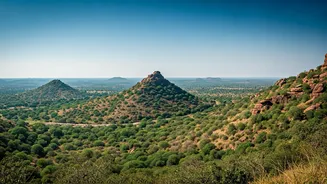
For the truly adventurous, Bandhavgarh Fort offers an experience like no other. Located deep within the core zone of the Bandhavgarh National Park, this fort is as rich in mythology as it is in wildlife. Believed to be over 2,000 years old, legend says it was gifted by Lord Rama to his brother Lakshmana. The trek to the fort, when accessible, is a journey through time. You'll pass ancient caves with Brahmi inscriptions, and remarkable 10th-century rock carvings of Lord Vishnu's avatars, including a massive 32-foot reclining statue known as Shesh Shaiyya. The fort itself, though in ruins, stands at a height of 811 meters, offering panoramic views of the national park—a prime tiger habitat. Visiting this fort isn't just about history; it's about seeing history reclaimed by nature, where ancient temples stand amidst the calls of the wild.