





The Policy Shift That Opened the Skies
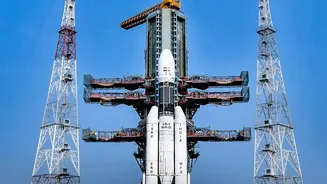
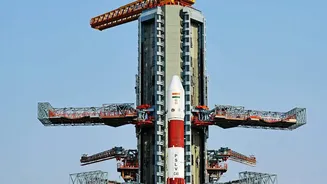
The transformation of India's space sector began in earnest around 2020 with a series of landmark policy reforms. The government decided to unlock the space industry, historically dominated by the Indian Space Research Organisation (ISRO), for private
participation. This led to the creation of the Indian National Space Promotion and Authorisation Center (IN-SPACe) and the announcement of the Indian Space Policy 2023. This new framework was designed to create a predictable and clear regulatory environment, encouraging private companies to engage in everything from satellite manufacturing and launch services to creating downstream applications. IN-SPACe acts as a single-window agency, facilitating collaboration between ISRO and the private sector, streamlining authorisations, and even enabling technology transfers from the state-run agency to new startups. The liberalisation of Foreign Direct Investment (FDI) norms has further fuelled this growth, making it easier for global investors to fund Indian space ventures.
A Galaxy of Ambitious Startups
The result of these reforms has been an explosion in entrepreneurial activity. From just a handful a decade ago, India is now home to over 450 space-tech startups. Companies like Skyroot Aerospace and Agnikul Cosmos are making headlines by developing their own launch vehicles. Skyroot's Vikram-1 recently became India's first privately developed rocket to successfully reach orbit, a major milestone. Agnikul Cosmos is pioneering the use of 3D-printed, single-piece engines for its small satellite launchers. These companies are focused on the booming global market for launching small satellites, offering cost-effective and flexible services. The success of these pioneers has sent a clear signal to investors and entrepreneurs: India's private space industry is ready for business. This has led to a significant inflow of venture capital, with startups attracting hundreds of millions of dollars in funding in recent years.
Innovation Beyond the Launchpad
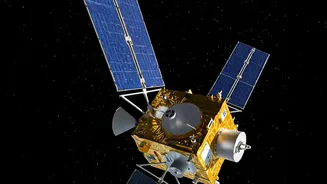
While rocket development grabs the most attention, innovation is flourishing across the entire space value chain. Bengaluru-based Pixxel is building a constellation of hyperspectral imaging satellites. These powerful satellites can see the Earth in hundreds of colours, providing data that can be used to monitor crop health, detect mineral deposits, and track environmental changes with incredible detail. Another startup, GalaxEye, has developed a multi-sensor satellite that combines optical and synthetic aperture radar (SAR), allowing it to capture clear images regardless of weather or time of day. Other companies are focusing on crucial areas like satellite propulsion systems, space debris monitoring, and using satellite data to provide decision intelligence for sectors like agriculture and finance. This diversification shows the deepening maturity of the ecosystem.
The New Frontier for Skilled Jobs
This burgeoning industry is creating a massive demand for skilled professionals. The Indian space industry already employs over 45,000 people, a number that is set to grow rapidly. Projections suggest that the ecosystem could create over 200,000 new jobs as it expands towards a target of becoming a $44 billion industry by 2033. These are not just roles for rocket scientists; the demand spans aerospace engineering, materials science, software development, data analytics, and manufacturing. Interestingly, the sector is also creating a 'reverse brain drain,' with experienced engineers from ISRO and global tech firms joining agile private startups. This migration of talent is helping to rapidly scale the capabilities of these new companies, channelling decades of public-sector expertise into commercial innovation. State governments are also getting involved, with policies aimed at creating dedicated industrial clusters for space technology, which are expected to generate thousands of high-value jobs.