



The Gardener’s Hidden Enemy
Before you dismiss it as overkill, understand this: reusing old pots and trays without cleaning them is like inviting trouble to your plant party. Last season’s soil and plant debris can harbour invisible fungi and bacteria. These pathogens are responsible
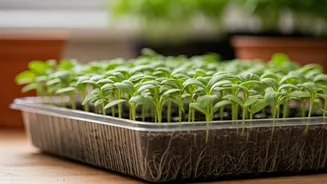
for a devastating condition known as “damping-off,” which causes young seedlings to suddenly wilt and collapse at the soil line. It’s a swift and silent killer that can wipe out an entire tray of promising sprouts overnight. The fungi thrive in the cool, wet conditions typical of seed starting. By starting with properly cleaned and sterilized equipment, you give your seeds a clean slate and dramatically reduce the risk of heartbreaking losses.
Your Simple Cleaning Toolkit
You don't need a professional lab to get your gear ready. Most of what you need is likely already in your home. Gather a stiff brush or scouring pad, a tub or sink large enough for soaking, protective gloves, your chosen disinfectant, and a clean water source for rinsing. The process is straightforward, but it makes a world of difference. Plan to do this chore on a dry, sunny day if possible, as the sun is an excellent final step in the drying and sanitizing process. And remember, this isn’t just for seedling trays; your pots, containers, and even garden tools can all benefit from a good annual cleaning.
The Deep Clean: A Step-by-Step Guide
Ready to give your seedlings their best shot? First, get scrubbing. Use a brush to remove all the old, caked-on soil and root fragments from your trays and pots. If the debris is stubborn, a pre-soak in warm, soapy water can help loosen it. Once physically clean, it’s time to disinfect. This is the crucial step that kills the lingering pathogens. Submerge the clean trays in your chosen disinfecting solution for the recommended amount of time. Finally, give everything a thorough rinse with clean water to remove any chemical residue that could harm your plants. Lay the trays out to air dry completely, preferably in the sun, before stacking them for storage.
Choosing Your Sanitizer: Bleach vs. Alternatives
For decades, the gold standard for sterilizing garden equipment has been a bleach solution. A common recommendation is to create a 10% solution by mixing one part household bleach with nine parts water. A soak for 10 to 30 minutes in this solution is highly effective at killing fungi, bacteria, and viruses. However, bleach can be corrosive to some materials and its fumes can be harsh. For those seeking a more natural alternative, white vinegar is a popular choice. A solution of equal parts vinegar and water can also be effective, though it may require a longer soaking time of 30 minutes or more. Another option gaining popularity is 3% hydrogen peroxide, which can be sprayed directly onto surfaces, left for about 10 minutes, and then rinsed. Some guides even suggest using vinegar and hydrogen peroxide sequentially—but never mixed together—for a powerful one-two punch.