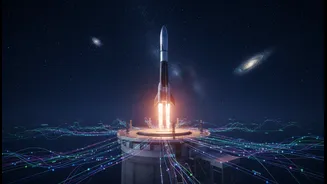







The Allure of a Tangible Mission
The traditional path for a top-tier engineer often leads to software development, working on abstract code for apps or enterprise solutions. While important, it can feel distant from the physical world. In contrast, space-tech startups offer a mission
that is both ambitious and tangible. Companies like Skyroot Aerospace and Agnikul Cosmos are not just writing code; they are building and launching rockets. This appeals to a fundamental engineering desire to create things that fly, orbit, and explore. For many graduates, the opportunity to work on propulsion systems, satellite design, and launch vehicles provides a sense of purpose that a corporate software role might lack. The mission isn't just to increase user engagement by a few percentage points, but to make space accessible and push the boundaries of human exploration.
Speed, Agility, and Direct Impact
Large corporations are defined by structure, process, and hierarchy. While this ensures stability, it can also lead to slow decision-making and layers of bureaucracy that insulate an individual's work from the final product. Startups, particularly in a nascent field like private space, operate with a sense of urgency. Engineers in these lean teams often wear multiple hats, working across design, testing, and integration simultaneously. This flat structure means they are closer to the core challenges and their contributions have a direct and visible impact on the outcome. The hiring process itself reflects this; startups are known for quick decisions, while MNCs can have procedures that stretch for weeks. This fast-paced environment promises a steeper learning curve and the ability to see one's work go from a design on a screen to a component on a launchpad in a fraction of the time.
Redefining Career Growth
In a traditional corporate technology tier, career growth is often linear and vertical, measured in promotions and title changes over several years. Indian space-tech startups offer a different model of advancement. Growth here is measured in skills acquired, problems solved, and ownership taken. An engineer might join to work on avionics but soon find themselves contributing to fluid dynamics or mission control software. This cross-functional exposure is immensely valuable, creating well-rounded engineers with a holistic understanding of a complex system. This 'T-shaped' skill set—deep expertise in one area combined with a broad knowledge of others—is becoming more valuable than siloed specialisation, especially as AI begins to handle more routine coding tasks.
A Maturing Deep-Tech Ecosystem
The choice is no longer a simple trade-off between high risk and high stability. India's deep-tech and space-tech ecosystems are rapidly maturing, backed by significant venture capital and supportive government policies that have opened the sector to private players. Startups in this domain are no longer just garage operations; they are well-funded enterprises tackling serious engineering challenges. With the number of Indian space startups surging to over 190, the industry is creating a vibrant job market with competitive compensation. This growing confidence means graduates are not just taking a risk; they are making a calculated bet on a high-growth sector where they can build valuable intellectual property and be part of India's next innovation wave.