







1. Akihabara: The Electric Town Still Buzzes
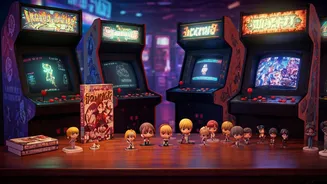
Let’s start with the mothership. Akihabara, Tokyo’s famed “Electric Town,” is the neon-drenched heart of otaku (geek) culture. While it’s true that some landmark arcades, like the iconic Sega building, have closed or rebranded (many are now GiGO), the spirit
is far from gone. Walk out of the station and you’re immediately hit by a sensory overload of sound and light. Multi-story buildings are dedicated entirely to gaming. The first floor might be UFO catchers (crane games) with impossibly cute prizes, while upper floors house rows of the latest fighting games, hypnotic rhythm games that demand full-body participation, and retro cabinets that let you relive your childhood. It’s not just a place to play games; it’s a vertical theme park of electronic entertainment.
2. The Modern Arcade Experience
American arcades of the '80s and '90s were often dimly lit corners of a mall. In Japan, they’re vibrant, clean, and surprisingly social destinations. You’ll see couples on dates trying to win a giant plushie from a crane game, office workers unwinding with a high-energy round of Taiko no Tatsujin (a drumming game), and pro-level players executing flawless combos on Street Fighter 6. The variety is staggering. Forget just Pac-Man and pinball; Japanese arcades feature complex mech simulators, train-conducting simulators so realistic they’re used for training, and card-based arcade games that save your progress. It’s an evolving ecosystem of entertainment you simply can't find elsewhere.
3. The Anime Pilgrimage, or 'Seichi Junrei'
For anime fans, visiting Japan offers a unique opportunity for “seichi junrei,” which translates to “pilgrimage to a sacred place.” This is the act of visiting the real-life locations that inspired the settings of your favorite anime. Imagine climbing the iconic staircase from the film *Your Name* in Tokyo, or exploring the Azabu-Juban district where the heroines of *Sailor Moon* lived and fought evil. This practice has become so popular that local towns often provide maps and merchandise to guide anime pilgrims. It transforms a simple vacation into a narrative experience, allowing you to literally step into the world of a beloved story and see the animators’ inspiration firsthand.
4. Museums and Parks That Are Destinations
Japan doesn’t just relegate its pop culture to shops; it elevates it to the level of art and engineering. The Ghibli Museum in Mitaka (and the new Ghibli Park near Nagoya) are whimsical, interactive wonderlands celebrating the genius of Hayao Miyazaki. You’re not just looking at exhibits; you’re entering the imaginative world of *My Neighbor Totoro* and *Spirited Away*. In Yokohama, a life-sized, 60-foot-tall Gundam robot moves and lights up in a stunning display of fandom-fueled engineering. And in Tokyo and Osaka, the official Pokémon Cafes and Nintendo Stores are less like shops and more like immersive shrines to their respective universes.
5. The Thrill of the Hunt for Treasure
Part of the appeal is the shopping, which is less about buying souvenirs and more about hunting for treasure. Places like Nakano Broadway in Tokyo, a multi-story mall dedicated to otaku culture, are a labyrinth of tiny shops overflowing with vintage manga, rare anime cels, and collector-grade figures. Den Den Town in Osaka offers a similar, if slightly more laid-back, experience. The sheer density and variety of merchandise is overwhelming in the best possible way. You might go in looking for a specific Gundam model and walk out with a rare soundtrack from a 1980s anime you’d completely forgotten about. It’s a collector's paradise.