



What Are Thermo-Responsive Coatings?
Imagine a window that knows when it’s too hot outside and automatically tints itself to block the sun’s heating rays, all without needing any power or a single tap on an app. That’s the magic of thermo-responsive coatings. These are advanced, ultra-thin
materials applied to glass that can change their properties in response to temperature. Also known as thermochromic coatings, they are designed to be transparent in cooler weather, letting in warming sunlight. But once the temperature hits a certain point, the coating intelligently transforms to reflect or absorb solar heat, specifically the infrared radiation that we feel as warmth. This dynamic ability allows them to regulate the amount of heat passing through a window, helping to keep indoor spaces cooler in the summer and warmer in the winter.
The Science Behind the Smart Switch
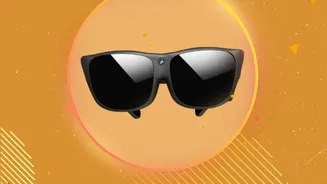
The secret behind this technology lies in a remarkable material called vanadium dioxide (VO₂). This compound undergoes a 'phase transition' at a specific temperature. Below this threshold, which is typically around 68°C for the pure material, its molecular structure allows infrared light to pass through freely. However, when the surface of the glass heats up beyond this point, the vanadium dioxide crystals rearrange themselves into a metallic state. In this new structure, the material becomes an excellent reflector of infrared radiation, effectively bouncing the sun's heat away from the window before it can enter the room. Think of it like a pair of transition sunglasses, but for heat instead of visible light. The process is completely reversible, so as the temperature drops, the coating reverts to its transparent state.
Tuning the Technology for Everyday Use
While a transition temperature of 68°C is too high for practical home use, scientists have found clever ways to fine-tune it. By doping, or mixing, the vanadium dioxide with other elements like tungsten, they can lower the trigger temperature to a much more useful range, such as 20-30°C. This means the windows can start blocking heat on a warm day, not just during a scorching heatwave. Further innovations focus on improving luminous transmittance—how much visible light gets through—ensuring that the coating blocks heat without making the room feel dark. Some advanced designs even incorporate phase change materials that can absorb and store excess heat, providing an additional layer of thermal management.
Why This Matters for Urban Apartments
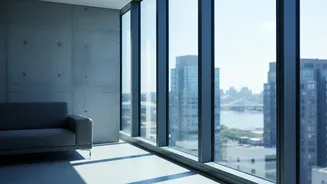
City flats are uniquely vulnerable to overheating. Densely packed buildings and dark surfaces like asphalt create an 'urban heat island' effect, making cities significantly warmer than surrounding rural areas. Many modern apartments also feature large glass windows, which, while offering great views, act like greenhouses that trap solar heat. This is where thermo-responsive coatings offer a significant advantage. By passively rejecting heat, they reduce the reliance on air conditioning, which is a major consumer of electricity in urban households. This not only leads to lower energy bills but also lessens the strain on the city's power grid during peak demand on hot days. Furthermore, by maintaining a more stable and comfortable indoor temperature, these coatings enhance the livability of high-rise homes.
The Benefits: Comfort, Costs, and Climate
The impact of thermo-responsive coatings is threefold. First is enhanced comfort. By automatically managing solar heat gain, they prevent the uncomfortable temperature spikes that force you to draw the blinds and live in the dark. Second, there are significant energy savings. Studies and simulations have shown that smart windows can reduce the energy used for air conditioning by a substantial margin, potentially up to 20 percent. This translates into direct financial savings for residents. Third, there is a clear environmental benefit. Lower electricity consumption means a reduced carbon footprint, helping cities meet emissions targets and promoting a more sustainable model for urban development. These windows are a prime example of using smart materials to build more efficient and resilient buildings for the future.
Are They Ready for Your Home?
Thermo-responsive technology is no longer confined to the laboratory. While high-performance smart windows with integrated coatings are available, particularly for new constructions, the development of retrofittable films is making this technology more accessible. These films can potentially be applied to existing windows, offering a way to upgrade the energy efficiency of older buildings without the cost and hassle of a full window replacement. As manufacturing techniques become more scalable and cost-effective, the price of these coatings is expected to decrease, bringing them within reach of a broader market. They represent a key component in the future of energy-efficient design, promising to make our homes smarter, more comfortable, and kinder to the planet.