






Descending into History
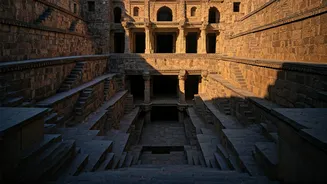
So, what exactly is a stepwell? Known as 'baori' or 'vav' in different parts of India, these are not just wells. They are elaborate, multi-storied structures designed to provide communities with access to groundwater, especially in the arid regions of Rajasthan
and Gujarat. Dating back over a millennium, they were more than just water sources; they were cool, subterranean community centres, spiritual sanctuaries, and vital stops along ancient trade routes. Each stepwell tells a story of engineering genius, artistic expression, and a profound understanding of water as a life-giving force. As you descend their steps, you are walking back through centuries of history, shielded from the harsh sun in a space that feels both sacred and social.
Chand Baori: The Geometric Marvel
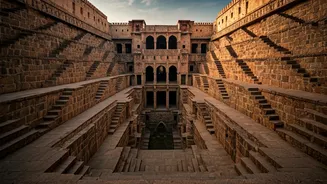
If you've seen a photograph of a stepwell, it was likely Chand Baori in Abhaneri, Rajasthan. This is the showstopper, the one that leaves visitors breathless. Constructed in the 9th century, it is one of the deepest and largest stepwells in India. Its fame comes from the staggering 3,500 narrow steps arranged in a perfect, mesmerising geometric pattern on three sides, descending 13 stories (about 100 feet) to the water level. It looks less like a well and more like an M.C. Escher drawing brought to life. Featured in films like 'The Dark Knight Rises', its dramatic symmetry and sheer scale make it a photographer's dream and a must-visit on any Rajasthan road trip. It serves as a powerful reminder of how functional architecture can also be profound art.
Rani ki Vav: A Queen's Tribute
In Patan, Gujarat, lies a stepwell so magnificent it has been declared a UNESCO World Heritage Site: Rani ki Vav, or 'The Queen's Stepwell'. Built in the 11th century by Queen Udayamati in memory of her husband, King Bhimdev I, this is no ordinary well. It is an inverted temple, designed to honour water. As you descend its seven levels, the walls come alive with over 500 major sculptures and a thousand minor ones depicting gods, goddesses, celestial beings, and scenes from daily life. The central theme is the Dashavatara, the ten incarnations of Vishnu. The level of craftsmanship is breathtaking, turning a utilitarian structure into a subterranean art gallery. Rani ki Vav is not just a place to see; it's a place to experience the pinnacle of Solanki-era art and architecture.
Adalaj Vav: A Fusion of Cultures
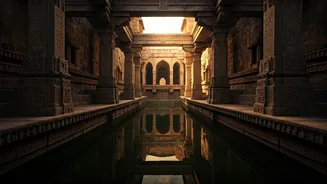
A short drive from Ahmedabad, the Adalaj Vav offers a different kind of story—one of love, tragedy, and cultural synthesis. Built in the 15th century, its architecture is a seamless blend of Islamic floral patterns and Hindu symbolism. The octagonal structure is five stories deep, with intricately carved pillars, balconies, and friezes. Sunlight filters down through the central opening, creating a play of light and shadow that changes throughout the day. The legend says it was started by a Hindu king and completed by a Muslim ruler, Mahmud Begada, who fell for the widowed queen. She agreed to marry him if he finished the well, but upon its completion, she jumped in, ending her life. This poignant history adds another layer to the serene beauty of the vav, making it a popular spot for both locals and travellers seeking a moment of peace.
Planning Your Stepwell Road Trip
Inspired to hit the road? The best time to visit stepwells in Rajasthan and Gujarat is during the cooler, drier months from October to March. These are destinations that reward unhurried exploration. Wear comfortable shoes with a good grip, as the steps can be steep and uneven. Carry water, but be respectful of the sites—these are protected monuments. For photographers, early morning or late afternoon light brings out the best in the carvings and geometric patterns. Combining these sites into a road trip—for example, a Delhi-Jaipur-Abhaneri route or an Ahmedabad-Patan-Adalaj circuit—offers an unforgettable journey into the heart of India's architectural heritage.