
A Speck of Cosmic Dawn
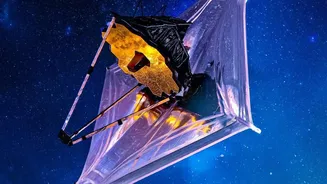
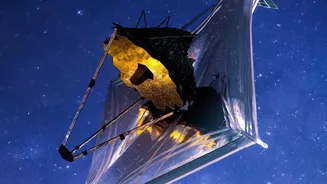
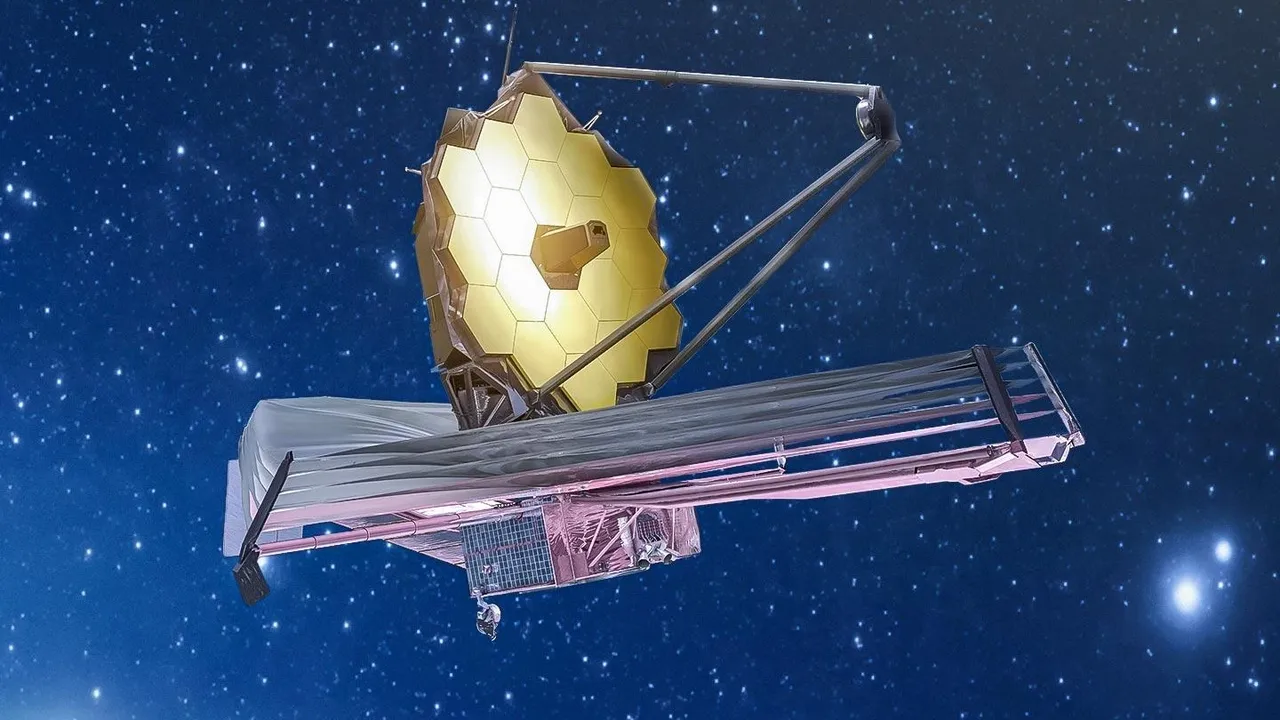
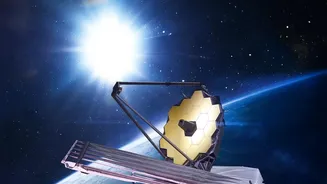
Imagine looking across 13 billion years of space and time to a period when the universe was a mere infant, less than a billion years old. This is the realm the James Webb Space Telescope (JWST) explores, and it’s here that scientists have found a perplexing
new class of objects. They appear as tiny, unassuming red smudges in the telescope’s deep-field images, earning them the nickname ‘little red dots.’ These are not just any distant objects; they are some of the farthest things humanity has ever observed. One such dot, in a galaxy named CEERS 1019, is seen as it was just 570 million years after the Big Bang. Another, called Abell2744-QSO1, dates back to when the cosmos was only 700 million years old. Initially, astronomers were unsure what to make of these faint signals from the edge of time. Were they unusually dusty young galaxies? Or something else entirely?
More Than Just a Faint Galaxy
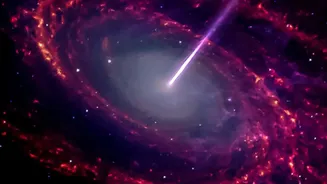
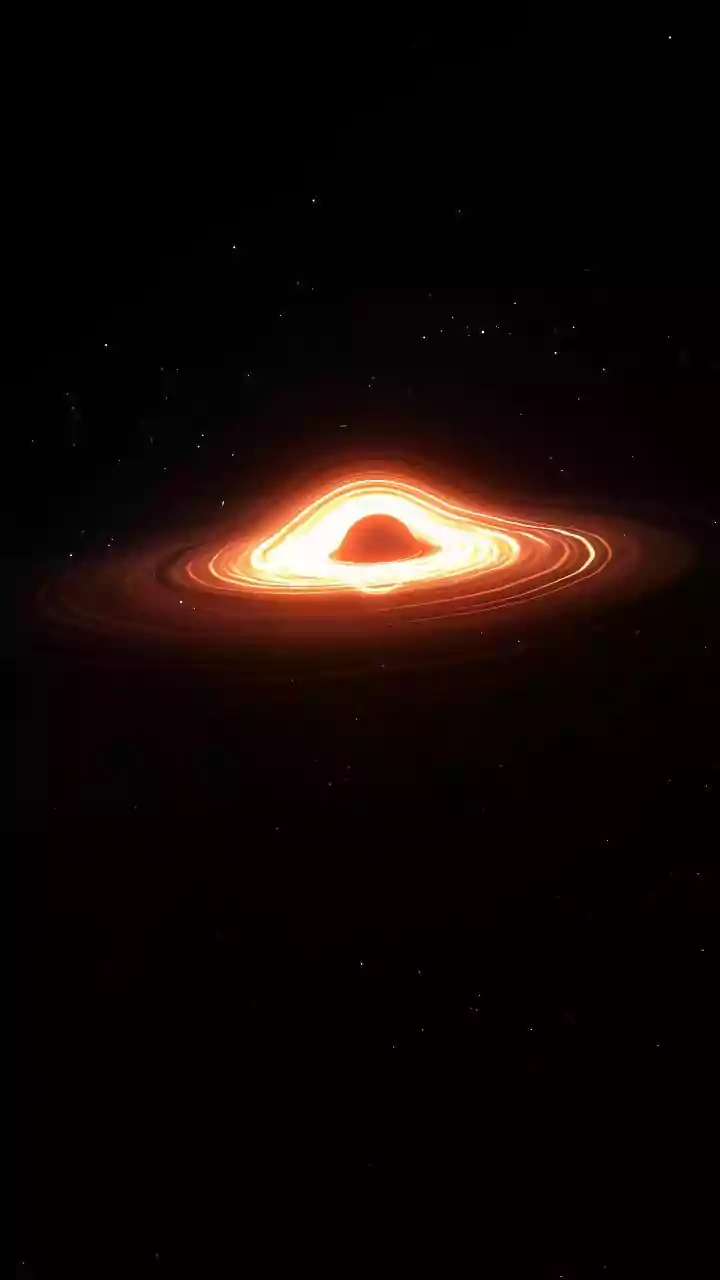
As Webb’s powerful instruments focused their gaze, a shocking truth emerged. Hidden within these compact, red specks were the unmistakable signatures of actively feeding supermassive black holes. An active black hole, also known as a quasar, is not a quiet cosmic giant but a ravenous beast. It violently pulls in surrounding gas and dust, which heats up and glows intensely across the electromagnetic spectrum. This intense radiation is what allowed the JWST to detect them from such an immense distance. The discovery was stunning because it confirmed these weren't just sleepy, primordial galaxies. They were cosmic powerhouses, already roaring with activity when the universe was just a fraction of its current age. The light from these objects tells a story of furious energy and rapid growth, providing a direct window into the chaotic environment of the early cosmos.
A Black Hole Too Big, Too Soon
Herein lies the cosmic puzzle. The black holes Webb found are staggeringly massive for their age. The black hole in CEERS 1019, for example, weighs about 9 million times the mass of our sun. While that may sound small compared to modern black holes that are billions of solar masses, it's enormous for its time. According to conventional theories, black holes are supposed to grow gradually. They start from the collapse of a massive star and then slowly accrete matter over billions of years, growing in tandem with their host galaxy. But these early universe black holes are ‘overmassive’—they are far too large compared to the relatively small number of stars in their host galaxies. They simply did not have enough time to grow that big through standard processes. It’s like finding a fully grown adult in a nursery, raising fundamental questions about how these cosmic giants came to be.
Solving the Chicken-and-Egg Problem
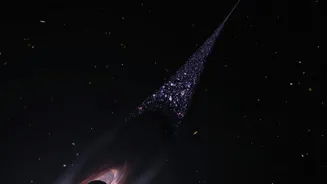
This discovery directly challenges the long-standing cosmological ‘chicken-and-egg’ question: which came first, the galaxy or its central black hole? The prevailing wisdom was that galaxies form first, providing the fuel for a central black hole to grow. But the existence of these overmassive black holes in tiny host galaxies suggests the opposite may be true in some cases. This has given rise to exciting new theories. One idea is the ‘direct collapse black hole,’ where massive clouds of primordial gas in the early universe collapse directly into a huge black hole ‘seed’ of thousands of solar masses, bypassing the normal star-to-black-hole lifecycle. These massive seeds would have a significant head start, allowing them to quickly grow into the behemoths Webb is now seeing. It suggests that some black holes may have been born big, forming even before the stars of their galaxy had a chance to ignite.
Are They Even Galaxies?
An even more radical theory proposes that some of these little red dots aren't galaxies at all, but an entirely new type of celestial object dubbed ‘black hole stars.’ In this model, the object is a gigantic, dense cloud of gas powered not by nuclear fusion, like a typical star, but by a furiously feeding supermassive black hole at its core. The black hole devours the surrounding gas, converting matter into immense energy and light. This would explain why the objects are so compact, red, and bright. It could also explain why they seem to disappear from view after the universe reaches about 2 billion years old; by then, the central black hole has either consumed all the gas or blown it away, evolving into a more traditional-looking quasar. This theory, if proven, would mean JWST has discovered not just early black holes, but a whole new phase of cosmic evolution.