








A New Dawn for 'Make in India' Exports
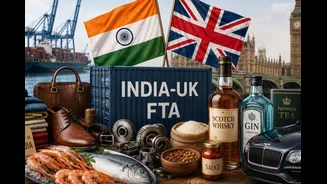
The centrepiece of the deal is unprecedented market access for Indian goods. The agreement provides immediate duty-free access for nearly 99% of Indian exports to the United Kingdom. This is a major boost for labour-intensive sectors that are the backbone
of Indian manufacturing and employment. Industries like textiles and apparel, leather and footwear, and gems and jewellery will see British import tariffs of up to 16% eliminated overnight. Similarly, sectors such as processed foods, marine products, engineering goods, and auto components will gain a significant price advantage in the competitive UK market, with tariffs being slashed to zero. The aim is to make 'Made in India' products more attractive and accessible to British consumers, with the two nations targeting a doubling of bilateral trade to $100 billion by 2030.
Opening Doors for Professionals and Students
Beyond goods, the agreement addresses a key Indian interest: mobility for its skilled workforce. While it's important to note that the deal does not create new work visa routes, it provides significant advantages and certainty for professionals. A major win is a social security pact, which exempts Indian professionals on temporary assignments in the UK from making National Insurance contributions for up to five years. This could result in substantial savings for Indian IT firms like TCS and Infosys, which have large numbers of employees on deputation. The agreement also guarantees a minimum three-year stay for intra-company transfers, protecting them from potential future changes in UK immigration rules. Furthermore, it creates new opportunities for independent professionals and contractual service suppliers in sectors like architecture and engineering. There is also a specific new annual quota for Indian chefs, yoga teachers, and classical musicians to work in the UK.
What India Is Giving in Return
A trade deal is a two-way street, and India has made significant concessions. For the first time in a major trade pact, India has agreed to lower its historically high import duties on fully-built cars. Tariffs on cars imported from the UK will be reduced in phases from as high as 110% down to 10% through an annual quota system. This is expected to make British luxury brands like Jaguar, Land Rover, and Aston Martin more affordable for Indian consumers. Similarly, the steep 150% tariff on Scotch whisky will be cut to 75% immediately, with further reductions planned over the next decade. India has also agreed to lower duties on a range of other British products, including certain foods, cosmetics, and machinery, and has opened up its central government procurement market to UK suppliers.
The Strategic Picture and The Road Ahead
This Comprehensive Economic and Trade Agreement (CETA) is more than just a list of tariff cuts; it represents a strategic alignment. For India, it is the sixth free trade agreement implemented by the current government and one of its first with a major developed economy. It signals an intent to integrate more deeply with global value chains and meet advanced regulatory standards. However, challenges remain. Indian steel exporters, for instance, face pressure from a new UK steel import regime that also began this month. Furthermore, a British carbon levy planned for next year could impact Indian industrial goods, a point of ongoing discussion between the two nations. The success of the deal will ultimately depend on how effectively Indian businesses can capitalize on these new opportunities and navigate the evolving global trade landscape.