





Kapil Dev’s 175: The Birth of a Belief
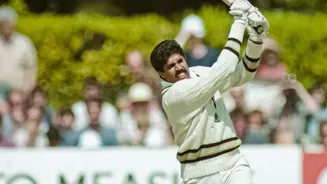
The year is 1983. The venue, Tunbridge Wells. In a must-win World Cup encounter against Zimbabwe, India found itself in a catastrophic position at 17 for 5. With the top order, including Sunil Gavaskar, gone for a pittance, the dream was fading fast.
In walked captain Kapil Dev and played an innings that has become cricketing folklore. Unfazed by the collapse, he launched a stunning counter-attack. His unbeaten 175 came from just 138 balls, including 16 fours and six sixes — numbers unheard of in that era. He masterfully shielded the lower order, forging a record 126-run stand for the ninth wicket with Syed Kirmani. India reached a competitive 266 and won the match by 31 runs, a victory that propelled them towards their historic World Cup triumph. Tragically, no video footage of this masterclass exists, but its legend inspired a generation.
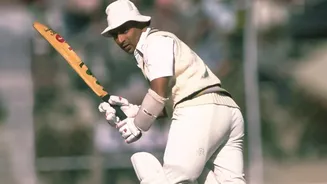
Sunil Gavaskar’s 221: The Chase That Almost Was
Long before the pyrotechnics of modern limited-overs cricket, Sunil Gavaskar played a Test innings of immense character against England at The Oval in 1979. Set an audacious target of 438 for victory, a fourth-innings chase of this magnitude was considered impossible. But Gavaskar, the original Little Master, was unmoved. For nearly eight hours, he defied a potent English attack, building a masterful 221. It was an innings of flawless technique and immense concentration that took India to the brink of a miraculous win. When he was dismissed, India were 389 for 4, needing just 49 more runs. Though the team fell short and the match ended in a draw, Gavaskar's epic knock remains a benchmark for fourth-innings batting and a testament to his legendary resilience.
Sachin Tendulkar’s 143: The Desert Storm
In the stifling heat of Sharjah in 1998, Sachin Tendulkar played an innings that felt more like a force of nature. In a crucial Coca-Cola Cup match against Australia, India needed to surpass a certain total to qualify for the final, even in defeat. Chasing Australia's imposing 284, a literal sandstorm halted play, revising the target. Then, the real storm hit. Tendulkar unleashed a furious assault on an attack featuring Shane Warne and Damien Fleming. He scored a magnificent 143 off 131 balls, an innings of breathtaking aggression and skill. Though India lost the match by 26 runs, Tendulkar's blitz ensured they qualified for the final. Two days later, on his birthday, he would score another century to win the trophy, but it was the ‘Desert Storm’ innings that is etched forever in memory.
Gambhir and Dhoni: The Architects of a World Cup Win
In the high-pressure 2011 World Cup final, India was in trouble chasing Sri Lanka's 274. After losing Virender Sehwag and Sachin Tendulkar early, the Wankhede Stadium fell silent. Gautam Gambhir came in and anchored the innings with a resolve of steel. He built a crucial 83-run partnership with Virat Kohli before constructing the match-defining stand with MS Dhoni. Gambhir fell for a gritty 97, an innings of immense importance that is often overlooked. Dhoni, who had promoted himself up the order, then took charge. He steered the chase with a calm head, finishing with an unbeaten 91 off 79 balls. The winning runs came from his bat, a monumental six that sailed into the Mumbai night sky, ending India's 28-year wait for a World Cup and creating an indelible moment for billions.
Virat Kohli’s 133: The Hobart Heist
It was a do-or-die game for India in the 2012 CB Series. To stay in contention for the finals, they not only had to chase down Sri Lanka's massive total of 320 but do it in under 40 overs. The task seemed impossible. But a young Virat Kohli had other ideas. He walked in and produced an innings of pure, unadulterated aggression. He took apart the Sri Lankan bowling, particularly the fearsome Lasith Malinga. Kohli remained unbeaten on 133 from just 86 balls, a whirlwind of powerful drives and wristy flicks. In a stunning display, India chased down the target in a mere 36.4 overs. The innings was a clear announcement of Kohli's arrival as the world's premier chaser and remains one of the most audacious and dominant ODI knocks ever played.