







The Dreaded 'No-Show' Clause
Deep within every airline's contract of carriage—the lengthy document you agree to when booking—lies a rule known as the 'no-show' clause. This clause states that your ticket is only valid if you fly all the segments in the exact order they were booked.
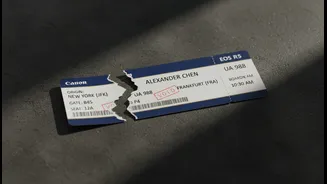
If you are a 'no-show' for any single part of your journey, whether it's the very first flight or a connecting one, the airline has the right to cancel all subsequent flights in your itinerary without a refund. This means if you miss your Mumbai to Dubai flight on a Mumbai-Dubai-London ticket, your Dubai to London leg, and even your return trip booked weeks later, could be automatically voided.
Why Do Airlines Enforce This?
This policy might seem purely punitive, but from the airline's perspective, it’s about protecting their complex pricing models. Airlines price tickets based not just on distance, but on market demand. A direct flight to a major hub like Delhi is often more expensive than a flight to a smaller city that connects through Delhi. This creates a loophole that some savvy travellers exploit, a practice known as 'hidden-city ticketing' or 'skiplagging'. A passenger might book a cheaper ticket from Chennai to Patna with a layover in Bengaluru, but have every intention of ending their journey in Bengaluru. The no-show clause is the airline's primary tool to combat this, ensuring that passengers use the ticket they purchased as intended, thereby protecting the pricing structure that distinguishes between direct and connecting routes.
The Costly Consequences of a Missed Leg
The financial fallout from a voided ticket can be staggering. When your reservation is cancelled, you're left stranded. To continue your journey, you'll likely have to purchase a new ticket. Since this is a last-minute purchase, you will be paying the highest possible walk-up fare, which can easily be several times the cost of your original round-trip booking. You forfeit the money spent on your original ticket and are hit with an exorbitant new charge. For many, this unexpected expense can turn a routine trip into a financial crisis, costing far more than the initial vacation budget.
When It's the Airline's Fault vs. Yours
There is a crucial distinction to be made. If you miss your connection because your first flight was delayed or cancelled by the airline, the responsibility falls on them. In these cases, the airline is obligated to rebook you on the next available flight to your destination at no extra cost. However, if you miss the flight for personal reasons—you were stuck in traffic, overslept, or had a family emergency—the no-show clause typically applies in full force. Some airlines have an informal 'flat tire rule', where they might show leniency if you arrive at the airport within a couple of hours of your missed flight, but this is not guaranteed and varies by carrier.
How to Protect Yourself and Your Wallet
Navigating these rules requires proactivity. The single most important step if you know you will miss a flight is to contact the airline immediately, before the flight departs. Informing them of your situation might allow them to protect the remaining segments of your trip, though you may still have to pay a change fee and a fare difference. Some travelers opt to book two separate one-way tickets instead of a round trip to avoid this issue, though this can sometimes be more expensive. Finally, consider travel insurance, but be sure to read the policy carefully. Many plans cover missed connections due to airline delays, but may not cover you if you miss a flight for personal reasons.