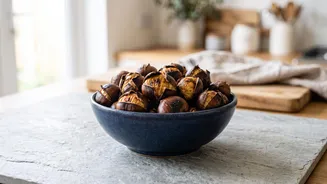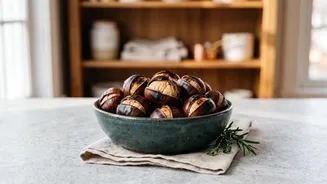



As the days grow shorter and a chill fills the air, nothing says 'winter' quite like the warm, nutty aroma of roasted chestnuts. This seasonal staple is more than just a street-food snack; it’s a versatile ingredient that adds depth to any dish.
Your Guide to Roasting Chestnuts
Before
they can star in any dish, chestnuts need to be roasted. Start by preheating your oven to around 200°C. Using a sharp knife, carefully score an 'X' on the rounded side of each chestnut. This crucial step allows steam to escape, preventing them from bursting in the oven. Place them on a baking sheet and roast for about 20 to 30 minutes, or until the shells begin to peel back and the nut inside is tender. Let them cool just enough to handle, then peel away both the hard outer shell and the thin inner skin while they are still warm for the best results. Once peeled, they are ready to eat or be added to your favorite winter recipes.
Creamy and Comforting Chestnut Soup
A velvety chestnut soup is the perfect antidote to a cold winter's day. The natural starches in chestnuts help create a wonderfully thick and creamy texture without much effort. To prepare, simply sauté aromatics like onions and celery, then add your roasted chestnuts and a quality vegetable or chicken stock. After simmering to let the flavors meld, the soup is blended until smooth. A final swirl of cream or coconut milk adds an extra layer of richness. This elegant soup works equally well as a sophisticated starter for a holiday meal or a simple, satisfying lunch served with a side of crusty bread.
A Festive Chestnut and Herb Stuffing
Elevate your traditional holiday stuffing by incorporating the subtly sweet and earthy flavor of chopped roasted chestnuts. The nuts provide a wonderful textural contrast to the soft bread cubes. A classic stuffing combines chestnuts with sautéed onion and celery, breadcrumbs, and a mix of fragrant herbs like sage, thyme, and rosemary. The chestnuts break up the richness and add a festive touch that pairs beautifully with roasted poultry or vegetables. It’s a guaranteed crowd-pleaser that brings a new dimension to a beloved side dish.
Roasted Brussels Sprouts with Chestnuts
Transform a humble vegetable side into something truly special by pairing Brussels sprouts with roasted chestnuts. When roasted together, the sprouts become tender with delightfully crispy edges, while the chestnuts add a soft, sweet counterpoint to the sprouts' slight bitterness. Simply toss halved Brussels sprouts and roughly chopped chestnuts with olive oil, salt, and pepper, then roast until everything is tender and nicely browned. For an extra flourish, you can finish the dish with a squeeze of fresh lemon juice or a sprinkle of Parmesan cheese just before serving.
Hearty Chestnut and Mushroom Risotto
For a truly comforting main course, a savory chestnut and mushroom risotto is hard to beat. The creamy Arborio rice provides the perfect canvas for the earthy flavors of mushrooms and the nutty sweetness of chestnuts. Start by building a flavor base with sautéed onions, then toast the rice before gradually adding warm broth and stirring until the risotto is rich and creamy. Fold in chopped roasted chestnuts and Parmesan cheese near the end of cooking for a hearty, satisfying meal that feels both rustic and refined.
Decadent Chocolate and Chestnut Desserts
Chestnuts shine just as brightly in sweet dishes, especially when paired with chocolate. Their smooth, dense texture makes them ideal for creating rich, flourless cakes and decadent purées. A classic French dessert, Mont Blanc, features a sweet chestnut purée topped with whipped cream. For something even richer, a chocolate chestnut cake, often made with chestnut purée or flour, results in a moist and deeply flavorful dessert. The combination is a sophisticated and memorable way to end a winter feast.