







The Foundation: Tyres and Brakes
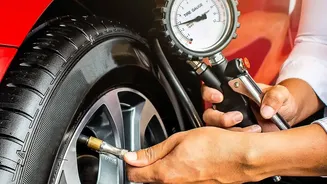
Your tyres are the single point of contact between your car and the slippery road. Before any hill journey, inspect them for adequate tread depth — at least 3mm is recommended for monsoon safety. A simple trick is to insert a one-rupee coin; if the top
of the Ashoka Pillar is visible, it's time for a replacement. Ensure correct tyre pressure as per your car's manual, as this affects grip and the risk of hydroplaning. Equally critical are your brakes. Wet roads can significantly increase your stopping distance. A pre-monsoon check of your brake pads, discs, and brake fluid is non-negotiable. If the pedal feels spongy or the brakes seem less responsive, get them inspected by a professional immediately.
Visibility is Everything
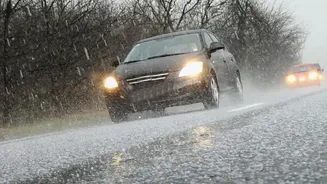
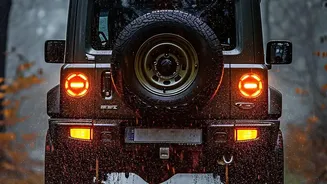
In heavy rain and fog, seeing and being seen is paramount for safety. Start with your wiper blades, which often degrade in the summer heat. If they leave streaks or make noise, replace them. It’s a small cost for a massive safety improvement. Also, top up your washer fluid reservoir, using a proper cleaning solution instead of plain water to clear oily road grime. Test your car's demister and air conditioning system; they are your best tools against a fogged-up interior windshield. Finally, walk around your vehicle and check all lights: headlights, taillights, fog lamps, and indicators. Always drive with low-beam headlights on during rain, even in the daytime, to enhance your visibility to others.
The Electronic Safety Net
Modern cars come equipped with a suite of electronic aids that are invaluable on treacherous monsoon roads. Features like an Anti-lock Braking System (ABS) prevent your wheels from locking up during panic braking, allowing you to maintain steering control. Electronic Brakeforce Distribution (EBD) balances brake pressure between wheels for more stable stopping. Electronic Stability Control (ESC) is another lifesaver, as it can detect a potential loss of control and automatically apply individual brakes to keep the car on its intended path. Hill-hold assist, a feature becoming common even in budget cars, prevents the vehicle from rolling backwards on an incline, which is incredibly useful on steep, narrow hill roads.
Built for the Challenge
While you can prepare any car for the monsoon, some are inherently better suited for hill driving. SUVs and compact SUVs often have higher ground clearance (over 180mm is ideal), which is crucial for navigating broken roads and waterlogged patches without damaging the underbody. Vehicles with strong low-end torque, often found in diesel engines or modern turbocharged petrol units, handle steep inclines with less strain on the engine. If you frequently travel to remote hilly areas, a car with a capable All-Wheel Drive (AWD) or Four-Wheel Drive (4WD) system, like a Mahindra Thar or Scorpio, provides superior grip and confidence. For most popular hill stations with paved roads, a well-prepared front-wheel-drive SUV like a Hyundai Creta or a capable hatchback will suffice.
Pack a Monsoon Emergency Kit
A well-prepared car is only half the battle; you also need a few essentials for yourself and any unforeseen situations. Your kit should include a powerful torch, a first-aid kit, jumper cables, and a tow strap. Also, pack an umbrella, a raincoat, and a change of clothes or at least a few dry towels. It’s wise to have a fully charged power bank for your phone and to save the numbers for roadside assistance and your insurance provider. Driving in the hills can be unpredictable, and being prepared for a potential delay or breakdown provides crucial peace of mind.