



A Moon Hiding a Massive Secret
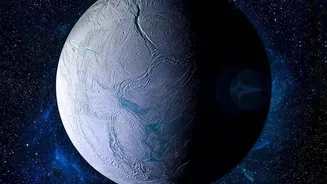
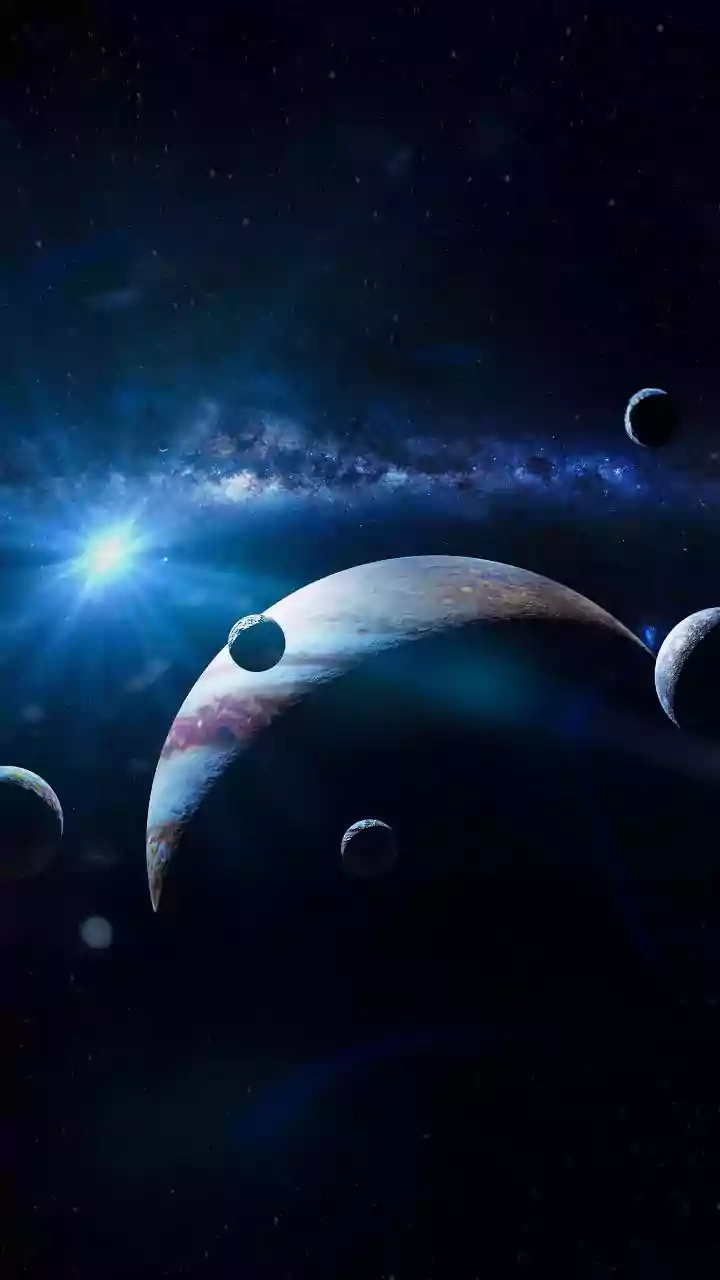
From a distance, Europa looks like a smooth, cue ball-like moon, crisscrossed with mysterious reddish-brown cracks. But its serene appearance belies a dramatic secret: strong evidence suggests a global ocean of liquid saltwater is hidden beneath its icy
shell. This isn't a small sea; scientists estimate Europa's ocean could contain more than twice the volume of all of Earth's oceans combined. This tantalizing possibility makes Europa one of the most compelling places in our solar system to search for habitable environments beyond Earth.
Meet the Interplanetary Detective
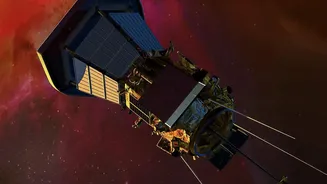
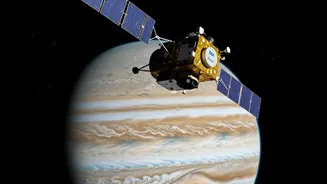
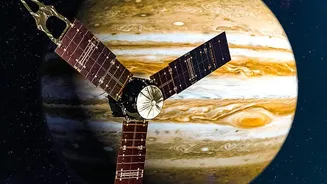
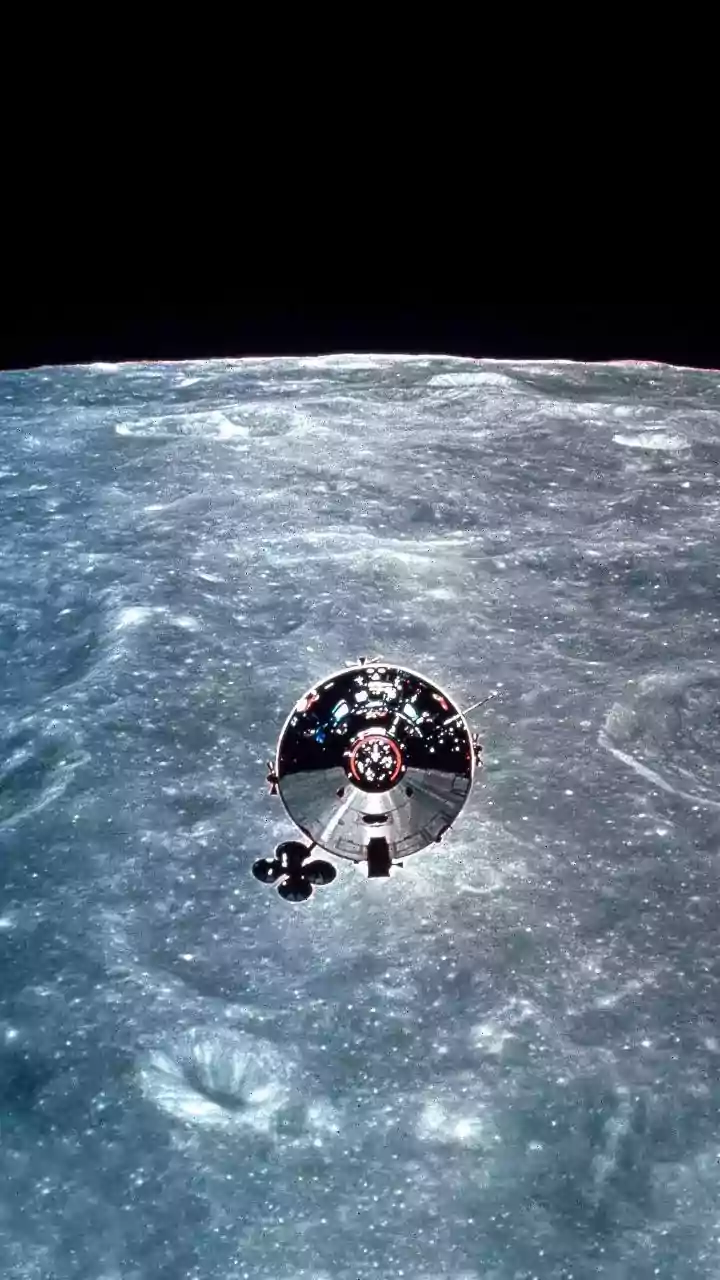
Enter NASA's Europa Clipper, a spacecraft specifically designed to investigate this enigmatic world. Launched in October 2024, the Clipper is on a multi-year journey to the Jupiter system, scheduled to arrive in April 2030. Rather than orbiting Europa directly—which would expose it to Jupiter’s fierce radiation—the spacecraft will orbit Jupiter and perform dozens of close flybys of the moon. During these passes, some as low as 25 kilometers from the surface, its suite of nine advanced science instruments will scan, map, and probe the moon in unprecedented detail.
A Toolkit for Unlocking Alien Secrets
The Clipper is equipped with a powerful array of tools to characterize Europa's habitability. Its ice-penetrating radar, REASON, will measure the thickness of the ice shell and search for pockets of water, or even the ocean itself. Spectrometers like MISE and Europa-UVS will analyze the surface composition, looking for salts, organic molecules, and other chemical clues about the ocean below. Meanwhile, a magnetometer will measure the strength and direction of Europa's magnetic field, which can help determine the ocean's depth and saltiness. The spacecraft will even have a dust analyser (SUDA) and a mass spectrometer (MASPEX) to 'taste' any particles or gases vented into space, potentially sampling the ocean without ever touching it.
Searching for the Ingredients of Life
While Europa Clipper is not a life-detection mission, its primary goal is to determine if the moon has the three key ingredients necessary for life as we know it: liquid water, essential chemical elements, and an energy source. The presence of a vast liquid ocean checks the first box. For the second, the mission will search for crucial elements like carbon, hydrogen, nitrogen, oxygen, phosphorus, and sulfur (often called CHNOPS) on the surface, which could indicate the ocean's chemical makeup. The third ingredient, energy, is trickier. With no sunlight reaching the ocean floor, life would need an alternative energy source, possibly from chemical reactions powered by hydrothermal vents, similar to ecosystems found in Earth's deep oceans.
Chasing Water Plumes
One of the mission's most exciting prospects is the potential to fly through and sample plumes of water vapor that may be erupting from Europa's surface. Observations from other telescopes have suggested these geysers exist, offering a direct pathway to sample the ocean's contents without having to drill through miles of ice. The SUDA and MASPEX instruments are specifically designed to analyze the composition of these plumes, looking for salts and organic molecules that would provide a snapshot of the ocean's environment. Confirming and sampling these plumes would be a monumental discovery, offering direct insight into the chemistry of a hidden alien sea.