








The Strategic Need for Critical Minerals
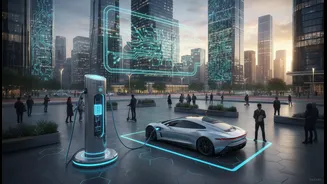
Critical minerals are the secret ingredients of the modern world. This group of 30 elements, including lithium, cobalt, nickel, graphite, and rare earth elements, are essential for everything from smartphones and semiconductors to electric vehicle (EV)
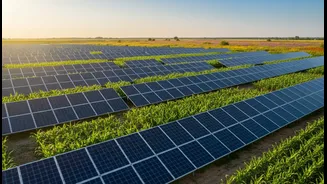
batteries and wind turbines. As India pushes towards its ambitious goals of expanding renewable energy capacity to 500 GW by 2030 and achieving net-zero emissions by 2070, the demand for these minerals is set to skyrocket. However, India is almost entirely dependent on imports for many of these key resources, relying on a handful of countries for its supply. This creates significant economic and geopolitical risks, making the nation vulnerable to supply chain disruptions and price volatility, a situation reminiscent of past dependencies on oil.
Urban Mining and the Circular Economy
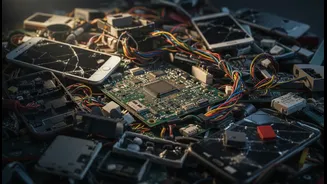
Instead of relying solely on traditional, carbon-intensive mining, India is turning its focus inward to a concept known as “urban mining.” This involves recovering valuable materials from discarded products. With millions of tonnes of electronic waste generated annually, India's cities are becoming a rich, untapped resource. This pivot is the heart of India's growing circular economy strategy, which moves away from a linear “take-make-dispose” model. The goal is to create a closed-loop system where resources are recovered, recycled, and reused, minimizing waste and environmental impact. Government initiatives like the National Critical Minerals Mission (NCMM) and incentive schemes are now actively promoting this shift, providing financial support to companies that can turn waste into wealth.
The Technology Driving the Change
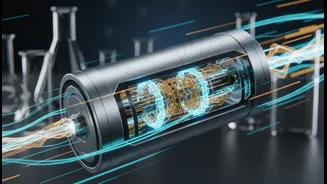
The process of extracting these tiny but valuable mineral fragments from complex products like lithium-ion batteries is highly technical. Companies are using advanced hydrometallurgical and pyrometallurgical processes to separate and purify minerals. Indian startups like BatX Energies, Metastable Materials, and LOHUM are pioneering new, environmentally friendly extraction technologies that are often cheaper and less energy-intensive than traditional methods. For instance, some companies have developed chemical-free processes that can recover up to 95% of essential battery materials, including lithium, cobalt, and nickel, which can then be refined to battery-grade quality and fed back into the supply chain. This innovation is crucial for building a self-reliant or 'Aatmanirbhar' industrial ecosystem.
A New Frontier for Green-Collar Jobs
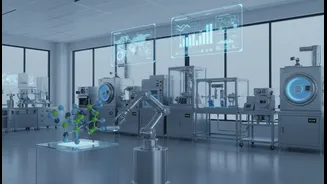
This industrial transformation is creating a new wave of “green-collar” jobs that require a blend of technical and environmental expertise. The demand is growing for skilled professionals in various fields. This includes chemical engineers and metallurgists to oversee refining processes, battery specialists and material scientists for research and development, and technicians skilled in operating sophisticated recycling machinery. Furthermore, the circular economy is generating roles in logistics for managing e-waste collection, data analysts for tracking materials through the supply chain, and consultants who help companies integrate sustainable practices. This represents a significant shift in energy and manufacturing careers, moving towards a more sustainable and technologically advanced workforce.