



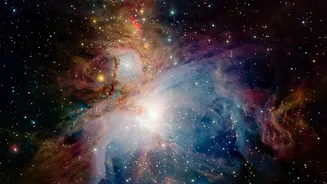
A Glimpse of Our Sun's Future
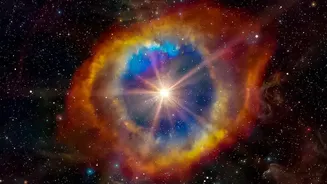
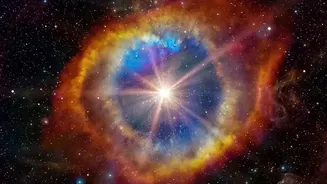
First, what exactly are we looking at? The Helix Nebula is what astronomers call a planetary nebula—a slightly confusing name, since it has nothing to do with planets. It's the spectacular, glowing remains of a star, once similar to our own sun, that
has reached the end of its life. In its final act, the star sheds its outer layers of gas into space. The central core, now a super-hot, dense star called a white dwarf, illuminates this expanding cloud of its own material, creating the intricate structure we see. For astronomers, studying the Helix Nebula is like getting a preview of our own solar system's fate in about five billion years.
Why Infrared Vision Is a Game-Changer
We’ve seen the Helix Nebula before through telescopes like Hubble, but Webb’s view is different. Webb sees the universe in infrared light, which is invisible to the human eye. This allows it to do two crucial things. First, it can peer through the clouds of dust that obscure the view in visible light. Second, and more importantly, it can detect the faint glow of cooler materials, like molecular hydrogen. This ability to see a wider range of temperatures reveals a hidden layer of complexity. Webb’s images show the stark transition from the scorching hot gas nearest the central star to the cooler, molecular gas farther out, painting a complete picture of the nebula’s environment.
The Mystery of the 'Cometary Knots'
One of the most fascinating features Webb has brought into focus are the thousands of so-called “cometary knots” that line the inner ring of the nebula. While they look like tiny comets with tails, each of these knots is massive, some containing the mass of Earth but spanning a volume larger than our entire solar system. For years, their exact nature was a puzzle. Webb’s high-resolution infrared images finally reveal that these knots are not just clumps of gas; they are dense, protective pockets teeming with molecular hydrogen—the fundamental building block for new stars and planets. They are sculpted by the blistering winds of the dying star crashing into colder gas and dust shed earlier in its life.
An Intricate Web of Cosmic Recycling
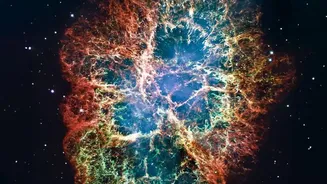
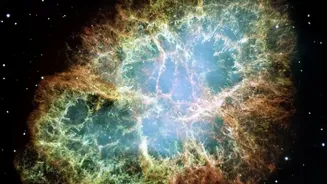
The new images showcase a delicate, filamentary structure that was previously unseen. These fine threads of molecular gas trace the history of the star's death throes, showing precisely how material was ejected and how it’s interacting with the surrounding space. The colors in Webb’s image represent chemistry and temperature: blue hues mark the hottest, ionized gas being blasted by the central star’s radiation, while yellow and red tones show where the gas has cooled enough for molecules to form. This isn't just a pretty picture; it's a map of cosmic recycling in action. The material this star has shed is now being seeded back into the cosmos.