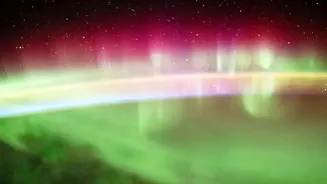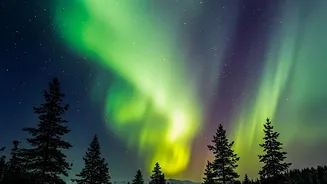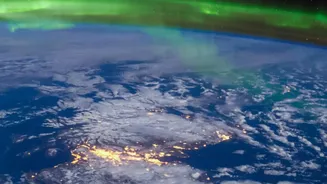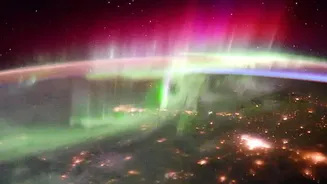

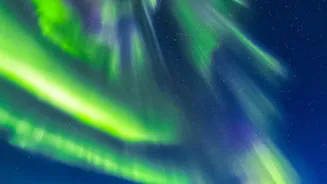
The ethereal dance of the aurora is one of nature's most breathtaking sights. But behind this beauty lies a powerful phenomenon that can threaten our modern way of life, and new research shows the risk isn't the same everywhere.
A Threat From the Heavens
The northern and southern
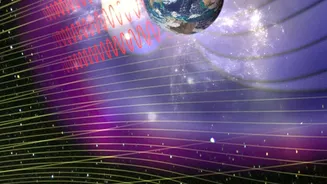
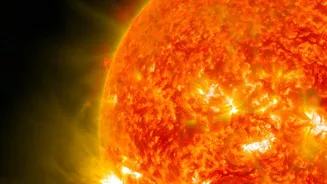
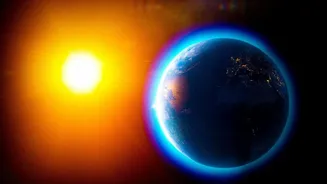
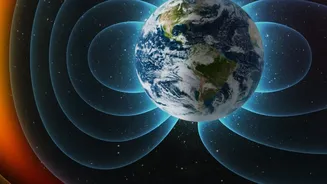
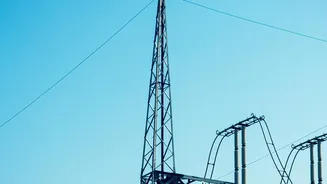
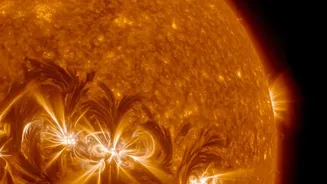
lights are the visible calling cards of space weather—bursts of energy and charged particles from the sun interacting with Earth's magnetic field. When the sun releases a massive cloud of particles, known as a coronal mass ejection, it can trigger a geomagnetic storm. These storms create dazzling auroras but also induce powerful electrical currents in the planet's upper atmosphere. The rapid changes in Earth's magnetic field during these events can generate geomagnetically induced currents (GICs) on the ground. These are rogue, quasi-DC currents that can find their way into our long, conductive power lines, which act like giant antennas.
Why Ground Conditions Are Critical
For decades, the primary focus was on the strength of the solar storm itself. But a recent study combining data from NASA satellites and ground-based magnetometers has highlighted a crucial, and highly variable, factor: the ground itself. Researchers found that the strength of magnetic disturbances on the ground can differ dramatically between locations, even those just a few hundred miles apart. It turns out the electrical conductivity of the local soil and rock formations plays a decisive role in how vulnerable a specific area is. The aurora might look spectacular overhead, but that doesn't automatically mean the ground below is experiencing the most dangerous electrical effects.
A Tale of Two Geologies
The Earth's crust is not uniform. Some areas, like those with thick sedimentary basins, are more electrically conductive. In these regions, the ground can more easily absorb and dissipate the induced electrical energy. However, in areas with electrically resistive geology, such as ancient, hard rock formations, the induced currents meet resistance. Unable to flow easily through the ground, the currents seek the path of least resistance—our man-made power grids. This can cause high-voltage transformers, the backbone of the grid, to overheat, leading to damage, protective shutdowns, or in the worst cases, widespread blackouts. The infamous 1989 Hydro-Québec blackout, which left six million people in the dark, was partly a consequence of the region's resistive geology amplifying the storm's impact.
A More Precise Approach to Protection
This new understanding is shifting how we think about grid resilience. Instead of a one-size-fits-all approach, grid operators and engineers can now create more detailed, location-specific risk maps. By mapping the electrical conductivity of the ground across entire continents, it's possible to identify which substations and transmission lines are most at risk during a geomagnetic storm. This allows for more targeted mitigation strategies, such as managing specific circuits or preparing for potential voltage control issues in known high-risk zones when a solar storm alert is issued. Advanced machine learning models are already being developed to combine solar wind data with local geological information to provide substation-specific risk warnings 30 to 60 minutes in advance.