



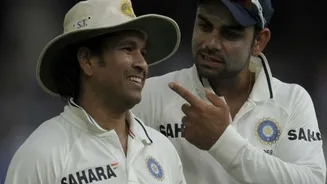

The Spark: What de Villiers Said
On his YouTube channel, former South African captain AB de Villiers weighed in on the eternal debate, framing it around success in challenging overseas conditions. He credited Tendulkar as the trailblazer, stating, "Sachin was the first guy to show that
as a subcontinent batter, you can do well in bouncy and seaming conditions." However, he argued that Kohli took this to another level. "Yet, he wasn't as strong as someone like Virat Kohli, who was even better... Virat took that forward and raised the bar," de Villiers claimed, suggesting Kohli's influence was instrumental in transforming India into a dominant force away from home. This bold take from a respected contemporary of both players brings the statistical and emotional arguments roaring back to life.
Sachin Tendulkar: The Burden of a Billion Dreams
For two decades, Sachin Tendulkar was more than a cricketer; he was a national institution. His career numbers are staggering in their volume. He remains the all-time leading run-scorer in both Test and ODI cricket, with a combined total of 34,357 international runs. His record of 100 international centuries is a landmark that once seemed untouchable. In Test cricket, he amassed 15,921 runs across 200 matches with 51 centuries, and in ODIs, he scored 18,426 runs with 49 tons. Tendulkar’s greatness lay not just in his run-scoring but in his longevity and the immense pressure he played under, often as the lone warrior in an inconsistent batting lineup during the 1990s.
Virat Kohli: The Modern Master of the Chase
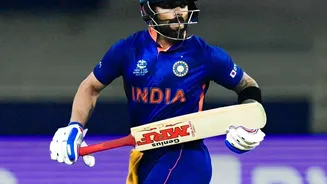
Virat Kohli, on the other hand, represents the modern, aggressive, and supremely fit Indian cricketer. While his overall run tally is lower, his efficiency and averages are breathtaking. Kohli is now the second-highest run-scorer in men's international cricket, having surpassed Kumar Sangakkara. His greatest claim lies in the ODI format, where he holds the record for the most centuries with 54, surpassing Tendulkar's 49. He scores a hundred every 5.65 ODI innings, a significantly faster rate than Tendulkar's 9.22. His average of over 58 in ODIs is peerless among high-volume scorers, and his record while chasing targets is legendary, earning him the title 'Chase Master'.
Head-to-Head: Test Arena
In the purest form of the game, Tendulkar’s records have a formidable weight. He played 200 Tests, scoring 15,921 runs at an average of 53.78 with 51 centuries. Kohli, who retired from the format in May 2025 according to some reports, finished with over 9,000 runs in more than 120 Tests at an average that hovers in the high 40s. While de Villiers argued for Kohli’s impact overseas, statistics show Tendulkar scored a massive 8,705 of his Test runs outside India. In the challenging SENA countries (South Africa, England, New Zealand, Australia), Tendulkar scored more runs at a higher average than Kohli. This suggests that while Kohli had many match-winning performances abroad, Tendulkar’s sustained excellence in foreign conditions over a longer period is statistically superior.
The Numbers Don't Lie, But Do They Tell the Whole Story?
A straight statistical comparison is complicated. Tendulkar played in an era against legendary bowling attacks like those of Wasim Akram, Waqar Younis, Glenn McGrath, and Shane Warne. The rules were different, with no powerplays or two new balls in ODIs for much of his career, making scoring more difficult. Conversely, Kohli has played in an era of bigger bats, smaller boundaries, and more batsman-friendly rules. He has also faced the relentless pressure of social media and the non-stop churn of a three-format calendar. While Tendulkar’s supporting cast included greats like Dravid and Ganguly, some analyses suggest Kohli's top-order partners like Rohit Sharma and Shikhar Dhawan were statistically more efficient, potentially easing the burden.