






What Exactly Are Air Taxis?
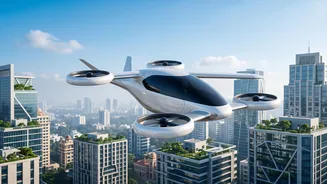
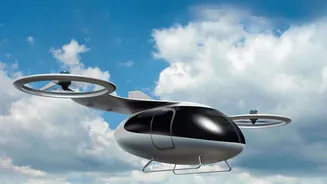
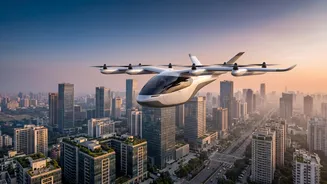
At the heart of this transport revolution are eVTOLs, which stands for electric Vertical Take-Off and Landing aircraft. Think of them as a hybrid between a helicopter and a small airplane, but much quieter and powered by batteries. These vehicles can
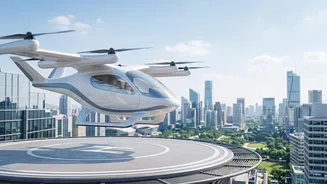
take off and land straight up and down from small spaces called 'vertiports', meaning they don't need traditional runways. They are designed to be a safe, low-noise, and sustainable alternative for short urban journeys, carrying a handful of passengers and a pilot. Several companies are developing these aircraft, which are seen as a key component of what experts call Advanced Air Mobility (AAM).
Who Is Bringing Them to India?
Two main initiatives are currently making headlines. The first is a major partnership between InterGlobe Enterprises, the parent company of IndiGo, and US-based Archer Aviation. They signed a Memorandum of Understanding to bring an all-electric air taxi service to India, planning to operate up to 200 of Archer's 'Midnight' aircraft. The Midnight is a piloted, four-passenger vehicle designed for quick, successive flights. Separately, several Indian startups are also in the race. Bengaluru-based Sarla Aviation and Chennai-based The ePlane Company are developing their own eVTOLs, with Sarla's prototype named 'Shunya' and ePlane's model also reaching the full-scale prototype stage. The government is actively encouraging these developments, with the Union Civil Aviation Minister recently highlighting the goal of making India a hub for eVTOL design and manufacturing.
When and Where Could They Launch?
The timelines are ambitious but becoming clearer. The InterGlobe-Archer partnership is targeting a launch as early as 2026, starting with services in Delhi, Mumbai, and Bengaluru. One of the flagship routes they've announced is a 27-km journey between Connaught Place in Delhi and Gurugram. Meanwhile, India's Civil Aviation Minister has stated a broader goal of seeing electric air taxis operational by 2028. This timeline is supported by startups like Sarla Aviation and ePlane Company, which are also aiming for commercial launches around 2028, with testing set to accelerate from 2027. Bengaluru is expected to be the first city for Sarla's launch, followed by Mumbai and Delhi.
What Will a Journey Look and Cost?
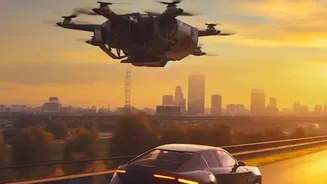
The main selling point is a dramatic reduction in travel time. The proposed 7-minute flight from Connaught Place to Gurugram would replace a car journey that typically takes 60 to 90 minutes. Similarly, a trip from Bengaluru's airport to Indiranagar could be cut from over an hour to just a few minutes. In terms of cost, the goal is to be competitive with ground-based premium taxi services. Early estimates for the Delhi-Gurugram route are in the range of ₹2,000 to ₹3,000 per passenger. Sarla Aviation has estimated a fare of around ₹1,700 for a trip between Bengaluru's airport and Electronics City. Initially, it might be a premium service, but the long-term vision is for it to become a more common mode of transport.
What Are the Hurdles to Overcome?
While the vision is exciting, several challenges must be addressed. The biggest is regulation. India's Directorate General of Civil Aviation (DGCA) is actively creating a framework for eVTOLs, covering everything from aircraft certification and pilot licensing to vertiport standards and air traffic integration. Safety is paramount, and these aircraft must prove they can operate reliably in India's unique climate and dense airspace. Another major hurdle is infrastructure. Cities will need a network of vertiports—mini-airports for take-off, landing, and charging. This requires significant investment and coordination with state governments for land allocation. Finally, public acceptance will be key, which depends on demonstrating that the services are not just fast, but also safe and affordable.