


The Moon's Unseen Danger
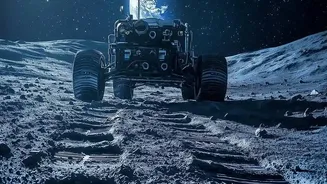
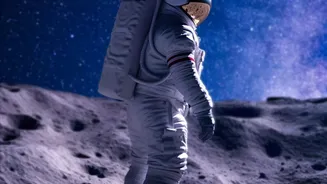
Establishing a permanent human presence on the Moon is a monumental goal for space agencies and private companies alike. However, the lunar surface is an incredibly hostile environment. Unlike Earth, the Moon has no thick atmosphere or global magnetic
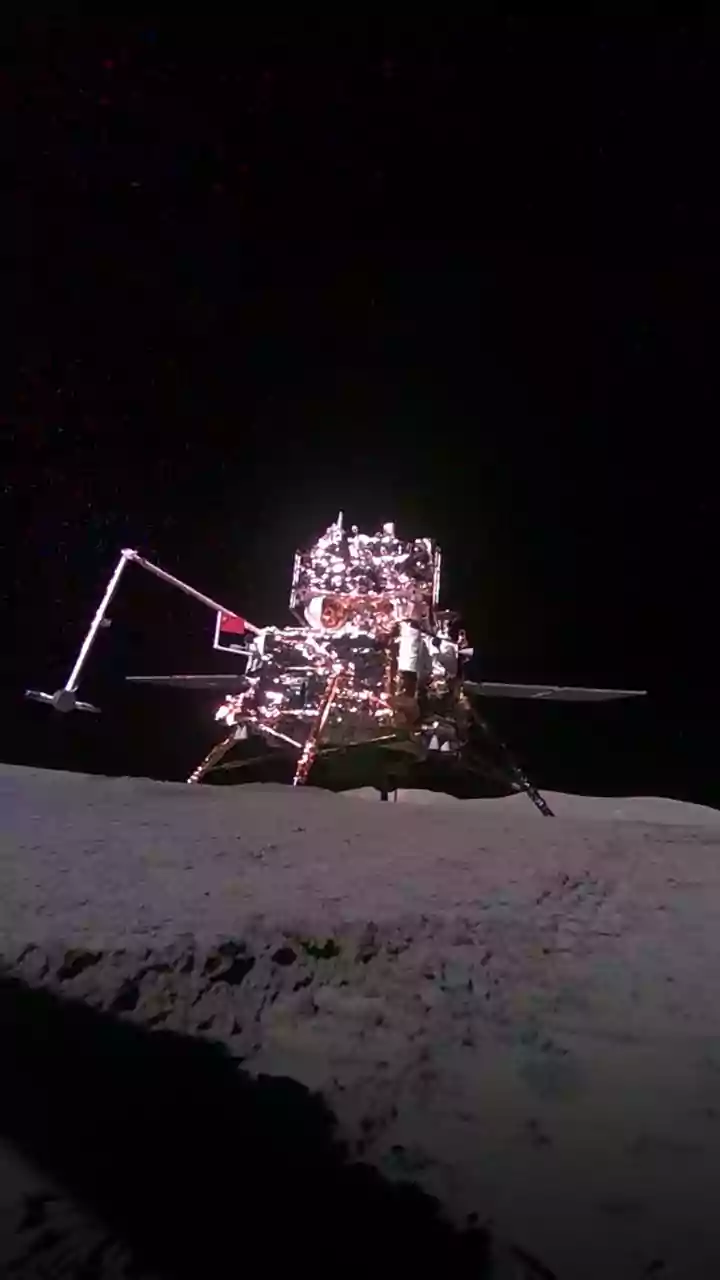
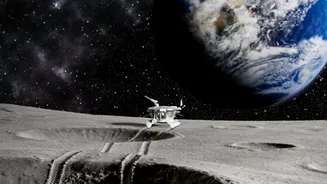
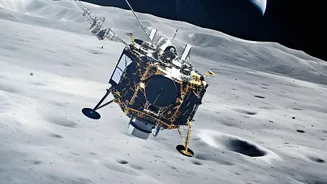
field to protect it. This leaves it completely exposed to the harsh realities of space. The two biggest threats are constant galactic cosmic rays (GCRs) and unpredictable solar particle events (SPEs), or solar flares. These streams of high-energy particles can bombard astronauts, increasing their lifetime risk of cancer, cataracts, and other serious health issues. Data from China's Chang'e 4 lander revealed that radiation levels on the lunar surface are 200 to 1,000 times higher than on Earth. Simply put, long-term survival on the surface would require massive, heavy shielding, making any habitat incredibly expensive and difficult to build.
An Ancient, Natural Solution
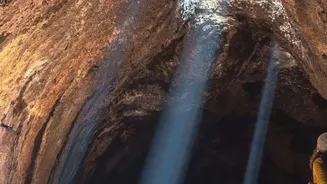
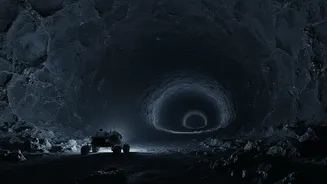
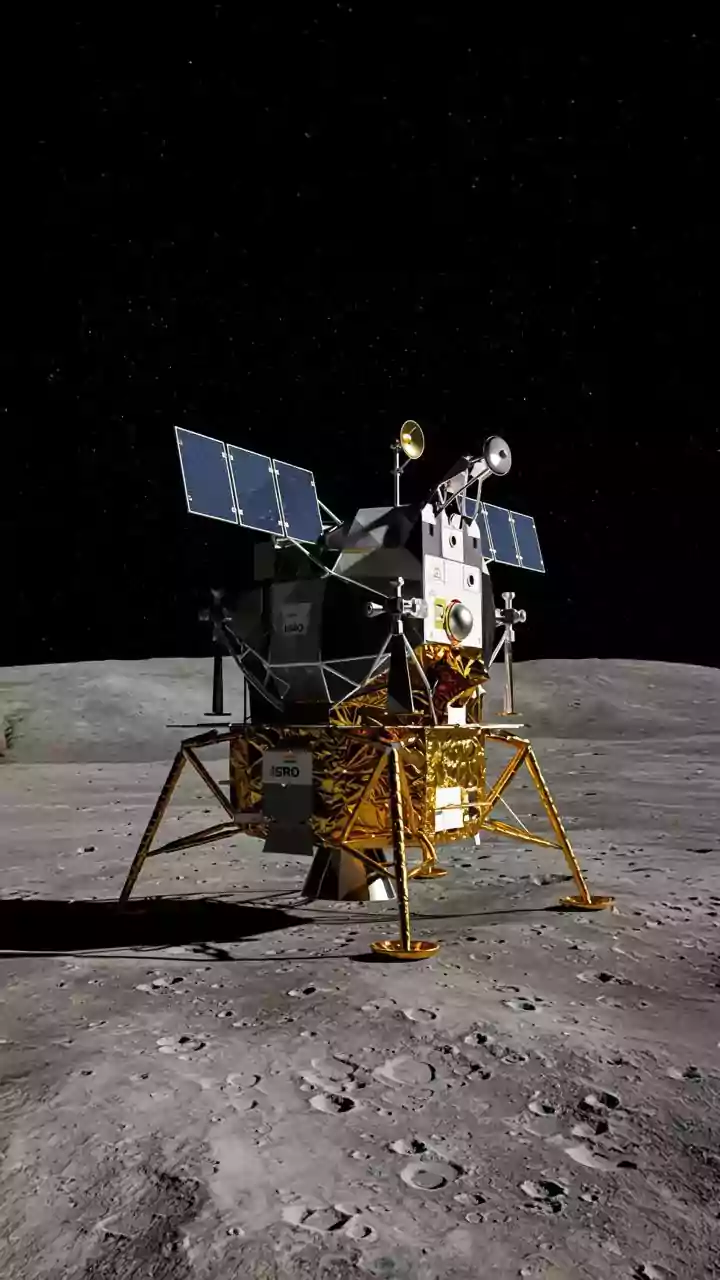
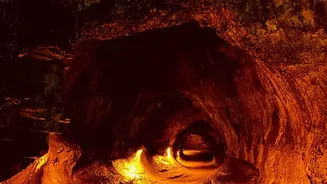
The answer may lie in repurposing the Moon's own geology. Billions of years ago, when the Moon was volcanically active, rivers of lava carved out vast underground tunnels. As the surface of a lava flow cooled and hardened, the molten rock inside continued to flow, eventually draining away to leave a hollow void. These formations are known as lava tubes. Evidence from orbiters, including NASA's Lunar Reconnaissance Orbiter (LRO) and India's Chandrayaan-1, has revealed hundreds of pits on the lunar surface that are believed to be 'skylights'—collapsed sections of the roof of these massive tubes. Some of these tubes are enormous, potentially stretching for hundreds of kilometres and wide enough to contain entire cities. They are primordial structures, waiting to be explored.
A Near-Perfect Shelter
Lunar lava tubes offer two critical advantages for would-be colonists. The first and most important is radiation protection. The thick roof of solid volcanic rock, estimated to be dozens of meters thick in many places, provides a natural and highly effective shield. Studies suggest that sheltering inside a lava tube could reduce an astronaut's radiation exposure to levels comparable to those experienced on Earth, drastically mitigating the long-term health risks. The second major benefit is temperature stability. The lunar surface experiences wild temperature swings, from a scorching 127°C during the day to a frigid -173°C at night. In contrast, data from the LRO indicates that areas within the pits and caves maintain a stable, almost comfortable temperature of around 17°C. This eliminates the enormous energy costs of heating and cooling a surface habitat.
Finding and Building Our Lunar Home
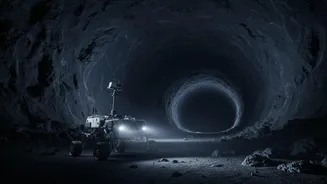
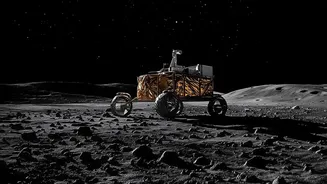
While the potential is immense, turning these caves into homes presents significant engineering challenges. The first step is to definitively locate and map them. Orbiters have identified many potential sites, but robotic missions will be needed to explore them up close. Proposed missions like the ESA's efforts to develop 3D mapping technology and NASA's 'Moon Diver' concept aim to send rovers into these pits to assess their structure and stability. Once a suitable tube is confirmed, the next challenge is access. Astronauts and equipment would need to be lowered through the skylights. Inside, habitats could be constructed. One popular concept is to use inflatable modules, which are lightweight and could be expanded inside the tube's protected environment. This leverages the tube for its shielding while using a purpose-built structure for life support, creating a habitat within a habitat.