




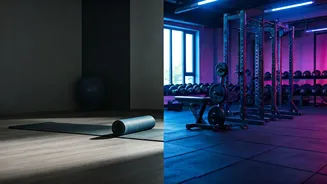



The False Dichotomy
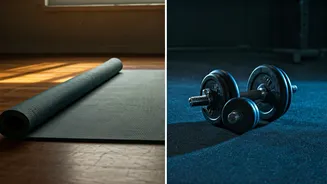
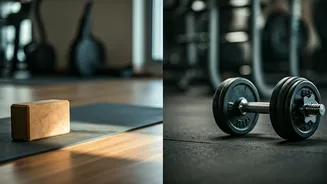
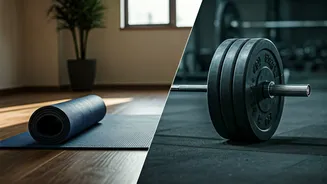
The debate between yoga and powerlifting is often framed as a battle: flexibility versus strength, mindfulness versus muscle, serenity versus intensity. Fitness experts clash because they are often arguing from different philosophical standpoints. A yoga proponent
might prioritize holistic well-being, functional movement, and mental clarity. A powerlifting coach, on the other hand, is focused on a very specific and measurable outcome: lifting the maximum possible weight in the squat, bench press, and deadlift. This fundamental difference in objectives is the primary source of the conflict, yet it overlooks a crucial reality: the two practices are not mutually exclusive and can be highly complementary.
Deconstructing the Stereotypes
A major part of the friction comes from common misconceptions. Many view yoga as just a gentle stretching session, not a 'real' workout. However, dynamic styles like Vinyasa or Ashtanga yoga build significant strength, endurance, and stability by using your own body weight as resistance. Holding challenging poses like plank or warrior requires tremendous muscular engagement. Conversely, powerlifting is often stereotyped as a pursuit for muscle-bound men that leads to being 'muscle-bound' and inflexible. In reality, powerlifting is a sport for all ages and genders. Furthermore, executing the main lifts correctly requires a significant degree of mobility—especially in the hips, ankles, and shoulders—which strength training itself can improve.
Strength: Two Paths to Power
Powerlifting's path to strength is clear: progressive overload. By consistently adding more weight to the bar, you force your muscles to adapt and grow stronger. It is the most efficient method for developing maximal strength. Yoga builds strength differently. It focuses on isometric contractions (holding a static position), stability, and muscular endurance. While you may not be able to deadlift twice your bodyweight from yoga alone, you will develop incredible core strength and control over your body, which are foundational to all other movements. Some forms of yoga even incorporate weights to blend the two approaches.
Mobility vs. Flexibility
This is a key area of debate. Yoga is renowned for increasing flexibility—the ability of muscles to lengthen passively. Powerlifting, however, demands mobility—the ability to actively move a joint through its full range of motion with control. You can be flexible without being mobile, and vice versa. While a powerlifter may not be able to do the splits, they need excellent hip and ankle mobility to perform a deep, safe squat. Critics argue that excessive flexibility without corresponding strength can lead to joint instability. This is where the practices can inform each other. Yoga can improve a lifter's range of motion, helping them get into better positions and potentially reducing injury risk. In turn, the stability gained from lifting can protect a yogi’s joints in deep stretches.
Mindset and Recovery
Beyond the physical, the mental approaches differ greatly. Powerlifting is goal-oriented and data-driven, focused on hitting personal records. Yoga, rooted in ancient traditions, emphasizes the mind-body connection, breath control, and being present. These mental benefits can be a powerful asset for any athlete. The focus on breathwork can improve bracing and stability during a heavy lift. Furthermore, yoga is an excellent tool for active recovery. It can help reduce delayed onset muscle soreness (DOMS), release muscle tightness from repeated lifting patterns, and calm the nervous system after an intense training session.