



July's Celestial Theatre
This July, the night sky is putting on a spectacular performance. Early in the month, viewers can catch Saturn and the moon in a close approach. Around the same time, asteroids like 8 Flora and 18 Melpomene reach opposition, making them prime for telescopic
viewing. Mid-month sees a beautiful team-up of the Moon, brilliant Venus, and the star Regulus. As the month progresses, the Delta Aquariid meteor shower begins its warm-up act for the more famous Perseids, promising 15-20 meteors per hour at its peak. For those in the Southern Hemisphere, the reappearance of the Pleiades star cluster, known as Matariki, marks the Māori new year, an event of major cultural significance. These events draw millions of eyes upward, cameras in hand, ready to capture and share the cosmic beauty.
The Conversation Shifts Online
As images of meteor streaks and planetary conjunctions flood social media feeds, they are increasingly accompanied by a deeper conversation. Hashtags related to #IndigenousAstronomy and #NativeSkywatchers gain traction, linking the celestial events to the rich astronomical traditions of First Peoples. Instead of just identifying constellations by their Greco-Roman names, a growing online community is learning their names and stories from Indigenous cultures across the globe. This isn't just about renaming stars; it's about a fundamental shift in perspective. Digital platforms have become a virtual campfire, where ancient sky knowledge is shared, celebrated, and connected to the modern science of astronomy. This online movement highlights that for many cultures, the sky has always been a map, a calendar, and a sacred book of laws and stories.
Ancient Knowledge, Modern Missions
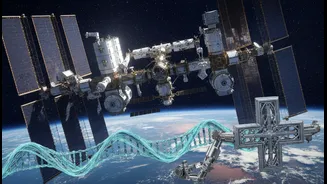
The interest extends far beyond historical knowledge. It shines a light on burgeoning Indigenous space programs and initiatives that are shaping the future of exploration. These are not concepts from the past, but active, forward-looking endeavors. For instance, NASA has been recognized for its Indigenous Community-Based Education Program, which blends Indigenous Knowledge with Western science to foster STEM identities among youth. In Australia, the National Indigenous Space Academy (NISA) sends First Nations STEM students to work with global leaders like NASA's Jet Propulsion Laboratory and the UK's RAL Space facility. These students work on cutting-edge projects, from analysing data from Jupiter's atmosphere to developing software for space missions. These programs represent a powerful fusion, acknowledging that Indigenous peoples are not only the world's first astronomers but are also vital to its future in space.
Why the Renewed Connection?
Several factors fuel this trend. Firstly, there's a growing global recognition of the value of Indigenous Knowledge Systems (IKS). Scientists and researchers are increasingly seeing that millennia of detailed observation can offer unique insights, complementing modern astrophysical data. Duane Hamacher, an Associate Professor of Cultural Astronomy, notes that ancient oral traditions can help constrain physical models of star systems. Secondly, educational and cultural institutions are actively working to decolonize astronomy. Planetariums are incorporating Indigenous sky stories, and curricula are being updated to include these perspectives, creating a new generation of learners who see the sky through multiple cultural lenses. Online portals like Canada's Astrodigenous provide educators with resources to respectfully incorporate this knowledge into classrooms.
A Digital Bridge to the Stars
Ultimately, the internet acts as a powerful amplifier. It allows for the rapid, global dissemination of information that was once siloed within specific communities or academic circles. Initiatives like Native Skywatchers use online gatherings and livestreams to revitalize and share Indigenous star knowledge with a global audience. This digital bridge connects the dots between a meteor shower seen from a backyard in India, a story about the "Emu in the Sky" constellation from Australia, and a NISA student in the UK working on a future space mission. The wonder of a July night sky becomes a gateway, inviting people to explore not just the cosmos, but the diverse human traditions that have looked to the stars for meaning and guidance for over 65,000 years.