








A Revolution in Indian Skies
For millions of Indian flyers, the airport experience has been transformed. What once involved a repetitive cycle of presenting your ID and boarding pass at multiple checkpoints is now streamlined into a few seconds of facial recognition. DigiYatra, a free
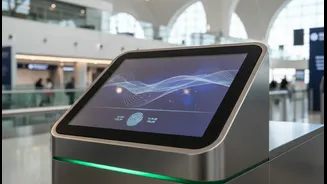
and optional service, allows passengers to link their travel documents to their biometric data via a smartphone app. Upon arrival at the airport, dedicated e-gates scan a passenger's face, verifying their identity and flight details in as little as five seconds, a significant reduction from the previous average of 15 seconds. This efficiency isn't just a minor convenience; it's a fundamental change in managing passenger flow, especially as India's air traffic continues its explosive growth.
The Undeniable Appeal of Speed
The success of DigiYatra, now operational in 38 airports and set for major expansion, is built on a simple, powerful promise: saving time. In an era of ever-growing passenger numbers—projected to reach 50 crore annually by 2030—this is a critical advantage. Frequent flyers and those travelling during peak holiday seasons have been among the quickest to adopt the system, appreciating the ability to bypass long queues at terminal entry, security checks, and even boarding gates. The platform's rapid uptake, with over 2.4 crore app downloads, speaks volumes about the public's appetite for solutions that simplify the complexities of modern travel. It represents a significant step towards the paperless, contactless journey envisioned by aviation authorities.
The Lingering Question of Trust
Yet, as facial recognition technology becomes more integrated into public life, the conversation inevitably turns to privacy and trust. For every passenger celebrating a swift airport passage, there are others expressing concern about how their personal data is being used and protected. Concerns range from the security of biometric data to the potential for surveillance and data misuse. Reports, although officially refuted, of passengers feeling coerced into signing up have also fueled skepticism. This highlights a crucial challenge for DigiYatra's future: its long-term success is not just about technological prowess but also about earning and maintaining the public's confidence in its data handling practices.
Building Confidence by Design
To its credit, the DigiYatra Foundation has attempted to address these concerns head-on. Officials stress that the system operates on a 'privacy-by-design' framework. Unlike a centralised government database, a passenger's personally identifiable information is encrypted and stored only on their own smartphone. When a passenger travels, a secure, temporary token is shared with the origin airport's system, which is then purged within 24 hours of the flight's departure. The Ministry of Civil Aviation has repeatedly stated that the service is voluntary and that manual processing gates remain available. This decentralised model is a key part of their effort to reassure users that convenience does not have to come at the cost of privacy.
The Journey Ahead
Having crossed the ten crore journey milestone, DigiYatra is not slowing down. Plans are in place to expand the service to 27 more airports, including upcoming greenfield airports which will be DigiYatra-enabled from day one. The platform is also set to become more inclusive by adding more regional languages. As it expands its reach, including pilots for international travel, the balance between speed and security will become even more critical. The platform's evolution from a novel convenience to a foundational piece of India's travel infrastructure will depend entirely on its ability to prove that trust, like speed, is a feature, not a bug.